
 236/254
“The county was named for William Jasper, a hero of the American Revolution who was killed attempting to plant the American colors at the storming of Savannah in 1779. Jasper County comprises 907 square miles of East Texas timberlands, with elevations ranging from 25 to 400 feet above sea level. The terrain along the northern border and southern third of the county is undulating to rolling, with loamy or sandy surface layers and reddish mottled clay or loamy subsoils.”
“Water is plentiful in the county; the average annual rainfall is fifty-two inches. Principal water sources include Sam Rayburn Reservoir, Lake B. A. Steinhagen, the Neches River (which forms the county’s western boundary), and the Angelina River.”
“Early inhabitants of the area that is now Jasper County were prehistoric hunters who camped near streams and rivers and moved about frequently in search of game. By the sixteenth century, when Spanish travelers first entered the region, Atakapa Indians lived in the southern sections of what later became Jasper County, and Indians of the Caddo confederacy dominated the northern sections. The area was also a home and hunting ground of the Ais Indians, who lived between the Sabine and Neches rivers.”
“The first white man in the area was probably Spanish, but Frenchmen and Englishmen also traveled through the region. Early records and maps indicate that the Moscoso expedition may have crossed Jasper County on the return trip to the Mississippi River in 1542. In 1754 several French trappers under the leadership of Joseph Blancpain were arrested by Spanish authorities wanted to fend off French occupation of East Texas. English explorers entered Sabine Lake and traveled up the Neches by boat in 1774. They remained along the banks of the Neches long enough to sow a crop.”
“One of the earliest white settlers was John R. Bevil, who moved to Texas before 1829 and received a first-class land grant on the Angelina River near the site of present Jasper. Bevil’s settlement became known as Bevilport and was an important river-navigation point from 1830 until 1860. In 1829 Lorenzo de Zavalaobtained a Mexican empresarial grant covering most of what is now Jasper County. During the Texas Revolution volunteers from Bevilport joined other Texans in confrontations with Mexican troops at Anahuac, Bexar, and Nacogdoches.”
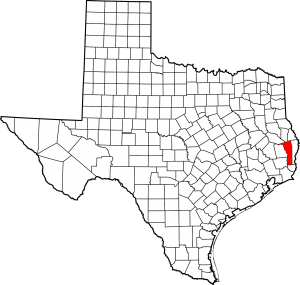
“Jasper County was established when the Convention of 1836 converted old municipalities into counties, but it was not until 1837 that an act was passed defining the county boundaries. The town of Jasper was named county seat by the county commissioners in 1836 and grew around a log courthouse and jail built on the main square. In 1846 the original Jasper County was split into two parts; the eastern portion became Newton County. In 1847 Andrew Smyth built a sawmill near Bevilport, using the swift current of Indian Creek for power. After a fire destroyed the Jasper County Courthouse and all county records in 1849, a new two-story structure was quickly constructed.”
“The county’s lumber industry got its start in 1852, when a steam sawmill was built at Ford’s Bluff (later named Evadale).”
“By 1860, just before the Civil War, the county had grown to include 250 farms encompassing more than 275,000 acres, including 19,000 acres classified as “improved.” Most of the county’s farms and plantations were smaller than 100 acres. Only three holdings were larger than 500 acres, and none was larger than 1,000 acres. The census reported 2,426 whites and 1,611 slaves (39 percent of the total population) in the county that year. There were no free blacks.”
“A Jasper County resident, Dr. William Neyland, was appointed brigadier general of the Second Brigade of Texas State Troops and placed in charge of recruiting for the Confederacy in Jefferson, Orange, Newton, Tyler, Liberty, Hardin, Polk, Chambers, and Jasper counties. One of the first companies to be organized in Jasper County was Company C of the Twenty-fifth Texas Dismounted Cavalry. In 1862 Company E of the Lone Star Rifles was mustered into service in Jasper. The Confederate government in Texas collapsed in the summer of 1865, and Union troops arrived in Jasper County the following year.”
“Between 1890 and 1910 the county grew steadily, despite the decline of cotton farming. There were 849 farms in Jasper County by 1900 and 864 by 1910. Though the number of acres cultivated in the county remained around 20,000 throughout this period, the farm economy diversified. In 1900 county farmers produced 27,000 chickens, for example, and 10,000 sheep were reported in 1910. The number of cattle in the county increased to more than 14,000 by 1910.”
“In 1882 the Texas Tram and Lumber Company moved its logging camp to Magnolia Springs and floated logs down Wright Creek into the Neches River. In 1894, Kirbyville began to grow when the company moved a logging camp there. At about the same time, railroads built into the county and linked it directly with outside markets. In 1895 the Gulf, Beaumont and Kansas City Railway completed its track from Kirbyville to Roganville, in Newton County. Shortly after 1900 the line reached Jasper, greatly increasing shipping capability for the growing timber industry, which was previously dependent on river transportation. The county’s agricultural economy grew steadily but slowly during this period, while the rise of the timber industry helped to increase the population of the county to 7,138 by 1900 and 14,000 by 1910.”
“The population of the county increased to 15,569 by 1920 and to 17,408 by 1930.”
“The county ceased to be a cotton producer during the 1940s, as farmers increasingly turned to truck farming and raising poultry. The logging industry revived during that time, and highway construction also helped to invigorate the economy; by 1945 U.S. highways 96 and 190 were both paved. The population of the county grew to 20,049 by 1950 and to 22,100 by 1960.”
“Oil was first discovered in Jasper County in 1928, but production was minimal until the 1950s; subsequently, petroleum helped to stabilize the economy and provided the area with welcome additional revenue, though not great wealth. Production was 4,560 barrels in 1948, more than 202,600 in 1956, almost 770,300 in 1960, 486,400 in 1965, about 220,480 in 1974, and almost 591,000 in 1982. In 1990 the county produced 835,816 barrels of crude, and by January 1991 almost 20,856,590 barrels had been produced in the county since discovery in 1928.”
“In 2002 the county had 763 farms and ranches covering 96,286 acres, 37 percent of which were devoted to woodlands, 33 percent to pasture, and 27 percent to crops. That year farmers and ranchers in the area earned $4,813,000; livestock sales accounted for $3,310,000 of the total. Timber, cattle and hogs were the chief agricultural products, but harvests of vegetables, fruit, and pecans also produced income for the area.”
“Jasper (population population, 7,595) is the county’s largest town and seat of government. Other communities include Buna (2,149), Kirbyville (2,114), Evadale (1,531), and Browndell (215).”
- Handbook of Texas Online, Glenn Justice, “Jasper County”
I was the guest of Jasper and Jasper County on July 11, 2016.
______________________________________________________________________________________________________________
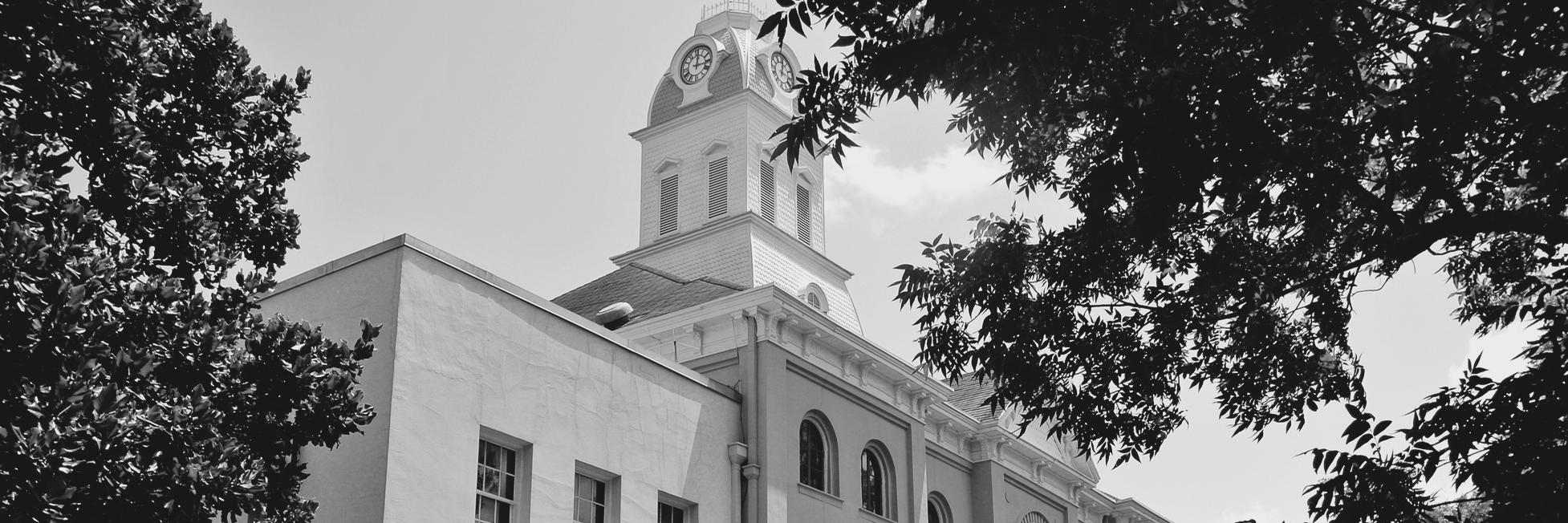
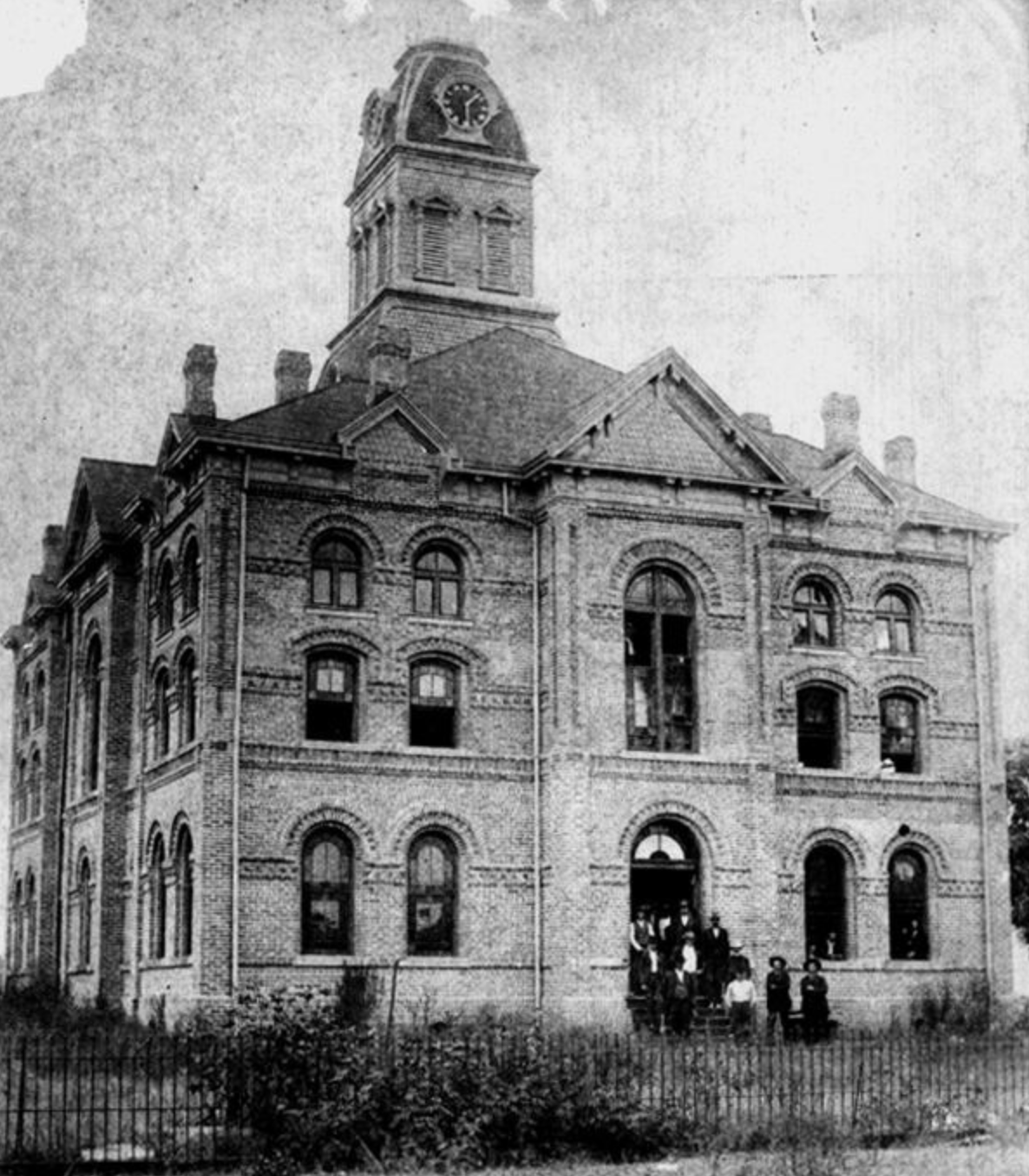
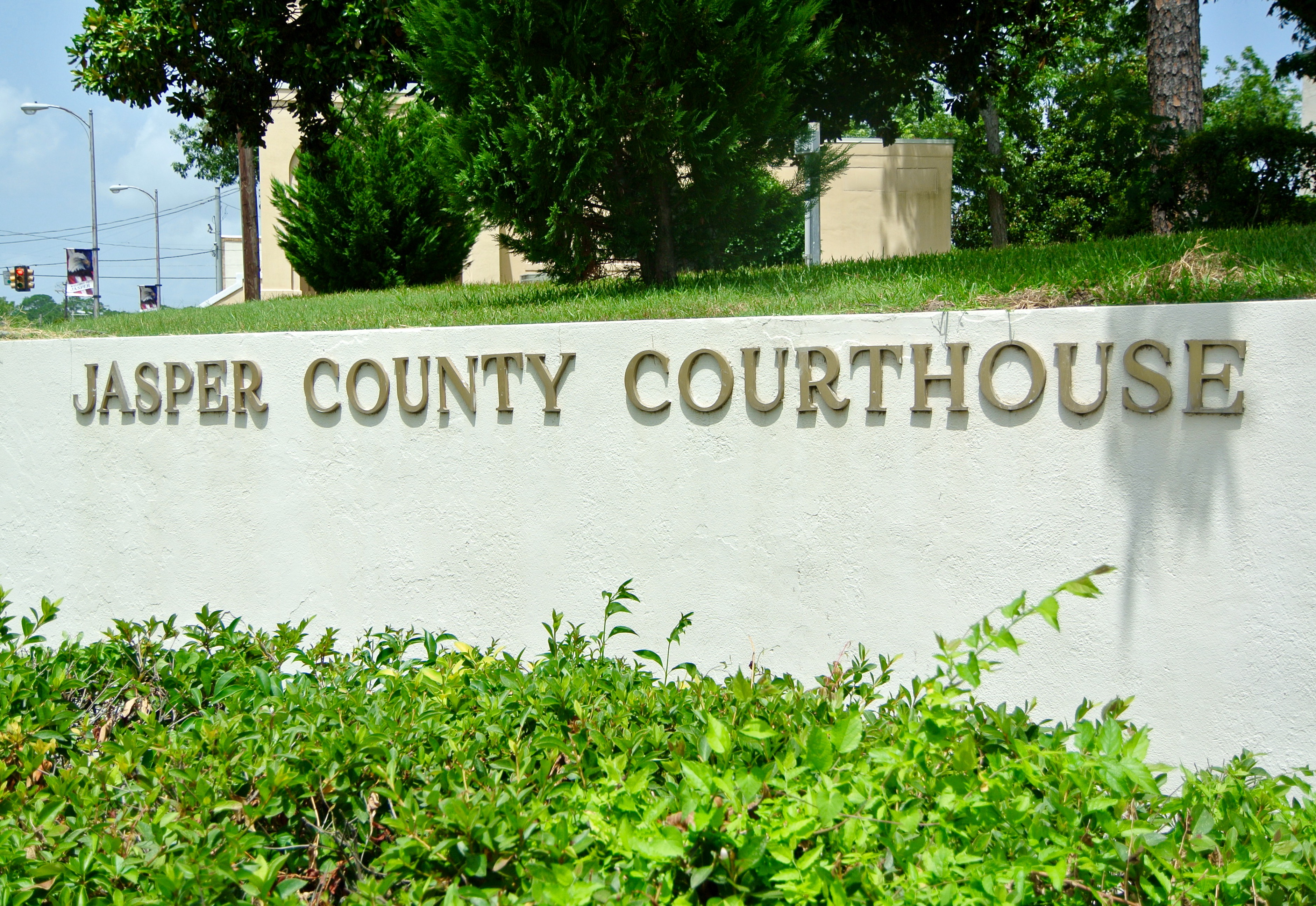
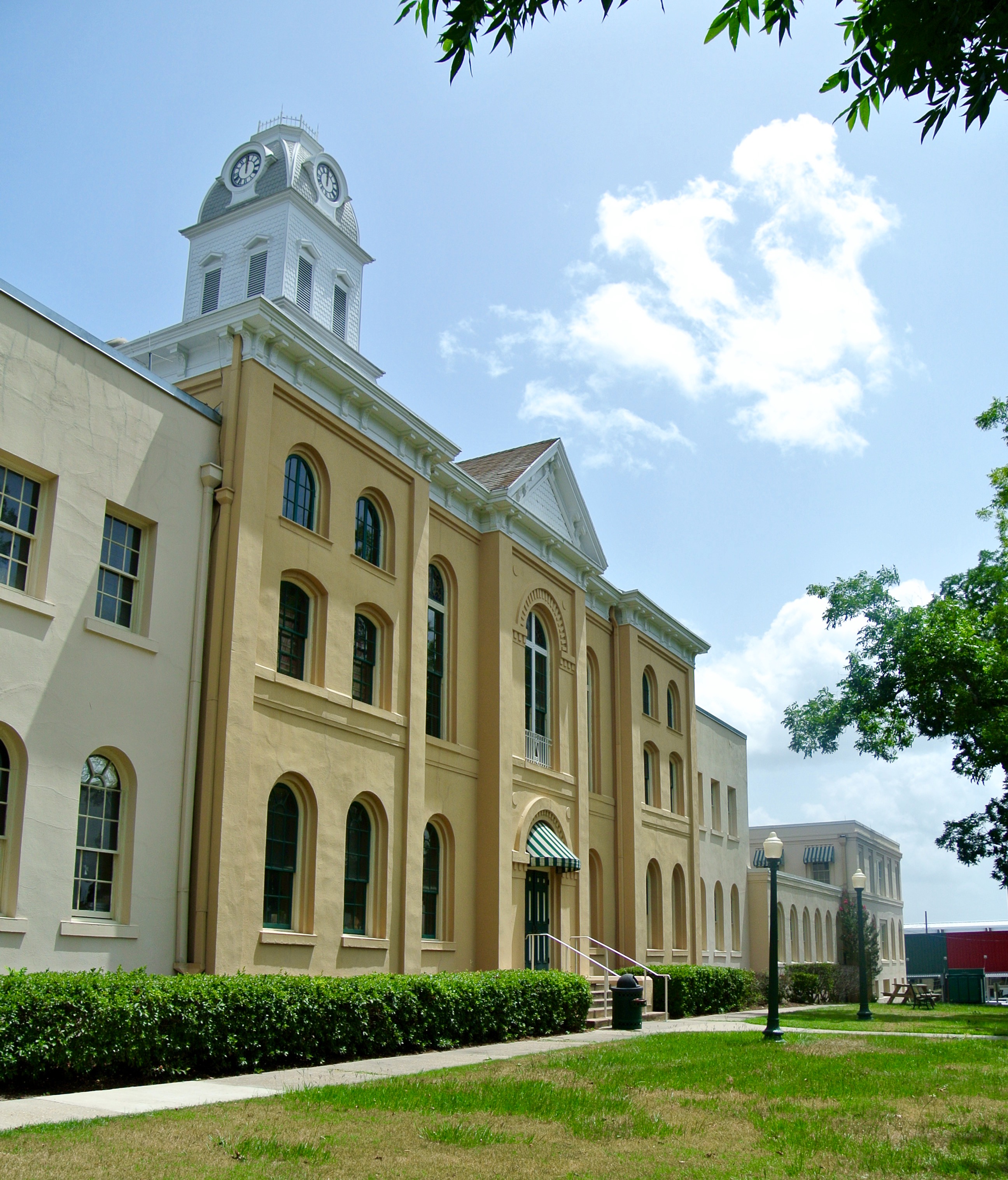
Jasper County Courthouse – 1889
(Photo Courtesy: THC)

(Photo Courtesy: TxDOT)
Succeeding both a log cabin and a small, two-story building, the 1889 courthouse came to life as Jasper County’s third via designs of Eugene T. Heiner.
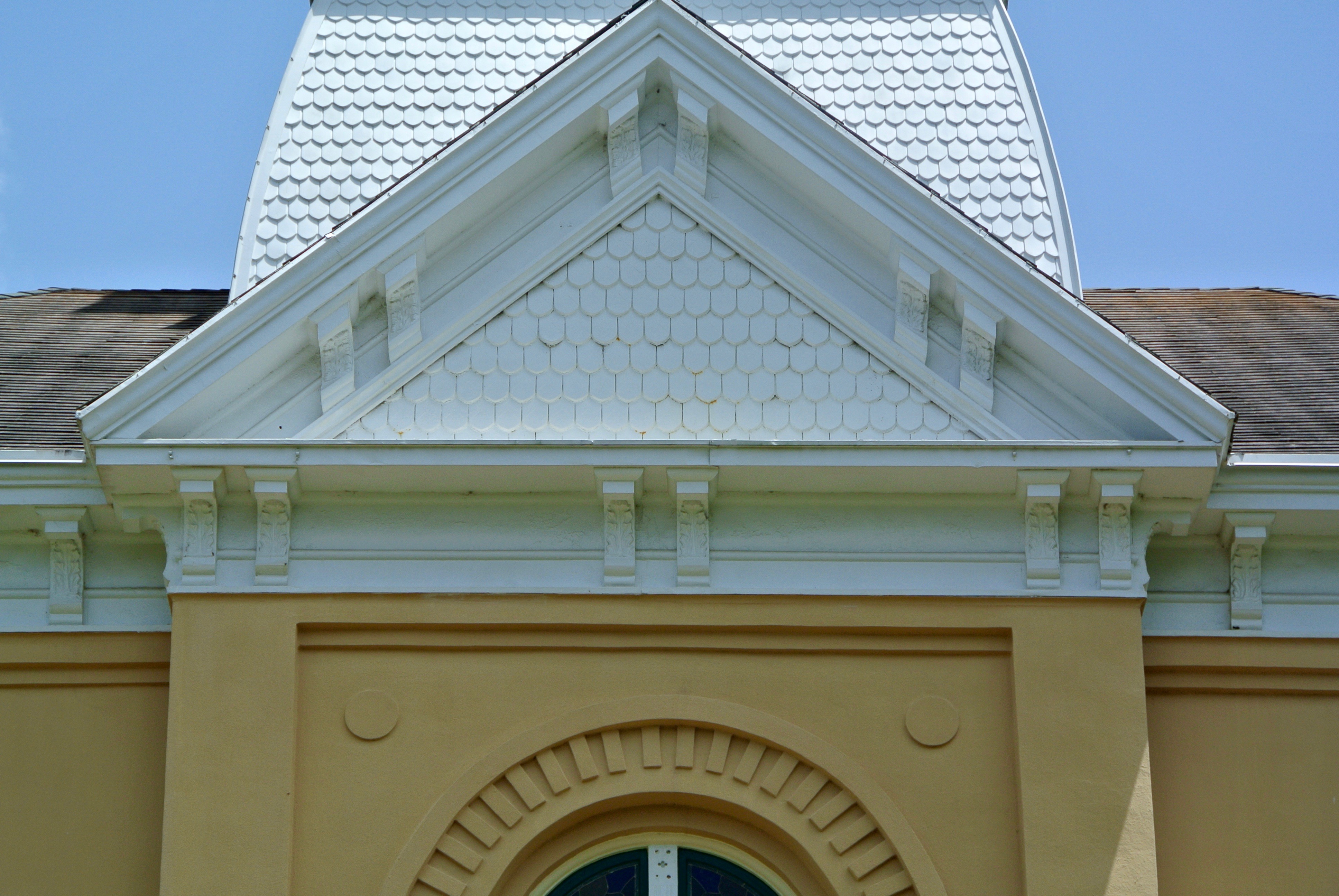
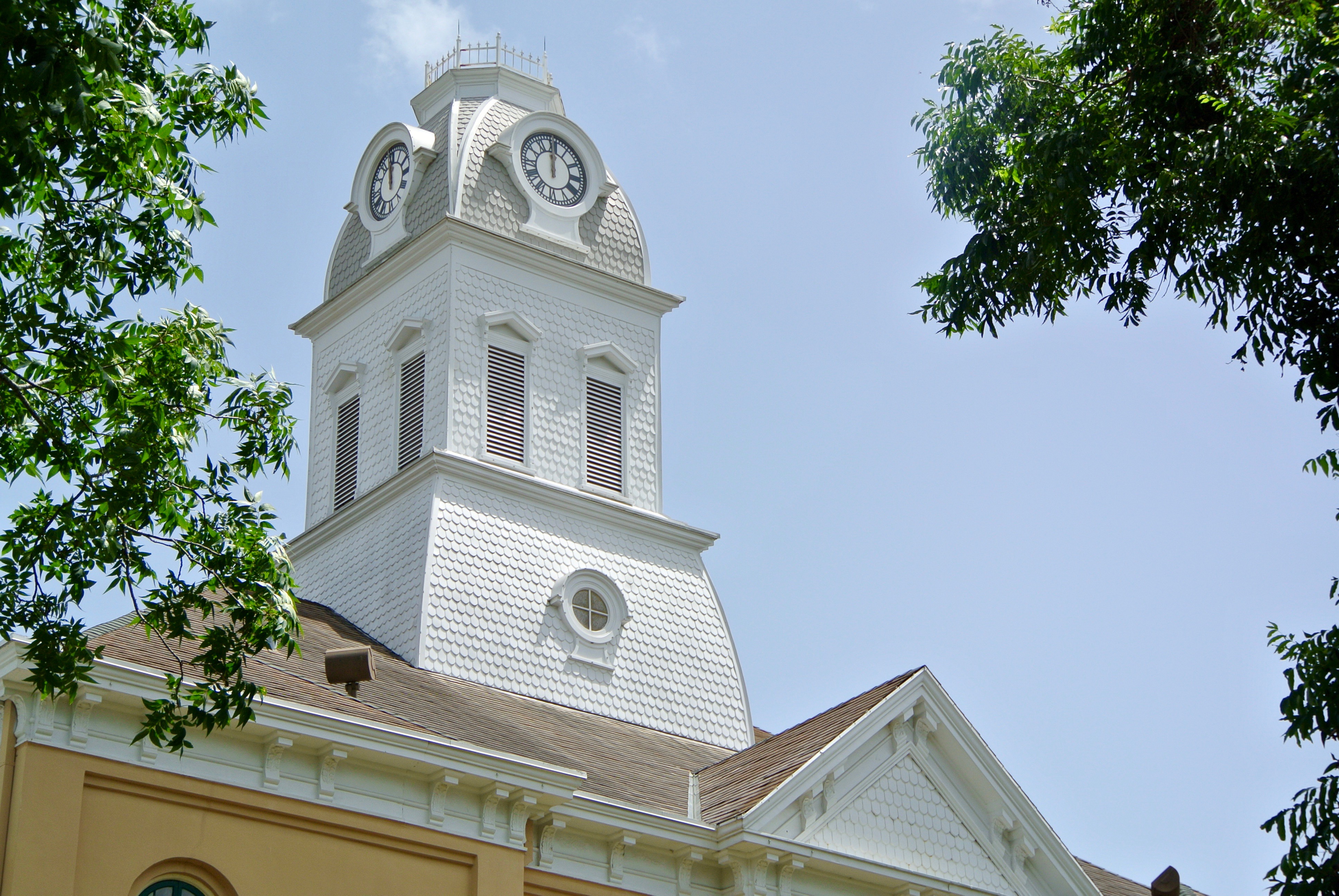
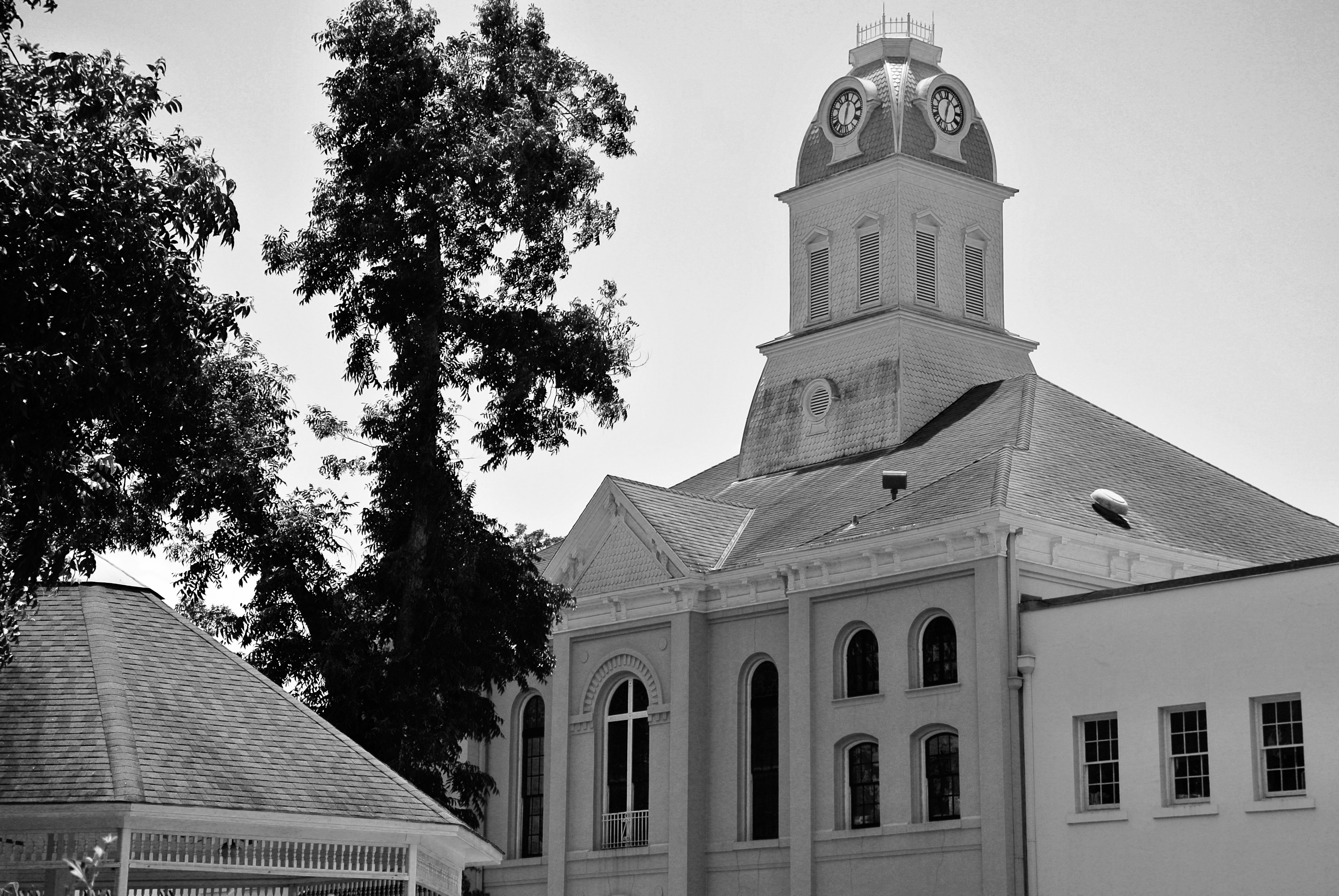
Constructed by locally made red brick, it once held details from the Renaissance Revival and Second Empire styles. However, the years have seen it pass through a series of significant renovations. First, a tower, clock, and bell were added in 1890. Secondly, wings were built on either side of the courthouse in 1931, and the entire building was coated in stucco in 1934. 1940 saw the addition of a Works Progress Administration-built office building adjacent to the main structure, while 1957 saw the removal of the courthouse clocktower. It wasn’t until 1992 that it was reconstructed and returned to the top of the building.
While the courthouse of today still bears signs of Heiner’s work, it does look somewhat different than what he intended.
______________________________________________________________________________________________________________



The Jasper County Courthouse

This is the western entrance (on Main Street).
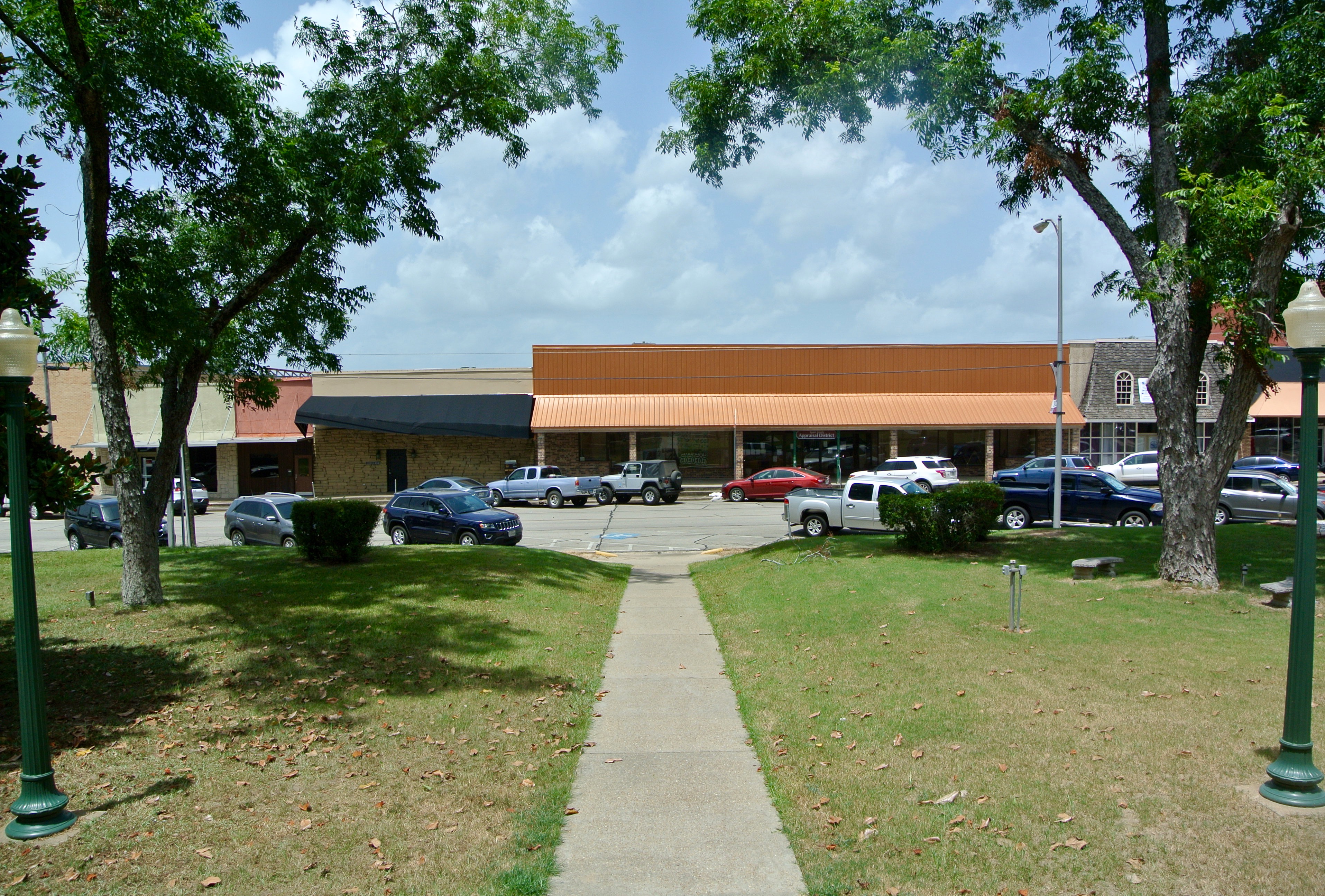 Here’s its view.


The northwest corner


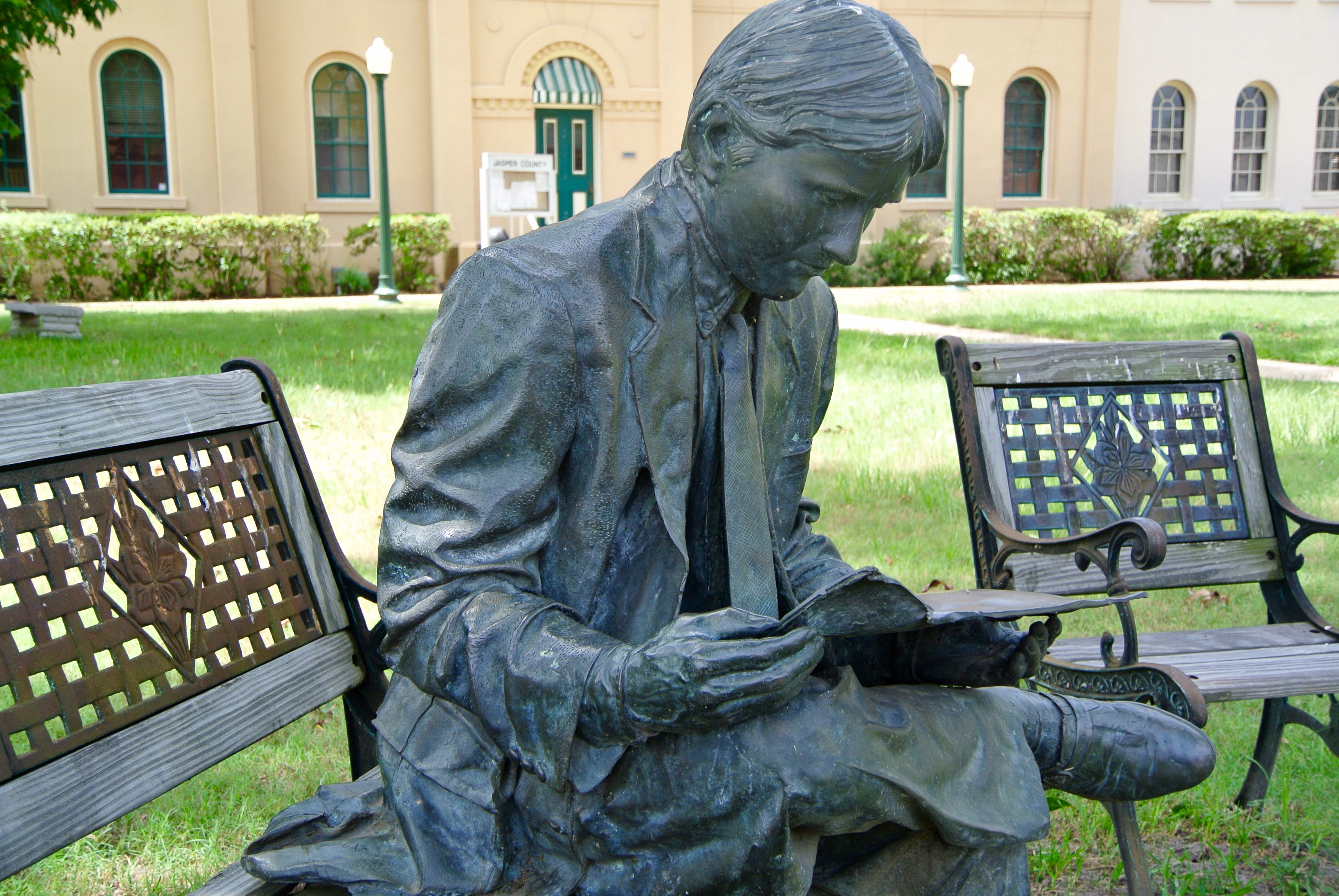
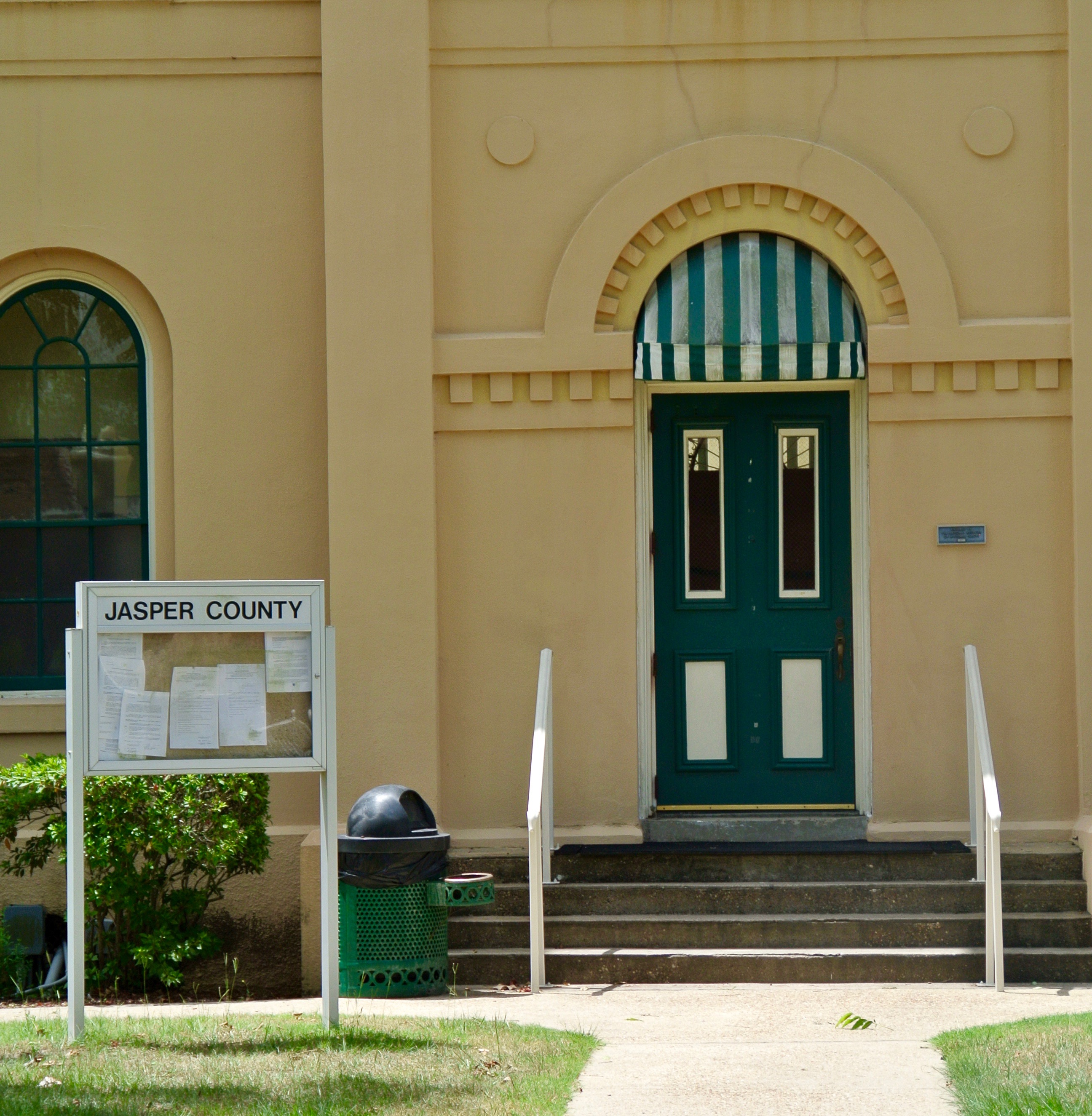


 One of the nearby additions


On the eastern side of the courthouse

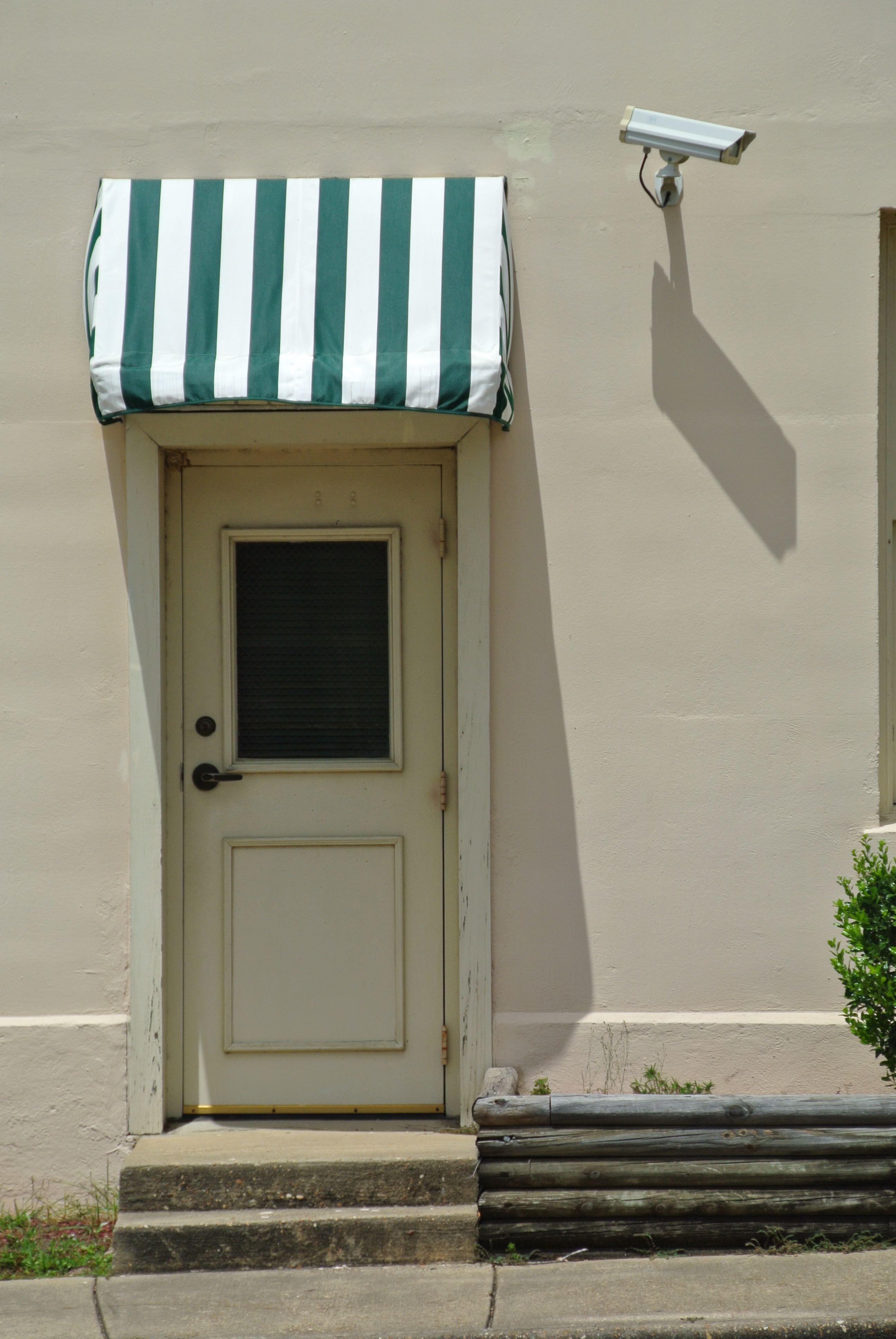


The Jasper County Jail (on the southern side of the property)




These awnings make me think the building is some French bistro, not a center of county justice.

The view from the southern doors




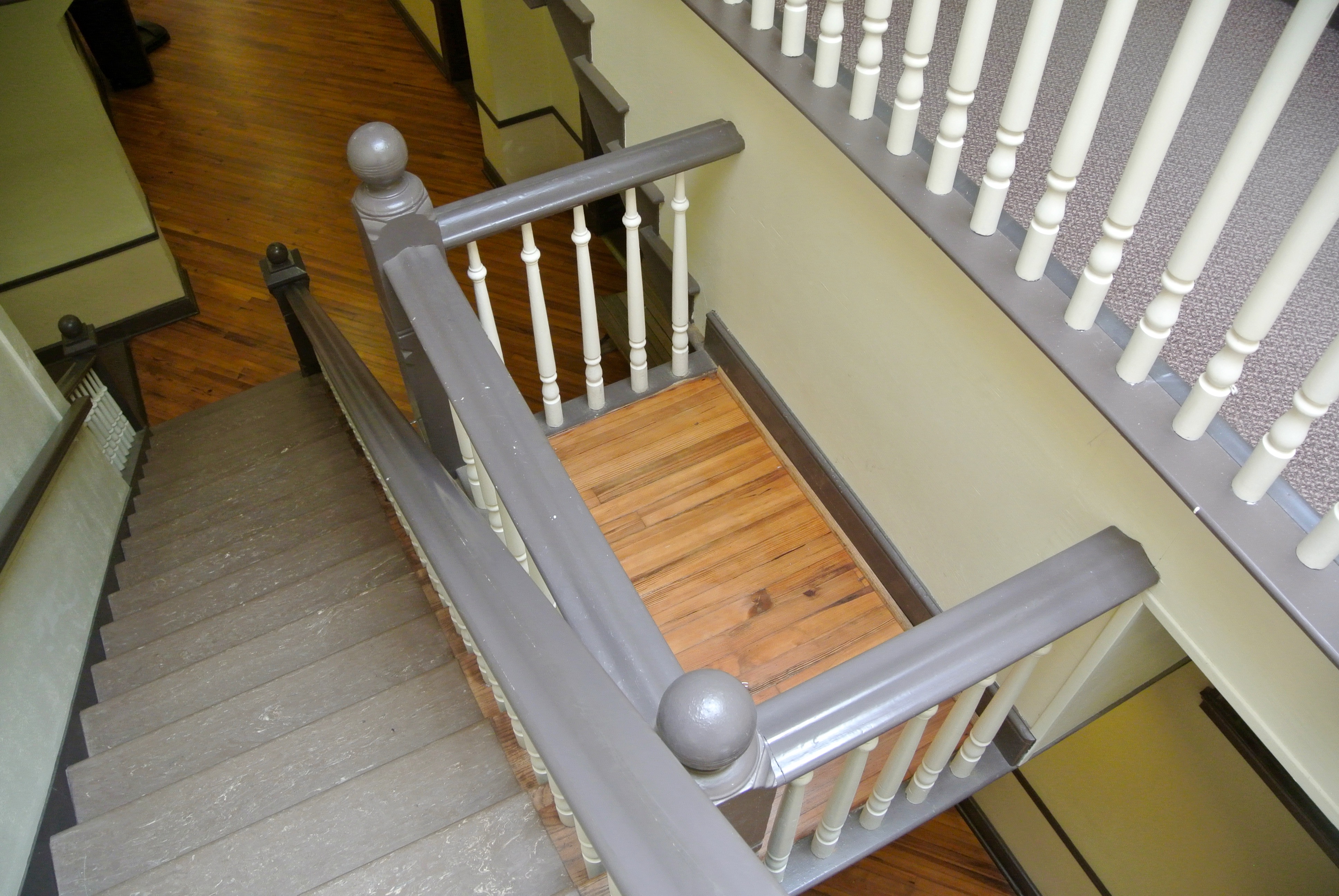
A place for the kids to be put during court?

A seriously dropped ceiling on the second floor
 This is the second floor’s district courtroom.



______________________________________________________________________________________________________________
Jasper & Jasper County
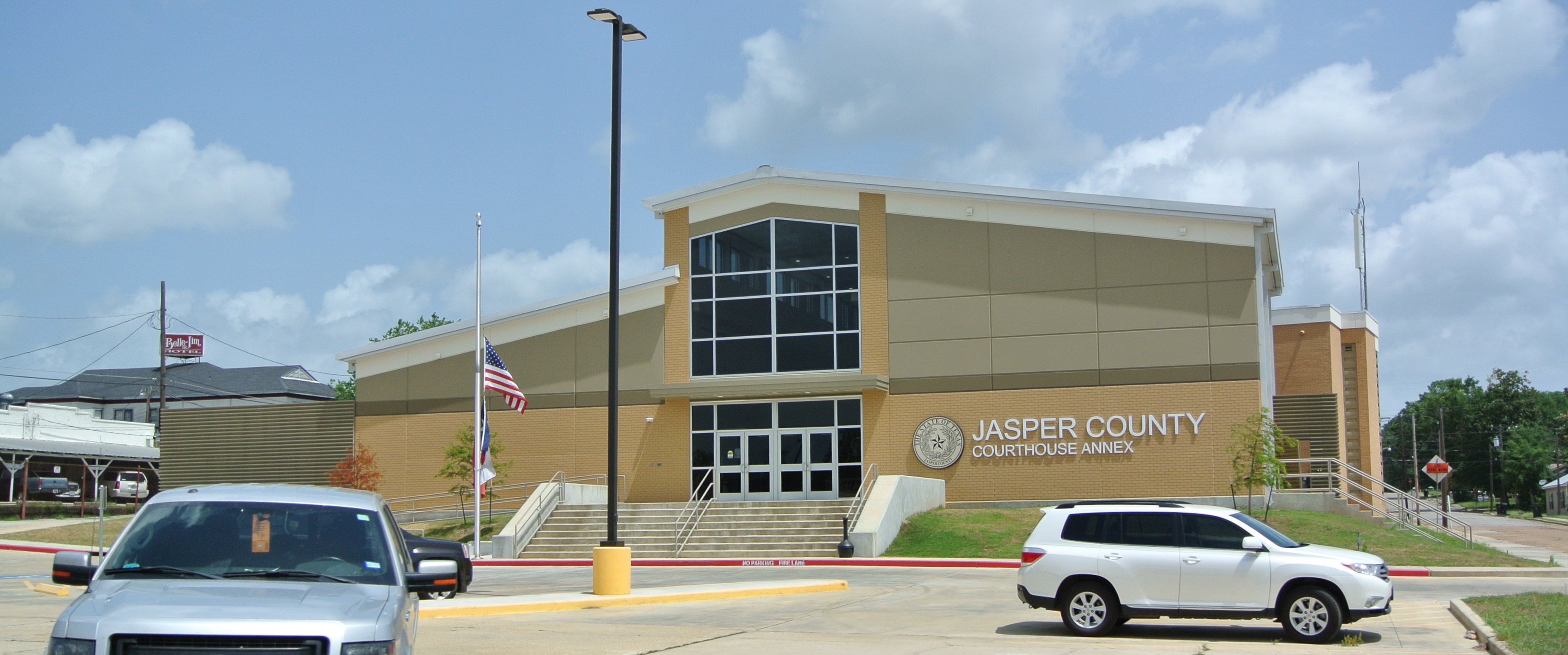
The Courthouse Annex, on Houston Street


 Scenes from the square


Previous Courthouse: Sabine County
Next Courthouse: Newton County