

107/254
“Loving County consists of 671 square miles of flat desert terrain with a few low-rolling hills stretching over calichified bedrock and wash deposits of pebbles, gravel, and sand. The soils of the county-loams, chalk, clays, and sands-support desert shrubs, cacti, range grasses, and salt cedars along the river. Wildlife includes waterfowl, quail, deer, badgers, javelinas, rabbits, bobcats, coyotes, armadillos, skunks, opossums, raccoons, rattlesnakes, killifish, brine shrimp, and turtles. Elevations vary from 2,686 to 3,311 feet above sea level.”
“The county has an immature drainage system made up of hundreds of playas and dry draws that feed into the Pecos only after heavy rainfall. In 1936 Red Bluff Dam was built across the Pecos on the Texas-New Mexico boundary for irrigation and recreation. Water from the Pecos, however, is too saline for drinking, so the 100 residents of the county haul water from a community tank.”
“In the prehistoric era, springs of pure water dotted the landscape and supported nomadic hunters and their prey. Antonio de Espejo crossed the area in 1583, fording the then-mighty Pecos at great risk. In 1854 Capt. John Pope surveyed the area for a railroad route. Convinced that he could drill artesian wells there, he returned in 1855 and located Pope’s Camp fifteen miles east of the mouth of Delaware Creek in northwestern Loving County. After three years of unsuccessful attempts, he and his men abandoned the camp.”
“From 1837 to 1874 the area of Loving County was part of the Bexar land district. In 1874 the Texas legislature separated Tom Green County from the Bexar District. In 1887 Loving County was separated from Tom Green County, but it remained attached to Reeves County for judicial purposes. It was named for Oliver Loving, an early Texas cattleman who was mortally wounded by Indians on the Pecos in the area of the county as he rode in advance of his herd in 1866.”

“Loving County is the only Texas county to be organized twice. The first organization appears to have been a scheme to defraud on the part of the organizers. Early in 1893 six men from Denver, Colorado, organized the Loving Canal and Irrigation Company of Mentone, Texas, with the stated purpose of migrating to isolated Loving County and constructing an irrigation canal from the Pecos to surrounding farmland. Although the 1890 United States census reported a population of only three in Loving County, on June 13, 1893, the organizers of the canal company filed a petition with the Reeves County Commissioners Court signed by 150 allegedly qualified voters who requested separate organization for Loving County. The court approved the petition and allowed the organization of the county. A county election was held on July 8, 1893, eighty-three votes were reported, and county organization was approved. Mentone, a town laid out by the company organizers twelve miles north of the present Mentone, was designated the county seat. Irrigation company organizers and several nonresidents were elected to county offices.”
“Subsequently, several families came to live in or near Mentone, probably intending to buy irrigated farmland. A general store and several adobe houses were built there. The Loving County Commissioners Court voted to issue bonds valued at $6,000 to build a courthouse in Mentone. Although construction began, the building was never finished. In August 1893 the Pecos flooded and destroyed the work that had been done on the irrigation project. With no hope for crop harvests, the few settlers left the area.”
“Although the company organizers failed at promotion of irrigated land, they retained control of county government. On September 6, 1893, the county commissioners reportedly appointed County Judge J. J. Combs as agent of the county to locate and acquire patents for county public school lands. Combs chose four leagues in Dawson and Gaines counties, and the county received the patents on February 9, 1894. The commissioners’ court authorized Combs to sell the four leagues on February 19, 1894, and he sold them two days later. He conveyed one tract, League 271, to W. R. Fowler in exchange for a promissory note in the amount of $3,099.60, due five years later.”
“In the spring of 1894 H. C. Withers and A. H. Randolph made a trip to Loving County to investigate reports of the illegal county organization for the firm of W. H. Abrams of New York, which represented a large Loving County landowner. They found three people in Mentone. When Withers asked to examine the tax-levy records, sheriff and tax collector W. A. Hunter told him that county clerk R. G. Munn had taken the records to Denver. Loving County reportedly held a second election of county officials on November 8, 1894, and the organizers and nonresidents were reelected to office. There is evidence that neither of the Loving County elections was legitimate. By 1897 the county officials fled the area.”
“Taxes were not collected for 1893 and 1894 and had not been assessed or collected for 1895 and 1896. County government was chaotic, and the state legislature deorganized Loving County on May 12, 1897, reattaching it to Reeves County. The Reeves County Commissioners Court taxed Loving County landowners to pay off the county debt.”
“After Mentone was abandoned in 1897, no town existed in Loving County. The 1900 census reported a county population of eleven females and twenty-two males, all white. By 1910 the population grew to 248 whites and one black, after a legitimate land and irrigation promotion established a settlement, called Juanita, in the southwestern corner of the county. The settlement, which was renamed Porterville in 1910, had a post office, several businesses, and the first school and church in the county. Although Juanita had an estimated population of 100 in 1909, a drought, compounded by the failure of irrigation systems, reduced that number to sixty by 1914.”
“Early in 1921 J. J. Wheat and Bladen Ramsey organized the Toyah-Bell Oil Company and leased acreage for drilling on the Russell Ranch. The company spudded the Russell No.1 in the summer and brought in the first producer of the county late in 1921. Although production from this well was short-lived, real commercial production was found in the Pecos Valley Petroleum Company Wheat No.1 on September 1, 1925. This well led to the development of the Wheat oilfield, which attained its maximum production in 1931 with 1,233,801 barrels, and to the discovery of other fields.”
“Oil activity in the county increased the population to 195–76 women and 119 men, all white-by 1930. The larger population produced the town of Ramsey and led to the second organization of Loving County in 1931. Ramsey was renamed Mentone and became the county seat. By 1933 several oil camps were built in the county, and the population reached a record of 600. In 1939 Mentone reported a population of 150 and twelve businesses. The census of 1940 listed a county population of 282 whites and 3 Hispanics.”
“In 1950 the residents numbered 225 whites, one black, and one Hispanic. In 1960 the county reported 216 whites and ten blacks. In 1970 the population had fallen to seventy-three, all white. The county closed its school system in 1972 because only two students were enrolled and its cost was $146,000 a year; the students were transferred to Winkler County. In 1980 there were fifty-nine whites and thirty-two Hispanics in the county; the median age was 45.3 years. Fifty residents had received four years of high school, and there were four college graduates.”
“At the end of 1989 the estimated population increased slightly to 100, but prospects for future development remained slim. In the summer of 1988 the county piped drinking water to a 500-gallon tank in Mentone for use by residents. Loving County and Mentone remained generally undeveloped because the land was mostly held by absentee owners, because good water was scarce, because cattle grazing made the best use of the unimproved arid surface, and because oil and gas income from the subsurface obviated the need for highly productive surface use.”
“As of 2014, the population of the county was 86. About 78.9 percent was Anglo and 17.9 percent Hispanic. At the end of the 1980s Loving County had no economic farming or manufacturing. The economy was based on oil and gas production; in 1986 crude oil production was more than 1.7 million barrels, gas-well gas totaled 42.3 billion cubic feet, and casinghead gas production was 3.9 billion cubic feet. Although petroleum gave the small population of Loving County the highest per-capita income of all United States counties ($34,173), the area was isolated and undeveloped.”
- Handbook of Texas Online, Julia Cauble Smith, “Loving County”
Of Some Note:
Loving County’s latest census count (2010) noted a population of 82, making it the least-populated county in the entire United States. Mentone last cited a population of 19 and is the second least-populated, unincorporated county seat in America behind Gann Valley, South Dakota (14).
I’ve always been fascinated by Mentone and what life must be like there. There’s an excellent quote from a 1997 Texas Monthly article that sums up the area nicely: “Out where the radio signals fade to static, past where the telephone poles and speed limit signs end, lies one of the loneliest spots on earth: Loving County, where the oil wells outnumber the people ten to one.”
This is the definitive ‘Wild West’, archetypal wilderness out-of-staters like to conjure up in their imaginations when someone asks them to describe what Texas looks like. Loving County is deserted by every sense of the word. There is no infrastructure but the eighteen wheeler-dominated roads and other than Mentone, there’s nothing but sandy soil, plains grass, and a patchwork of natural gas drilling sites and oil derricks.
The tiny community is all that distinguishes this lonely place from a county where people live and a corporate-owned wasteland. It’s a land of unparalleled emptiness and rarely duplicated isolation. The sparse number of school-age kids are shipped off on an early morning bus to Wink in Winkler County (about thirty miles away), sustainable water is artificially hauled in, and all common city services (banks, doctors offices, hospitals, lawyers, a newspaper, etc.) simply don’t exist. Folks can’t even die in Mentone without getting buried somewhere else. There’s no cemetery.
It’s a fascinating place that I would encourage anyone passing through to investigate further. After all, I might never have come here if not for the courthouse that forms a large part of what I affectionally call the “Mentone skyline” (the courthouse, its annex, the gas station, a church, water tower, and few more buildings). This town is one in a million.
I was the guest of Mentone and Loving County on August 13, 2013 and returned to rephotograph the courthouse on July 4, 2015.
______________________________________________________________________________________________________________
Loving County Courthouse – 1935

(Photo Courtesy: THC)

(Photo Courtesy: TxDOT)
Loving County residents built their first courthouse in 1931, but there are neither sufficient records nor photographs to capture its mark on history.
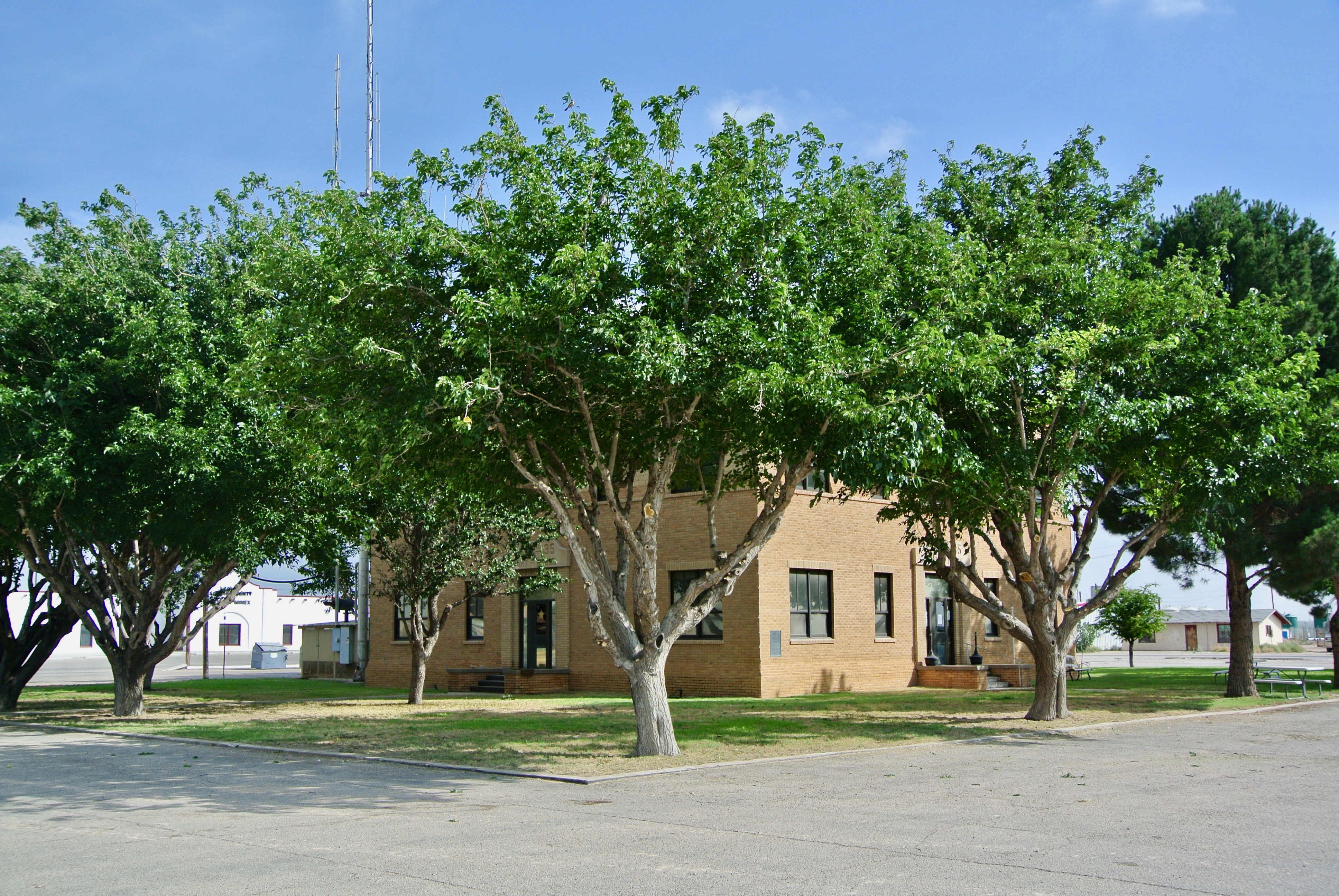
Instead, the courthouse register picks up in 1935. That year, a local architect named Evan J. Wood (from Pecos) designed a simple, brick courthouse to reflect its relatively simple community. While ultimately classified as a Moderne building, Loving County’s courthouse’s near orange color and distinct, almost cubical shape make it stand apart from the pack. Such is fitting for the only two-story building in Loving County.
______________________________________________________________________________________________________________


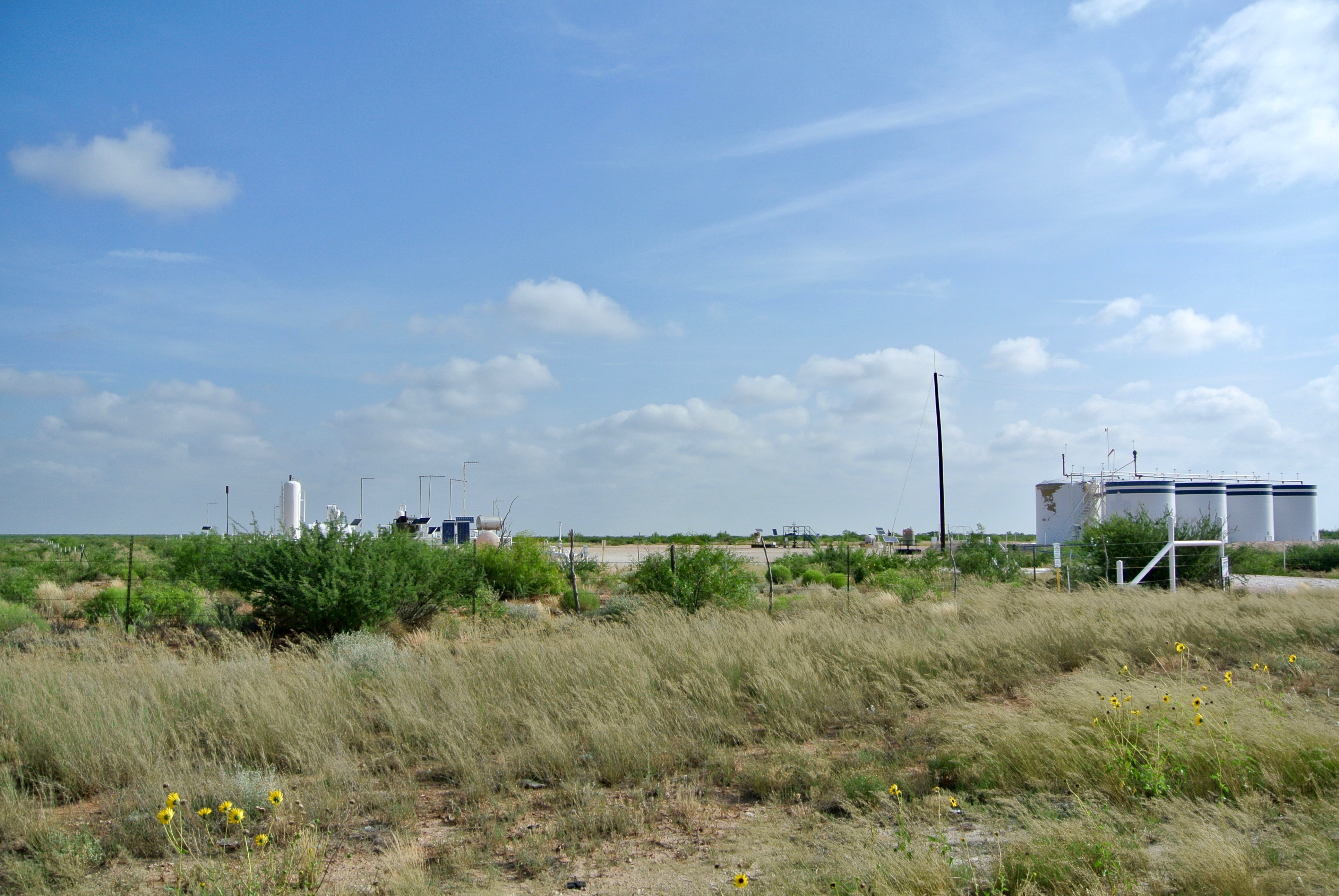
These are the only sights to be seen on the long road to Mentone.

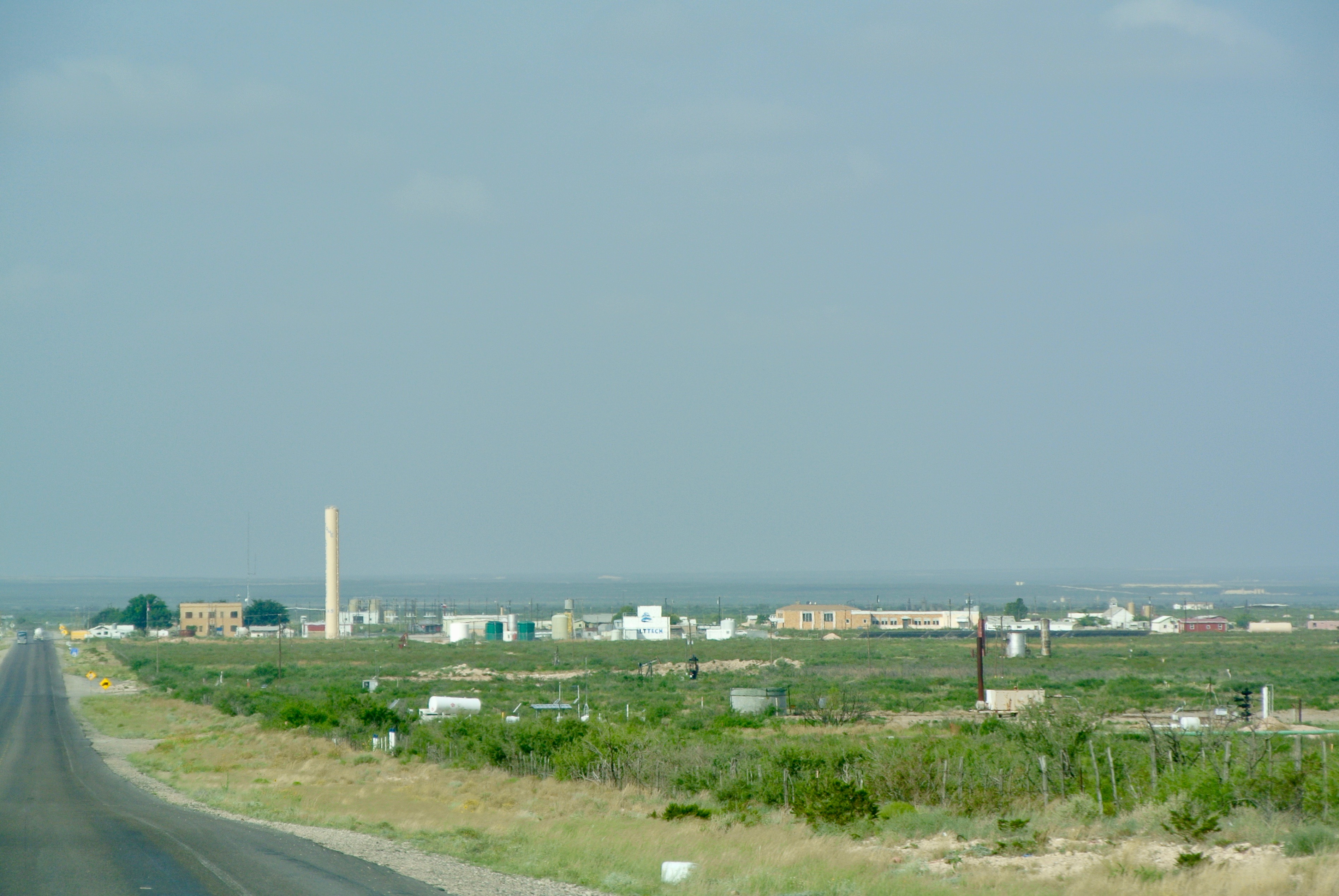
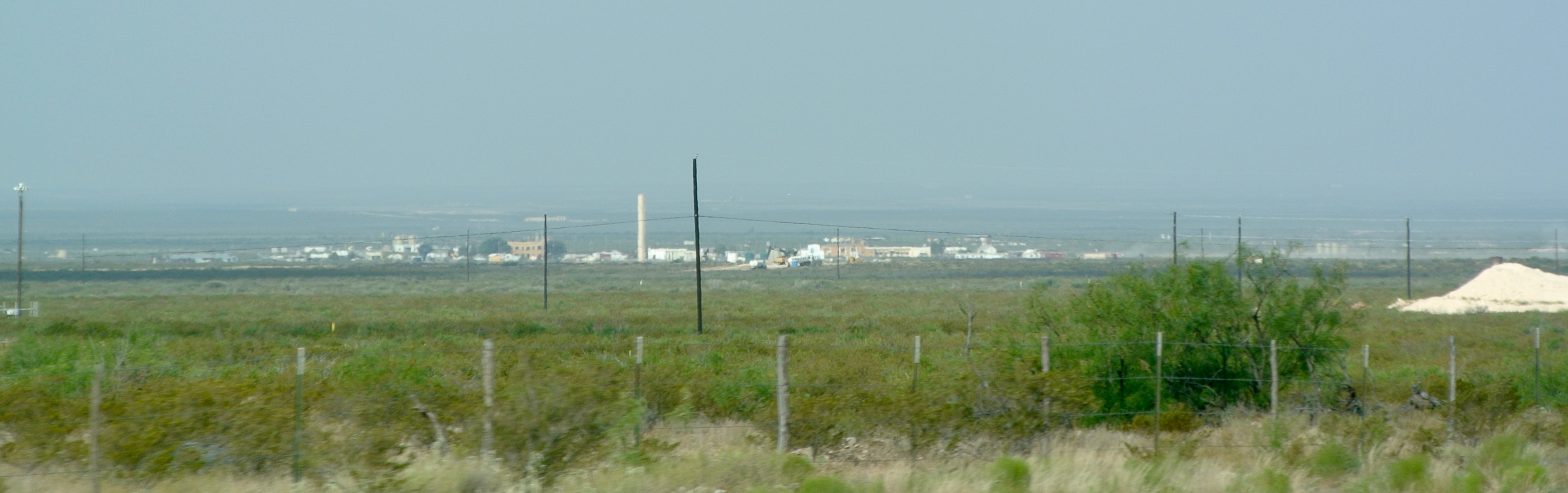 The Mentone Skyline

The Loving County Courthouse: a quaint roadside find on TX-302.


 It’s hard to believe anything’s out this far.
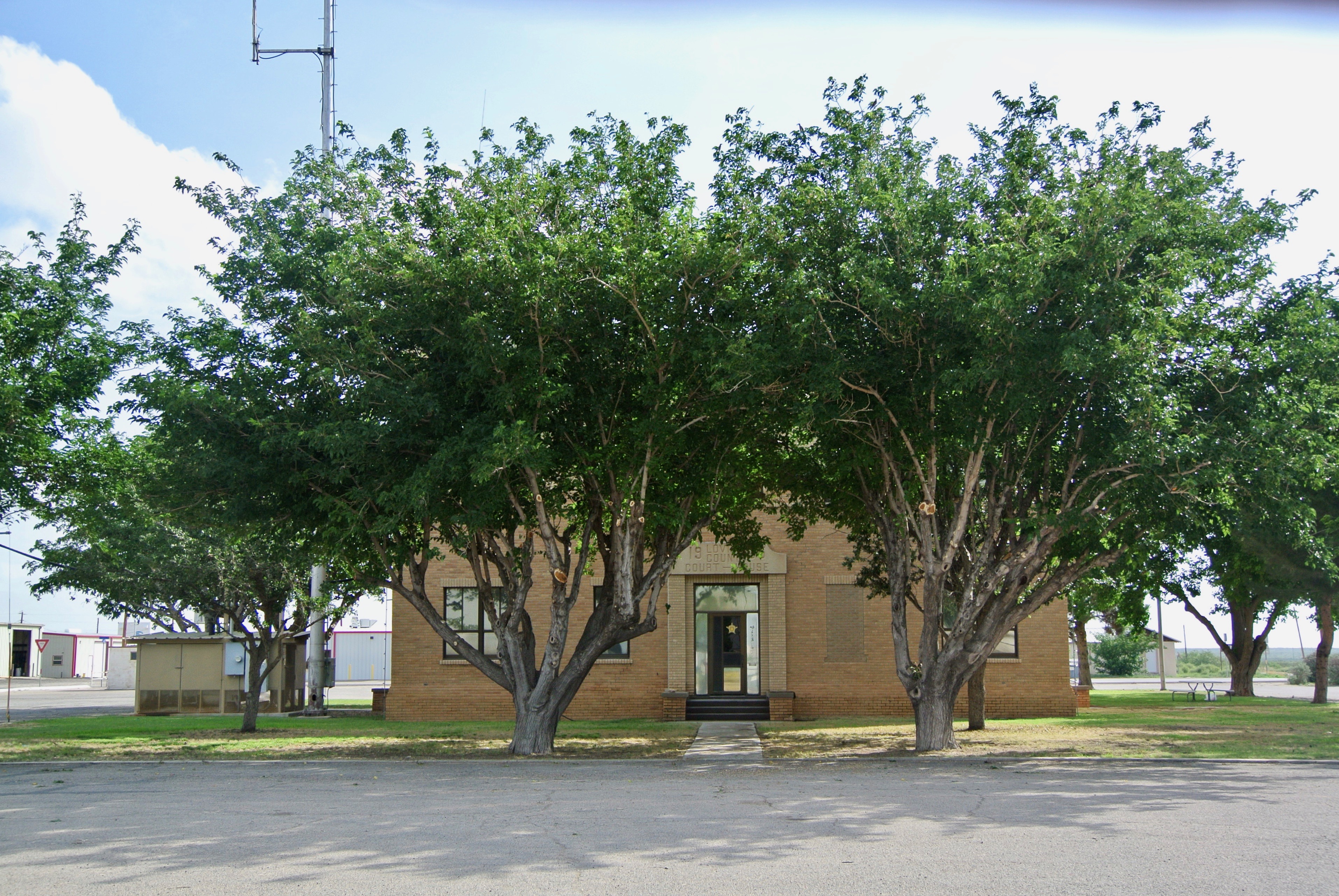
This is the southwest façade on Pecos Street.


And this is its view.
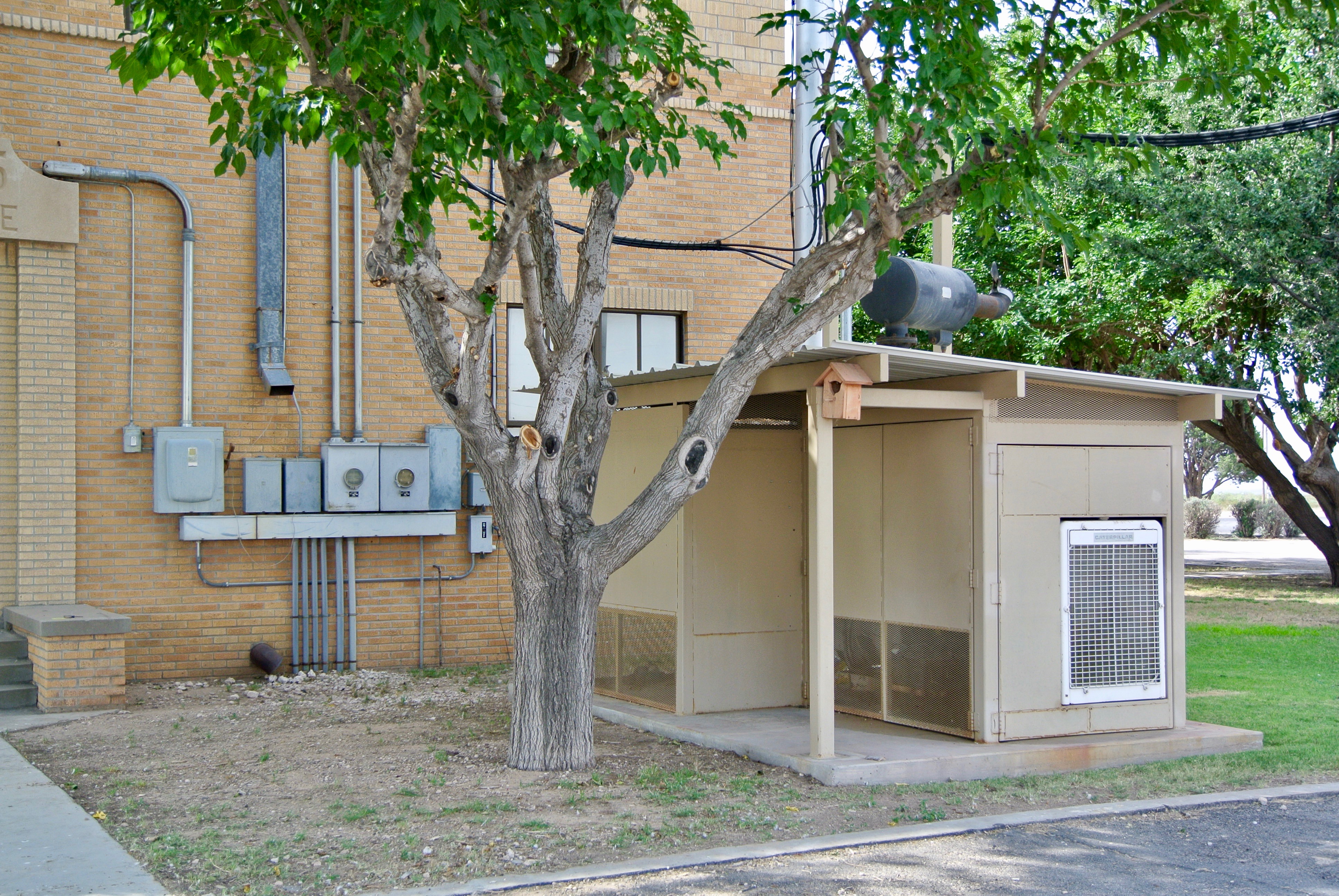 Things aren’t as picturesque around the courthouse’s backside, aside from the birdhouse.
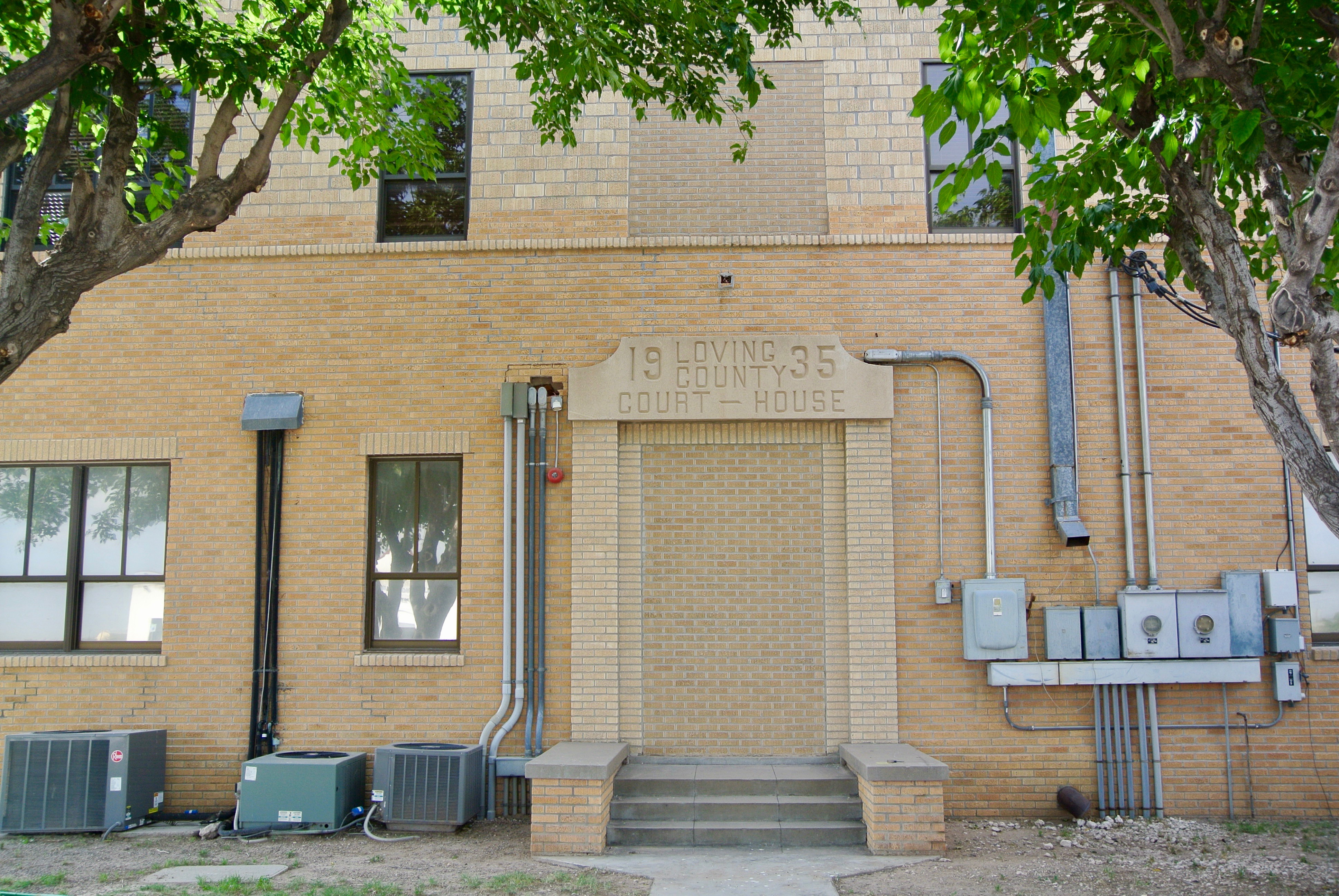 At some point in history, the need for more office space trumped the need for a back door.
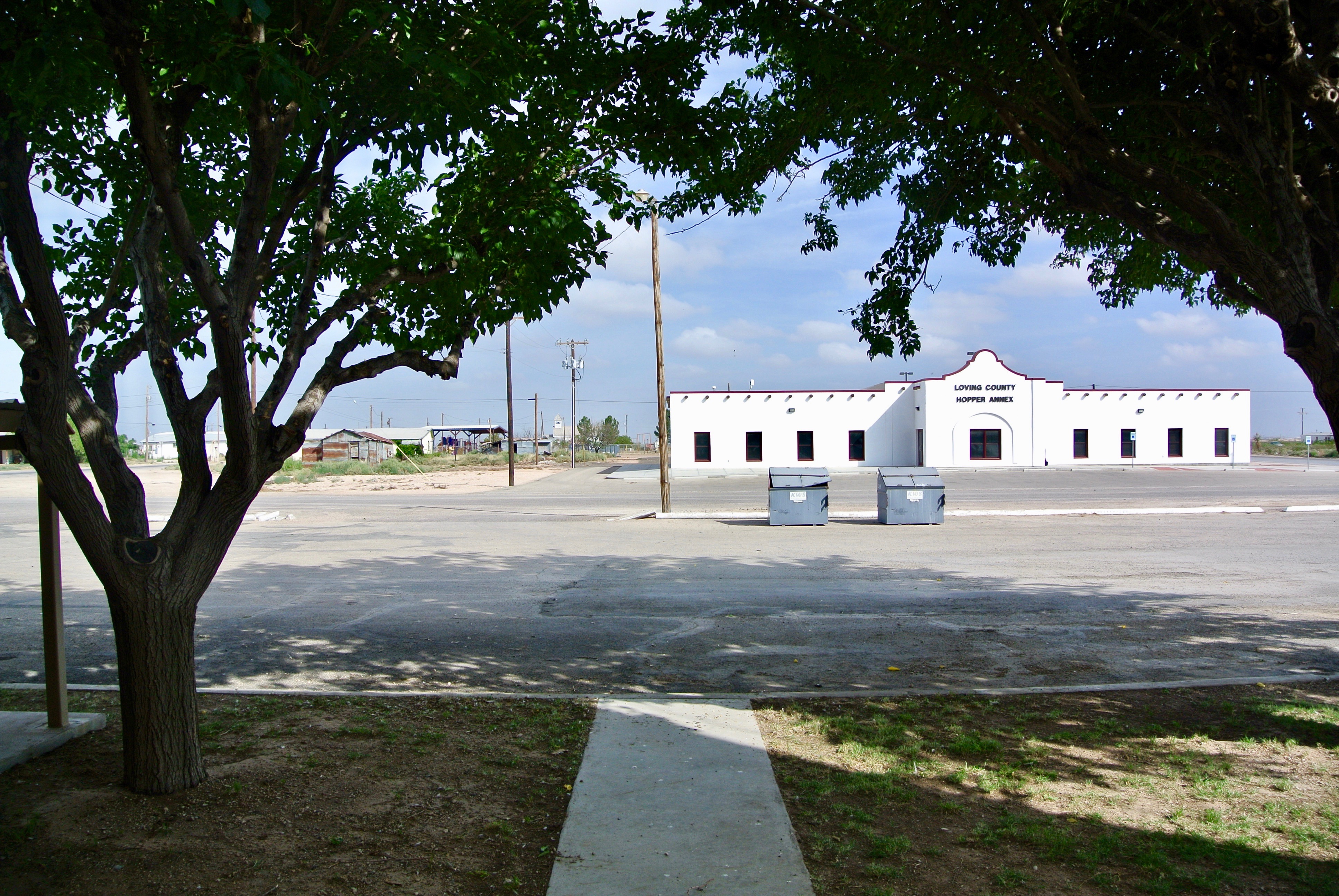 This would have been its view if it still existed. That’s Collins Street.

The western corner, at the intersection of Pecos and Collins





This façade faces northeast on Dallas Street.

 Mentone’s Dallas Street is, needless to say, a long way from Big D.


 Just inside the main (southeast) entrance
 Here’s the view from those doors. TX-302 is the main highway through these parts.


______________________________________________________________________________________________________________
Scenes from Mentone
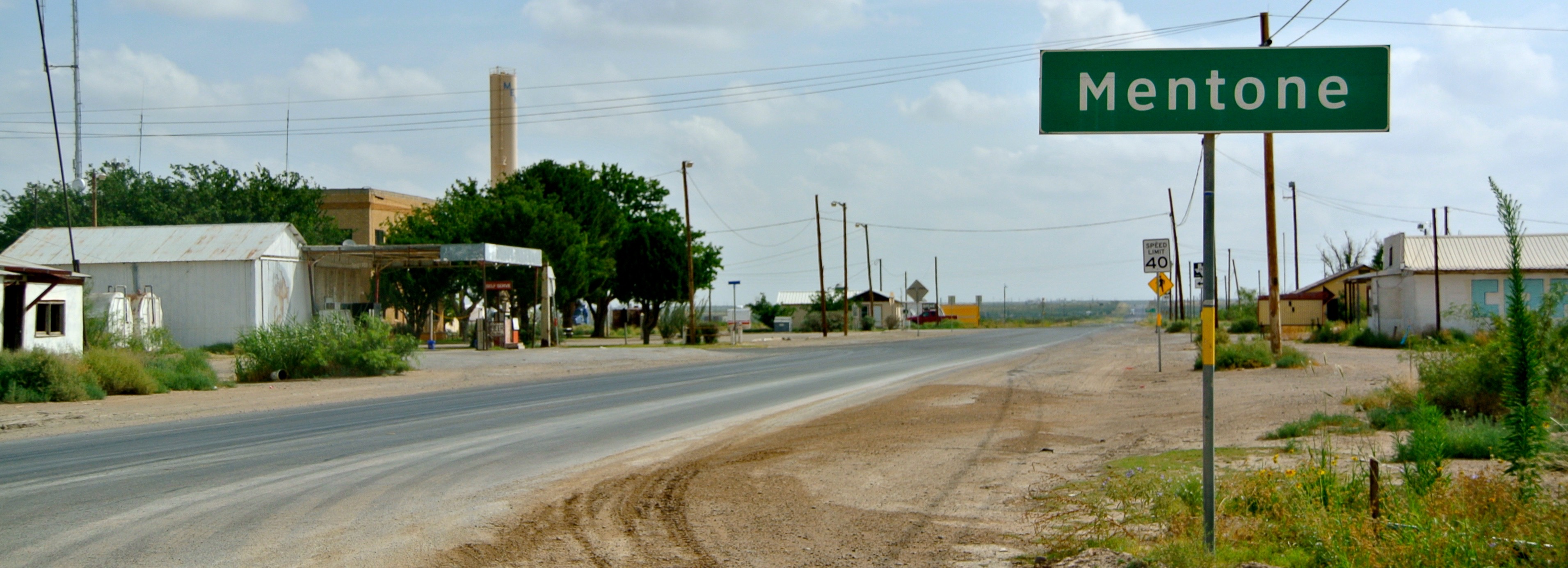
 What entering a town of 19 people looks like
 “Where the Streets Have No Name”

No, they have names. At least some of them do, anyway.
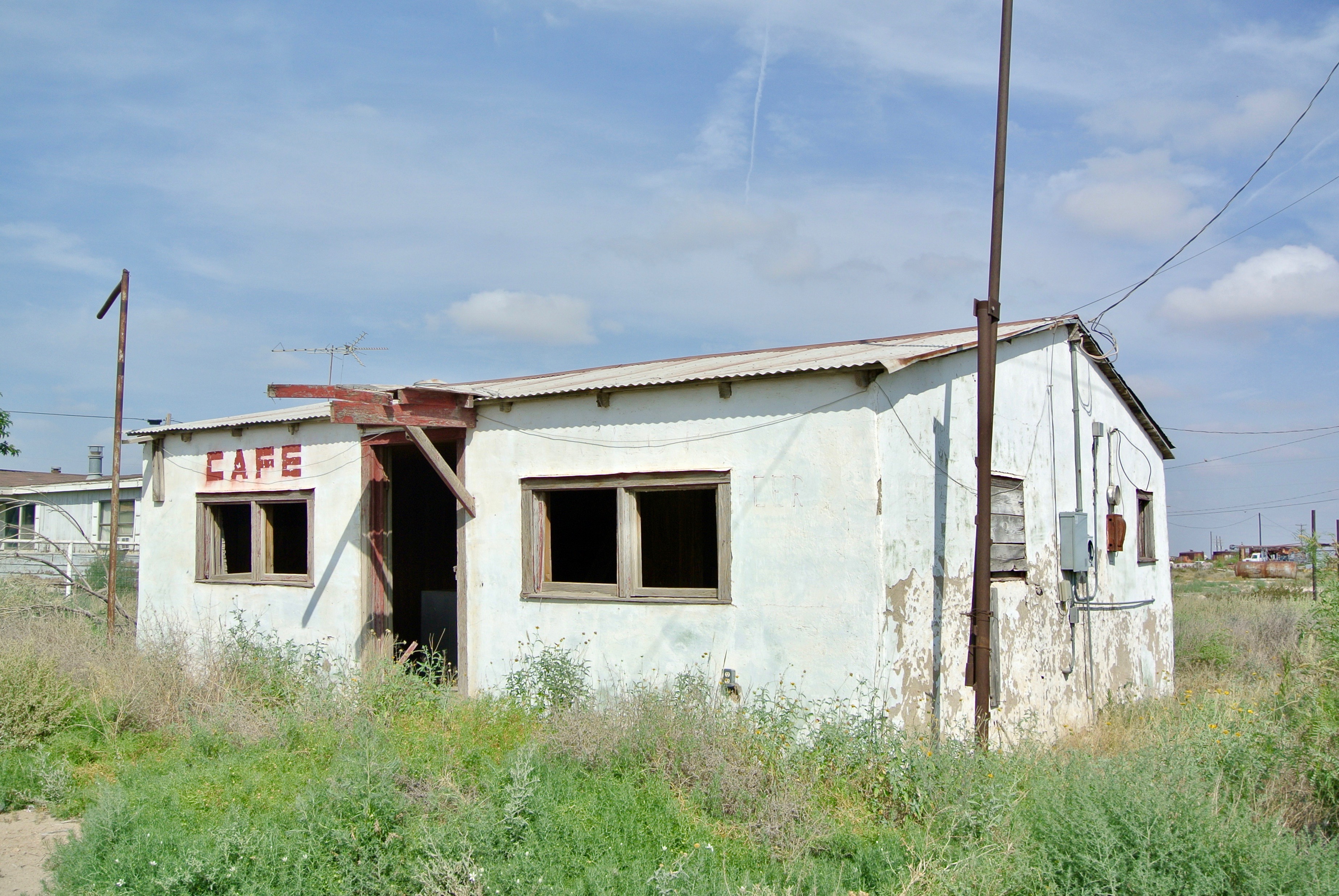
Life seems to have just passed Mentone by.
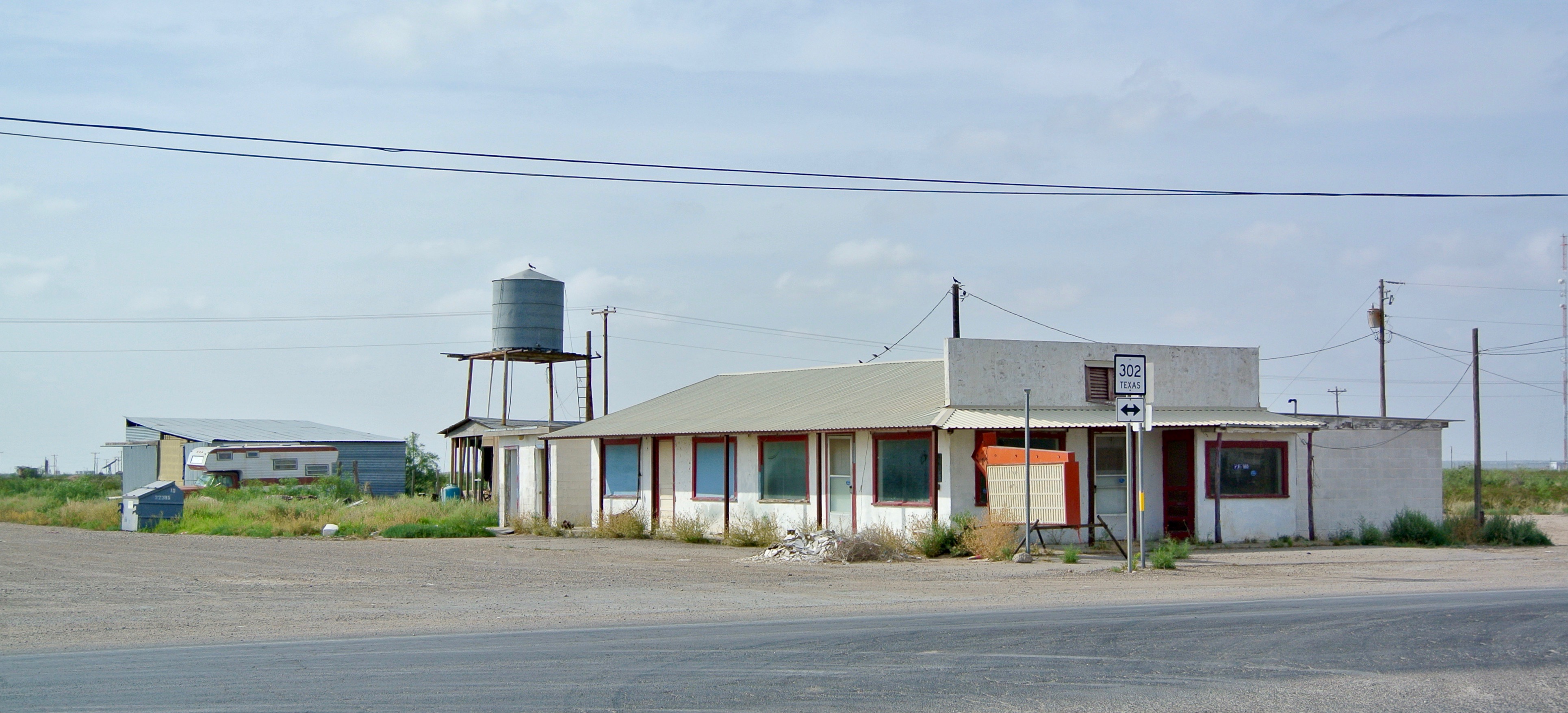

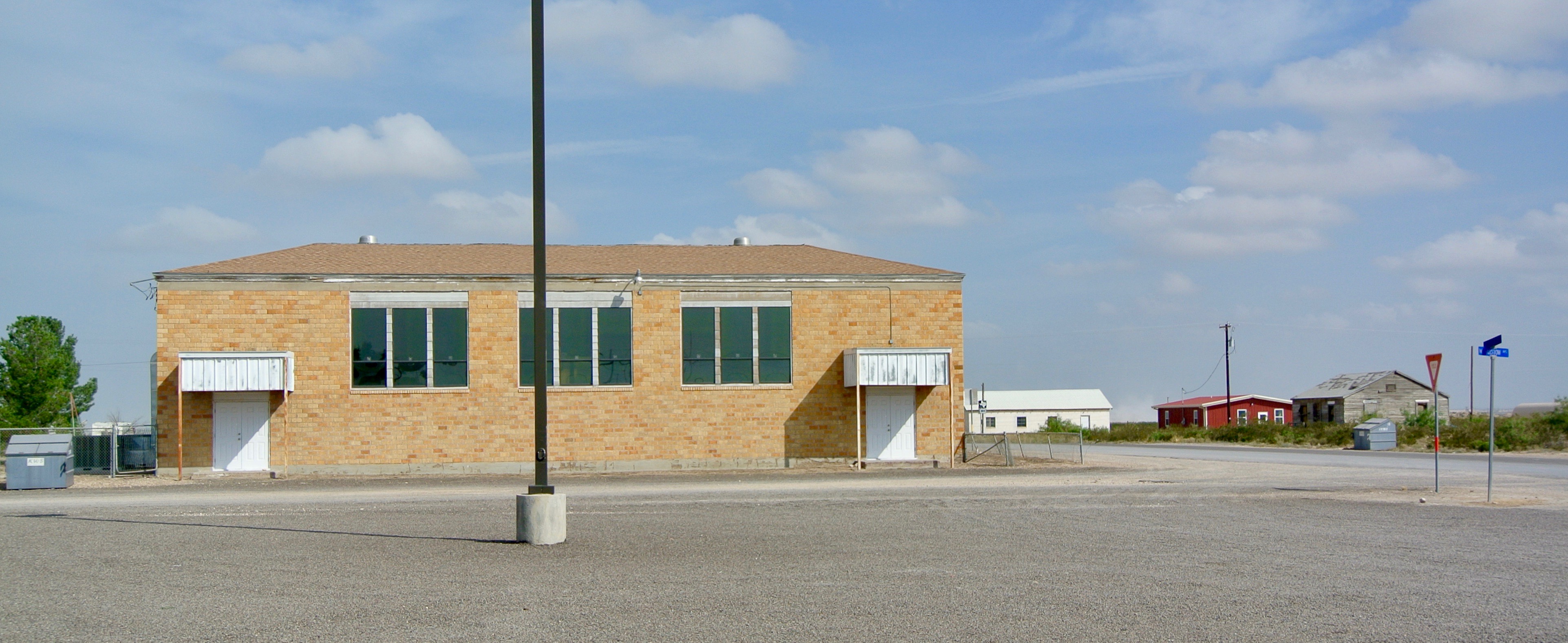


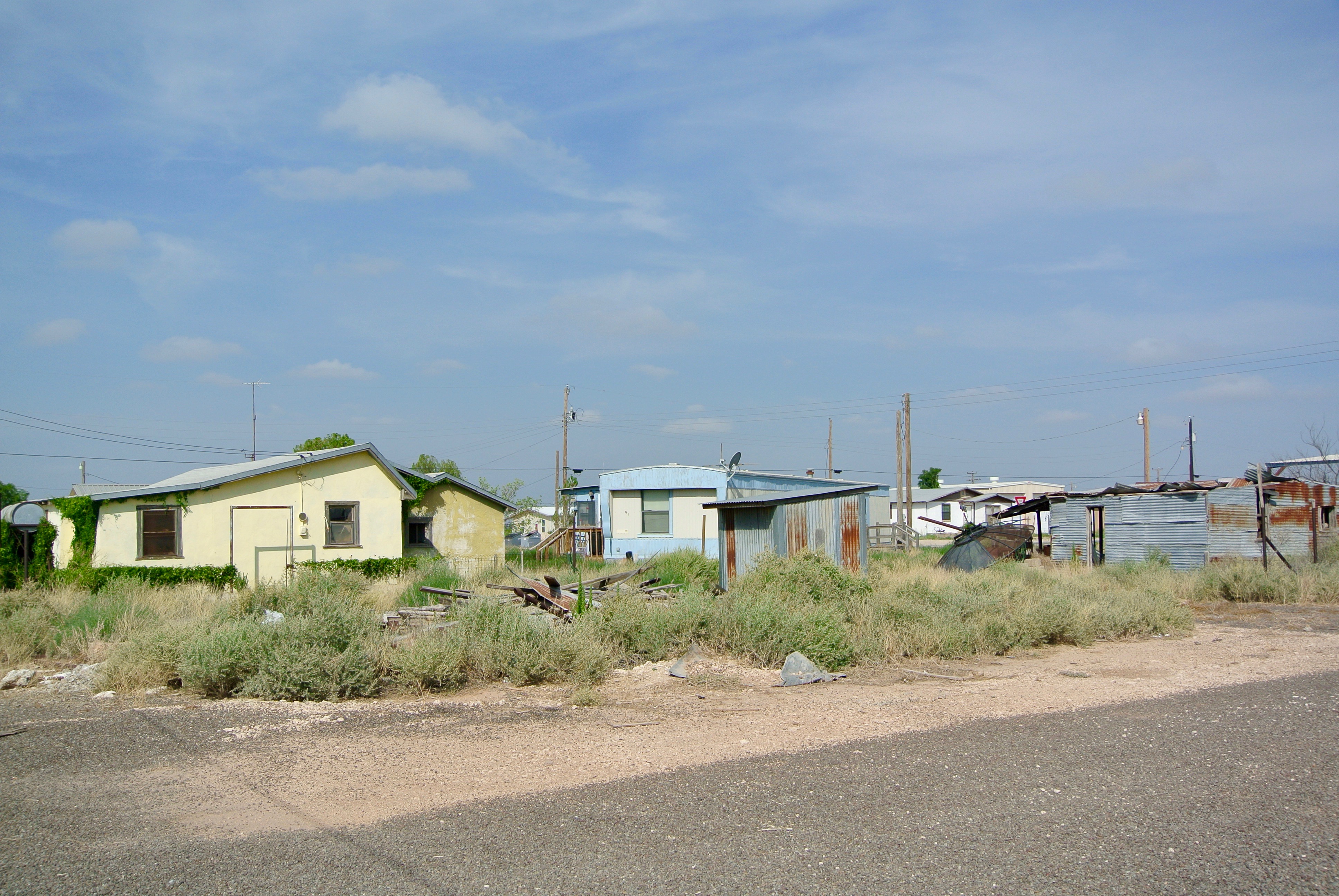

With no water to spare on a pool, this is how Mentone kids beat the heat.

 Mentone’s church is the oldest building in Loving County, a relic transported from Porterville when it became a ghost town.


 The Hopper Annex, named after longtime Sheriff Hopper, became the county’s solution to cramped office space in the courthouse. It was built within the last decade.


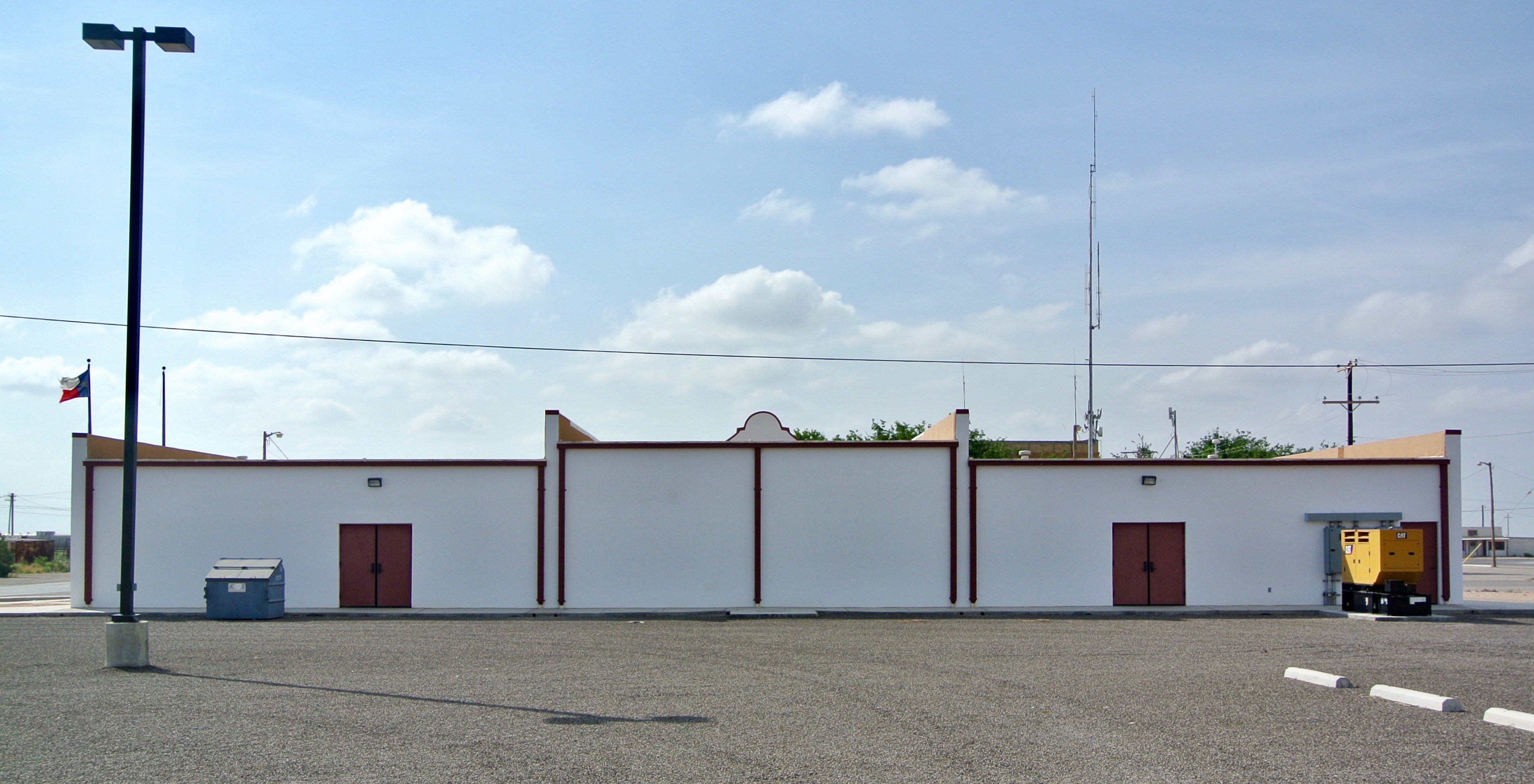 Its Alamo-like influences can’t be overstated.


Mentone’s Cafe has been closed for some time, but New York Steak Food Service is still serving up grub to hungry oilfield workers weekly.

The Mentone Post Office is the only other functioning government building left in Loving County.
 Loving County’s only gas station is the last publicly accessible building to see on our tour of Mentone.

You don’t say…



Previous Courthouse: Reeves County
Next Courthouse: Culberson County