

#90/254
“The county was named for a pioneer Bexar County family of which José Antonio de la Garza was a well-known member. It covers 914 square miles of rough, broken land drained by tributaries of the Brazos River; elevations vary from 2,100 to 3,000 feet above sea level. The area’s sandy, loamy, and clay soils support grass, small mesquite, and thorny scrubs and cacti.”
“Garza County was formed from Bexar County in 1876. It began to be settled by ranchmen during the mid-1870s, when buffalo hunting had nearly devastated the herds. Two of the earliest ranchers in the county were Andy and Frank Long, who stocked the range south of the Double Mountain Fork of the Brazos for their OS Ranch. In 1879 W. C. Young and Ben Galbraith established the Llano Cattle Co in the northwest part of Garza County.”
“The ubiquitous West Texas rancher John B. Slaughter used Garza County rangeland during the 1870s. In 1880 the census counted thirty-six residents in the county. The last Indian raid in the county occurred in 1883 at the Curry Comb Ranch, owned by the Llano Cattle Company; in 1884, the Square and Compass Ranch put up the first barbed wire fence in the county. The disastrous winter of 1885–86 and the drought of 1886 discouraged some of the early ranchers, and by 1890 only fourteen residents remained.”
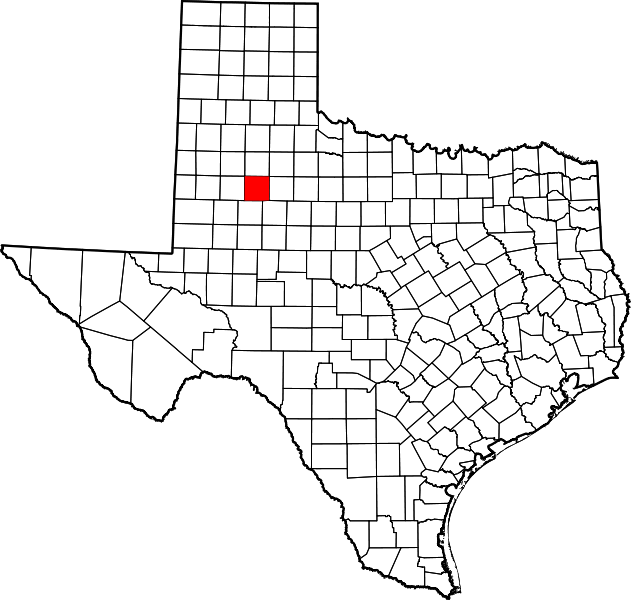
“During the 1890s, however, other ranchers and a few farmers began to move in and drilled wells to help ensure their water supply. By 1900 thirty-eight farms and ranches had been established in Garza County and the population had risen to 185, but at the turn of the century the county’s economy was still almost entirely devoted to cattle production. The agricultural census for 1900 reported only 545 improved acres in the county, with only twenty-one acres planted in corn, but the cattle herds that year comprised 29,094 head.”
“The development of the county quickly accelerated after 1906, when Charles William Post bought 250,000 acres in Lynn and Garza counties to start an experimental colony. He bought a number of ranches, fenced off the land in 160-acre tracts, laid out a townsite, built houses, and in other ways worked to attract settlers. In 1907 Garza County was formally organized, with the new town of Post City designated as county seat. Land speculators and liquor were banned in the settlement.”
“C.W. Post sponsored a number of agricultural experiments in the area. His rainmaking efforts between 1910 and 1913 were some of the more colorful, if less conclusive, of these. Post’s “rain battles,” as he called them, involved the heavy use of explosives fired from kites and towers along the rim of the Caprock. Though more than half of the “battles” produced immediate measurable moisture, the project did not actually contribute to the colony’s success in agriculture.”
“Though C. W. Post is and was best known for his cereal company, little corn or wheat was grown by the settlers he attracted to his colony: instead, cotton became the foundation of the area’s agricultural economy. Post built a gin in 1909 and a cotton mill in 1911, and by 1920 cotton culture occupied almost 18,358 acres in Garza County; corn was planted on 1,389 acres, and wheat production was negligible.”
“By 1925, 617 farms had been established; by 1929, the number was 796, and more than 51,100 acres in the county was planted in cotton. But the cotton boom peaked in the 1920s, and by the end of the decade poultry productionwas growing in importance. In 1929 county farmers reported more than 36,000 chickens and produced almost 112,000 dozen eggs.”
“Starting in the late 1940s, petroleum became more important. Production of crude totaled only 12,278 barrels in 1938 and 11,216 barrels in 1944. By 1948, however, it had increased to more than 2,577,700 barrels; more than 5,507,000 barrels were pumped in 1956, and more than 6,752,000 in 1978. By January 1991, 250,618,823 barrels of petroleum had been extracted in Garza County since 1926. The petroleum industry helped to diversify and stabilize the economy, which remains fundamentally agricultural. The most important county industries in the early 1980s were agribusiness, oil and gas extraction, and textile mills.”
John Leffler, “GARZA COUNTY,” Handbook of Texas Online
I was the guest of Garza County and Post on July 28, 2013.
______________________________________________________________________________
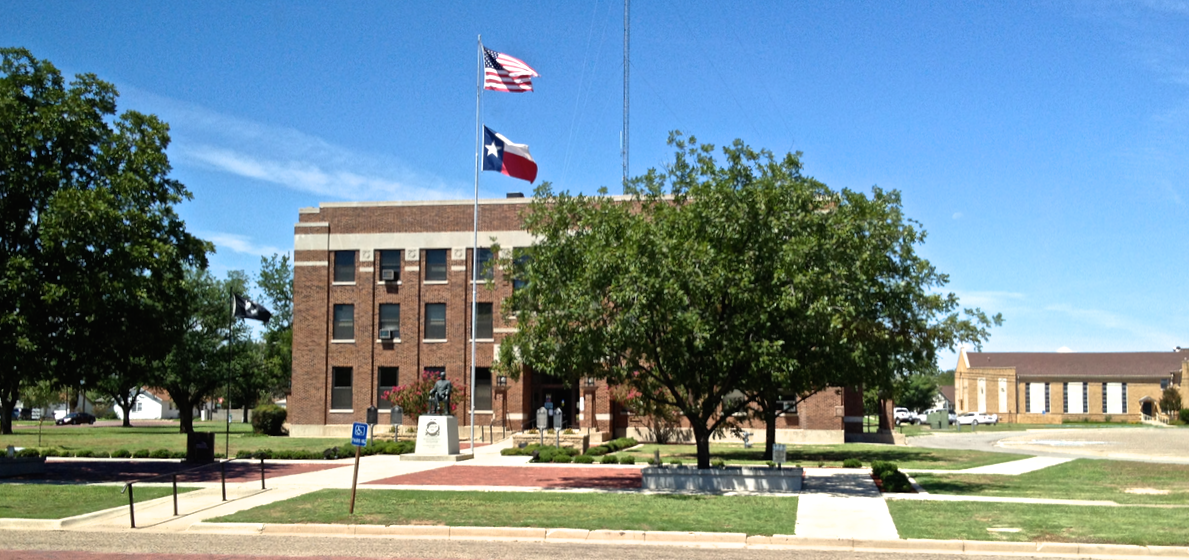
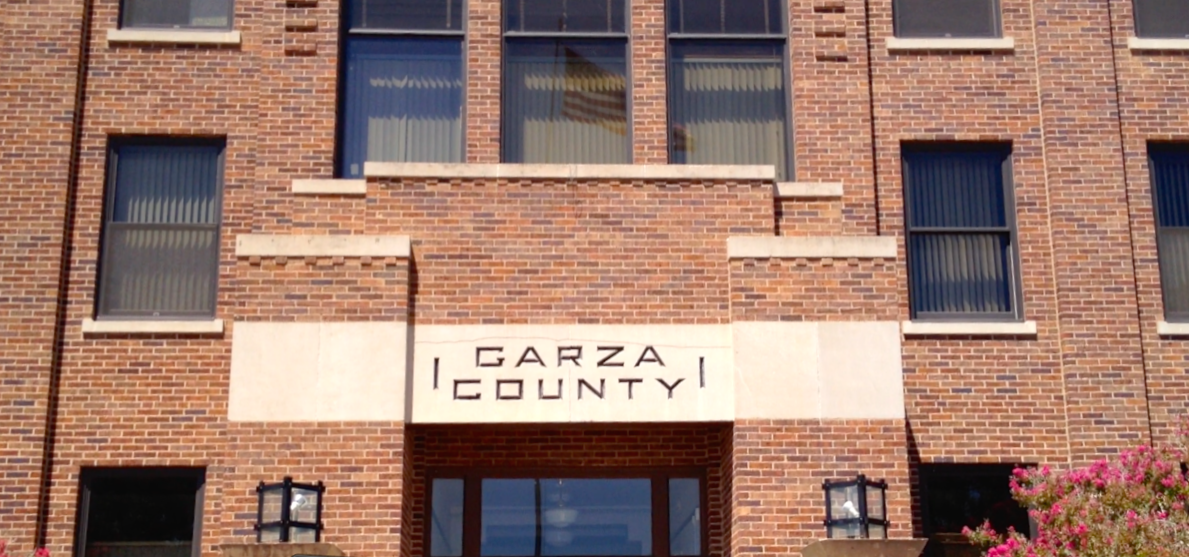
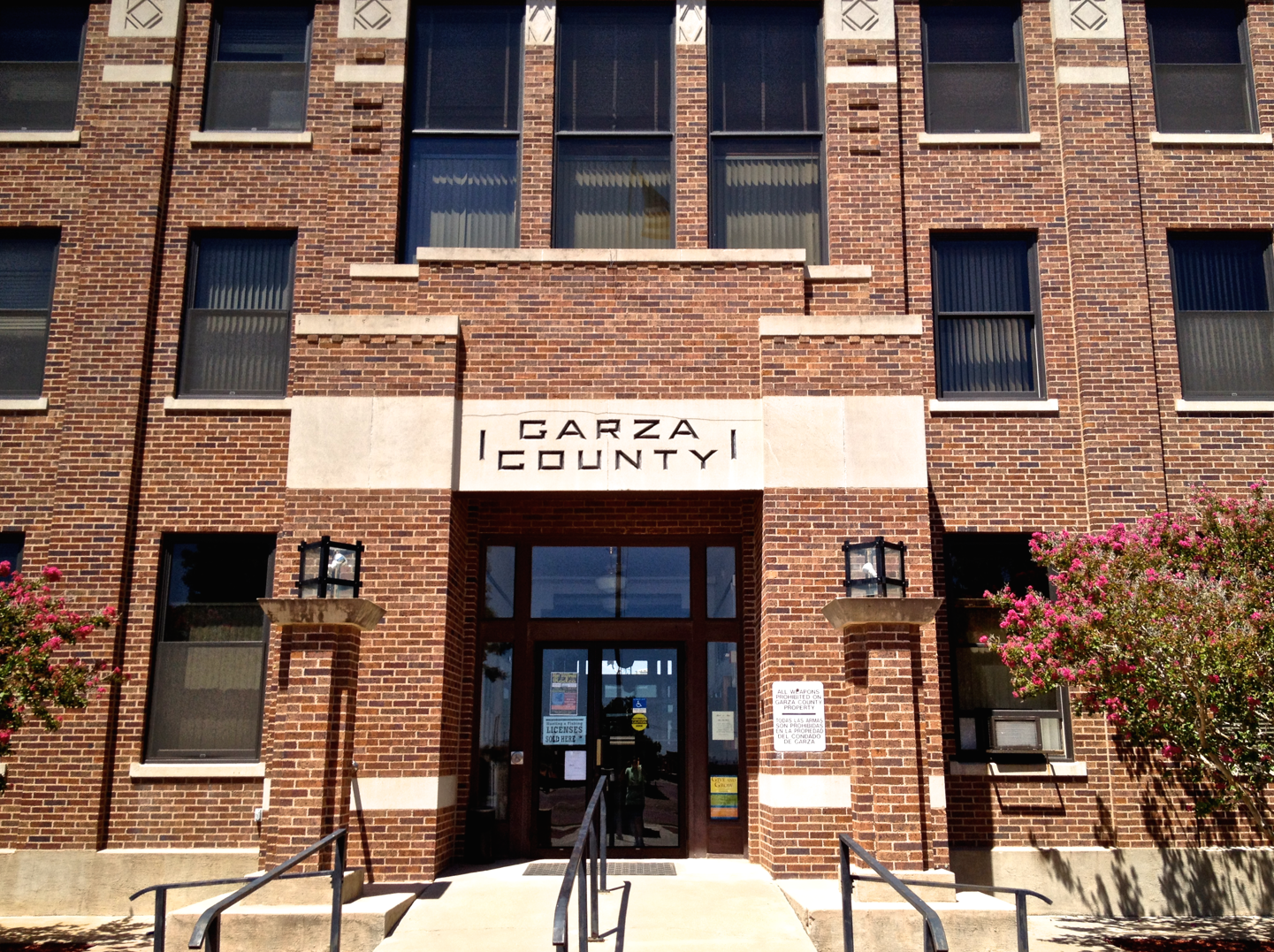
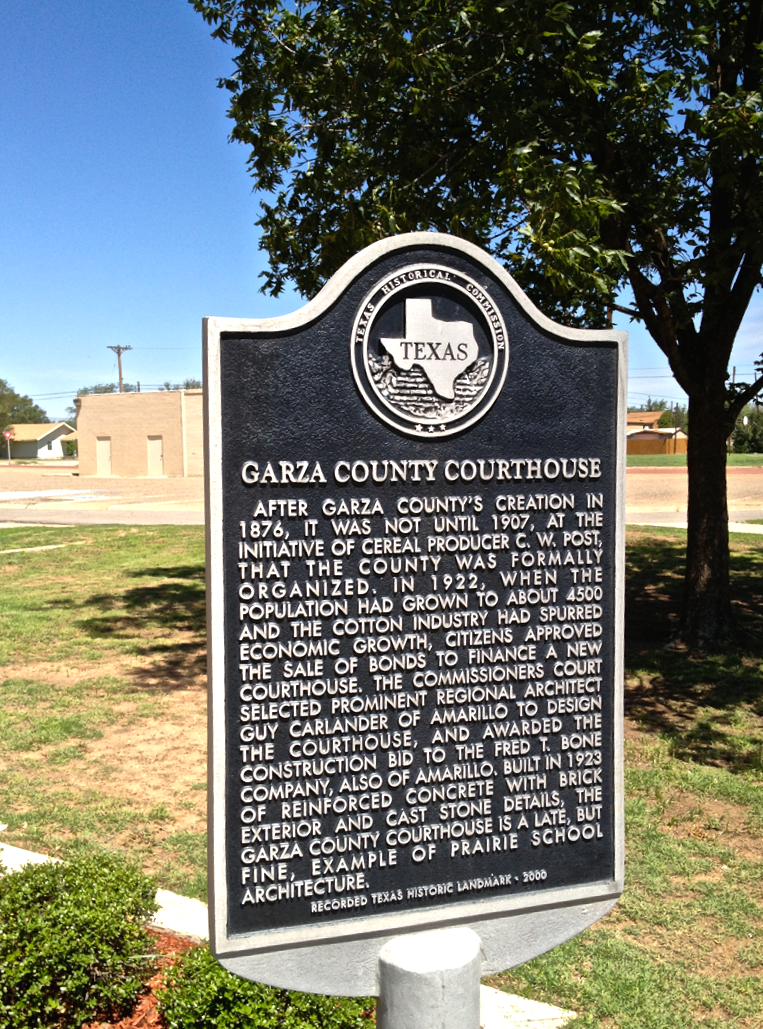
Garza County Courthouse 1923
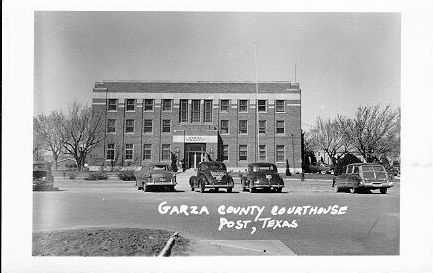 Architect: Guy A. Carlander
Number for the County: Second
Style: Classical Revival
(Photo Courtesy: THC)
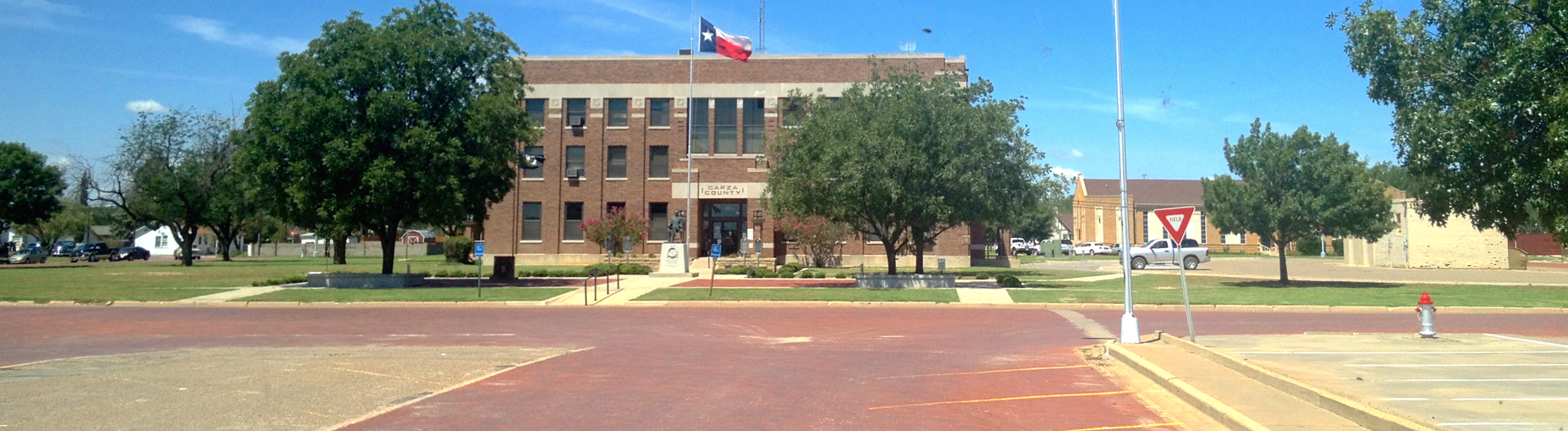
The eastern façade faces Avenue L, and is perpendicular to Main Street.
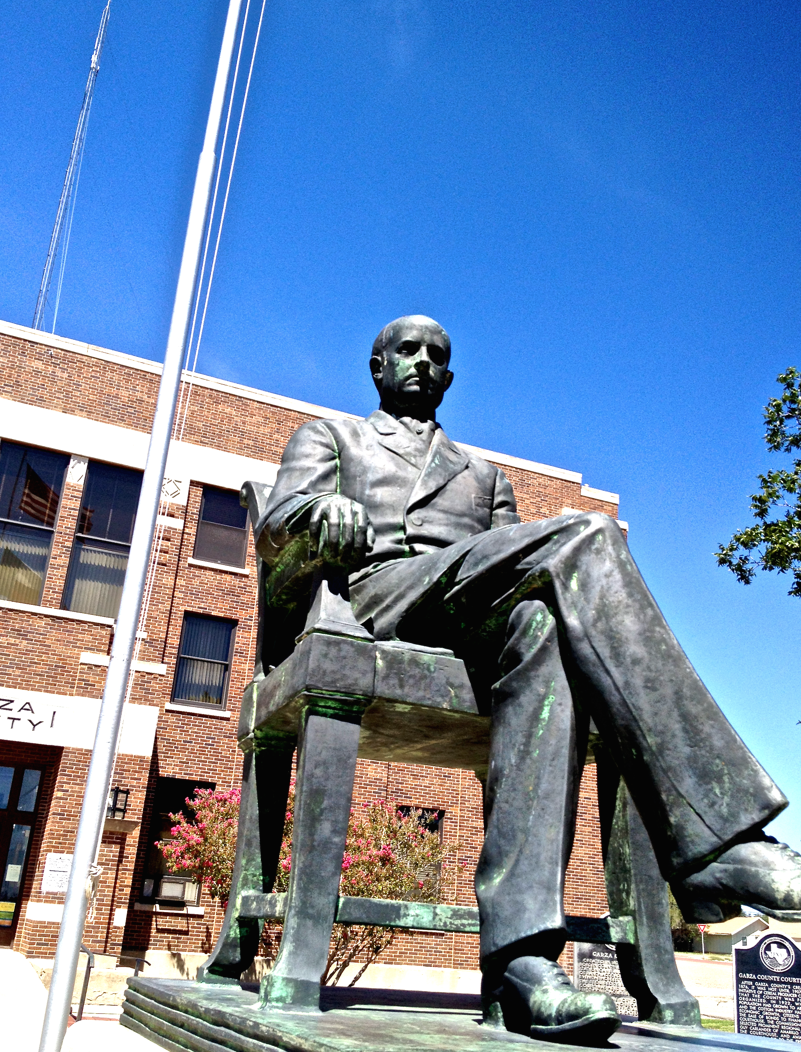
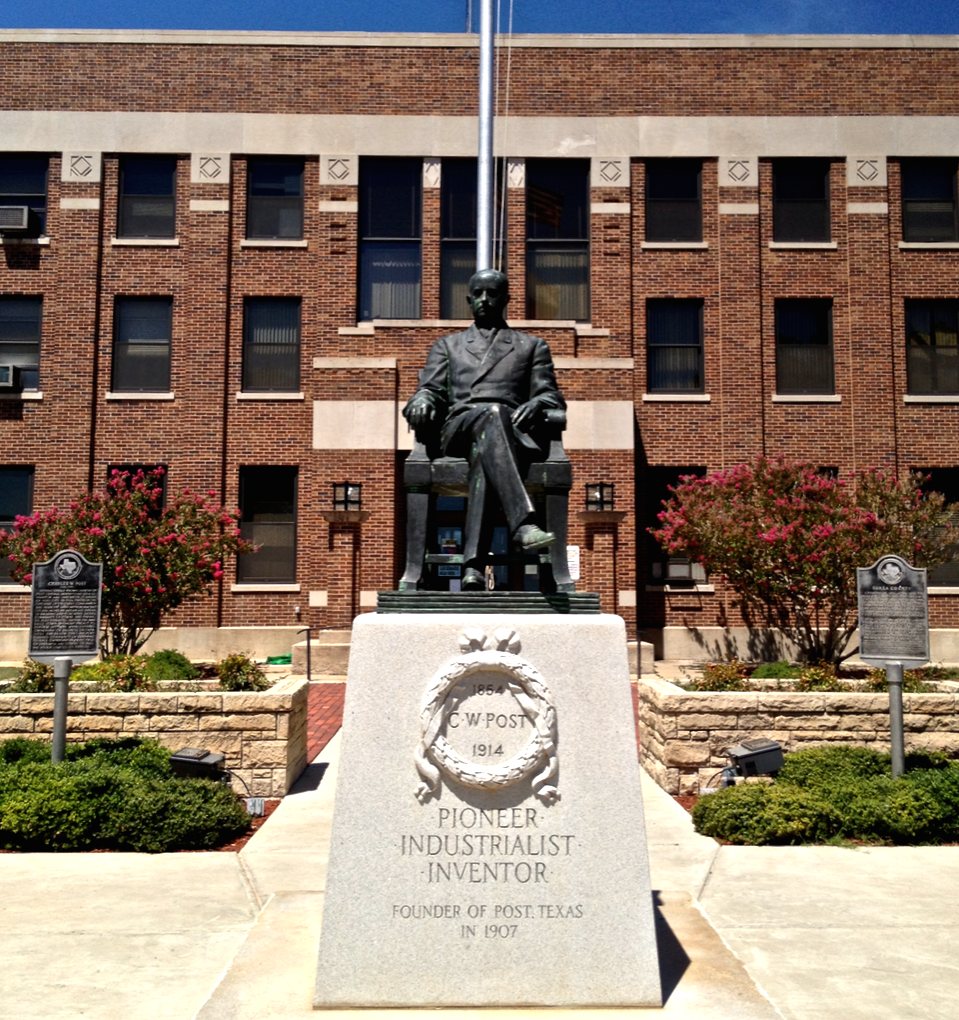 The main entrance is “guarded” by a statue of town founder, C.W. Post.
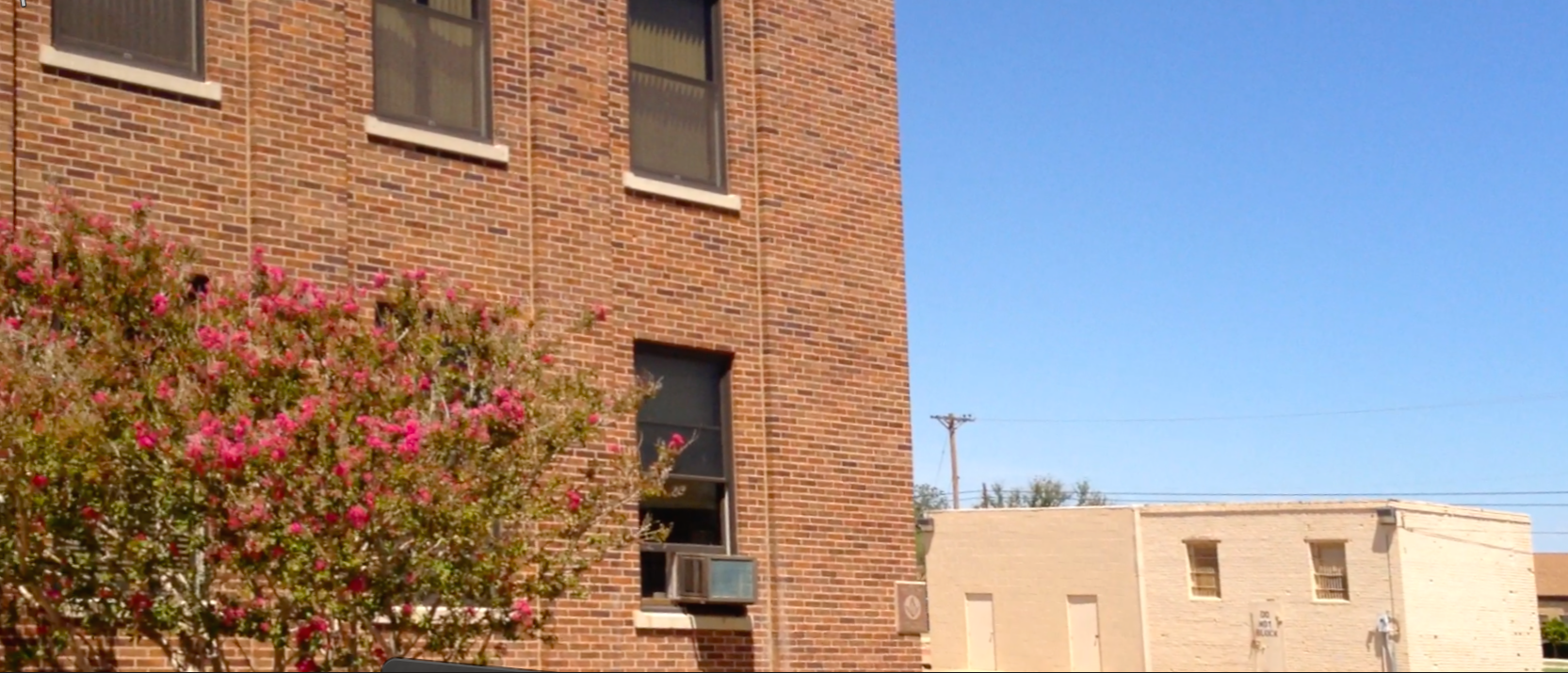 The northeast corner, complete with cornerstone
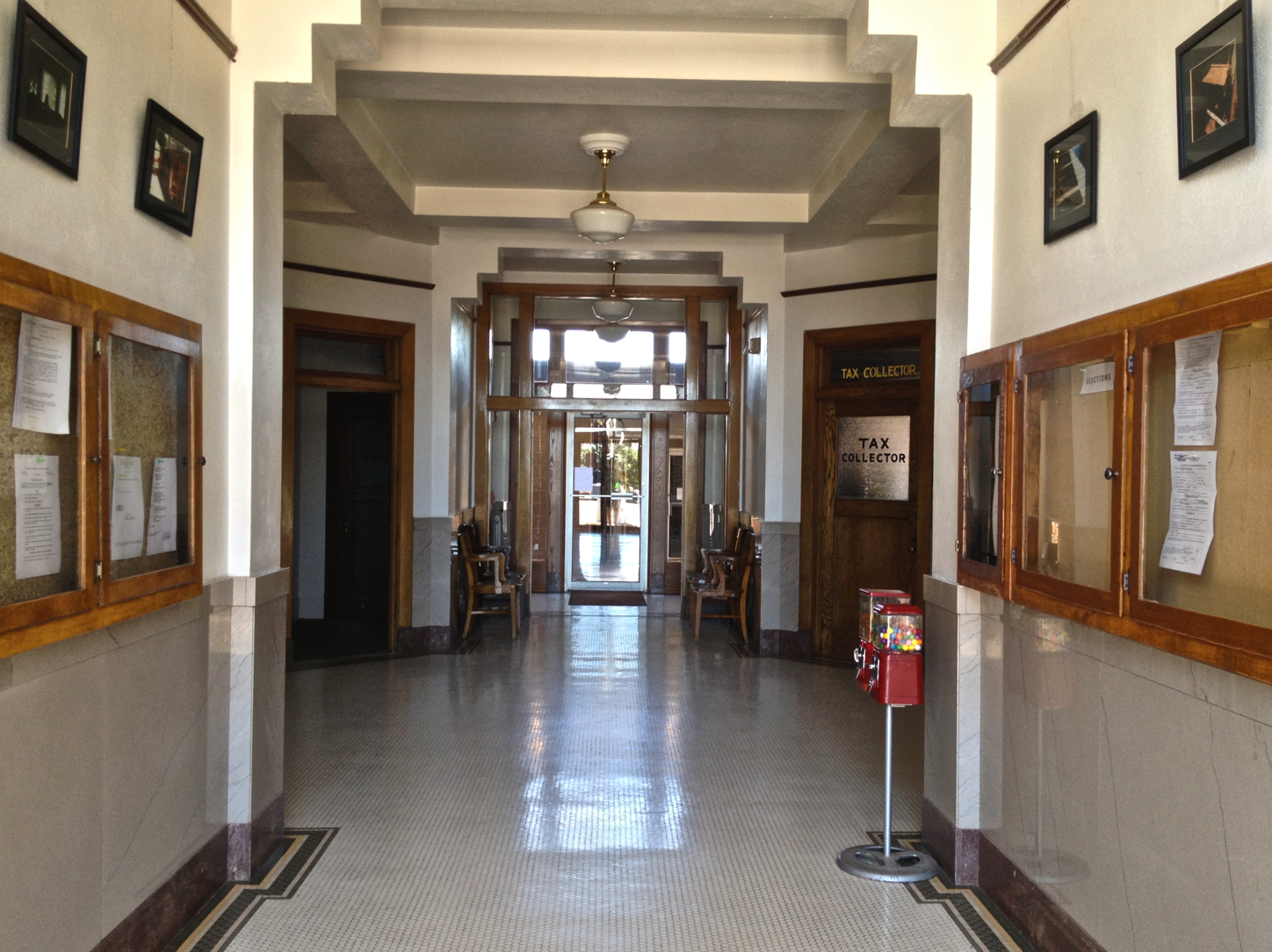 The interior is not hard to look at.
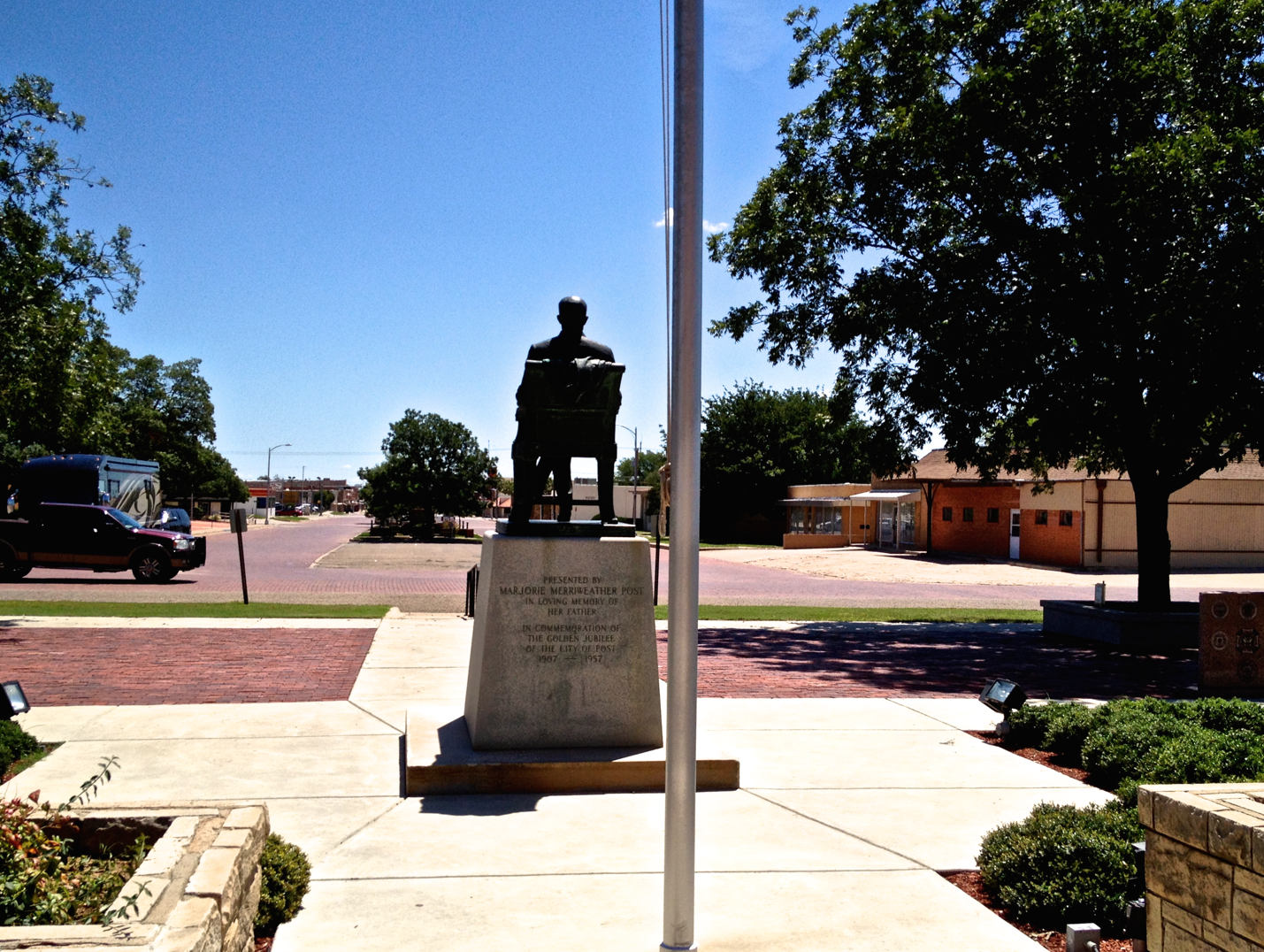
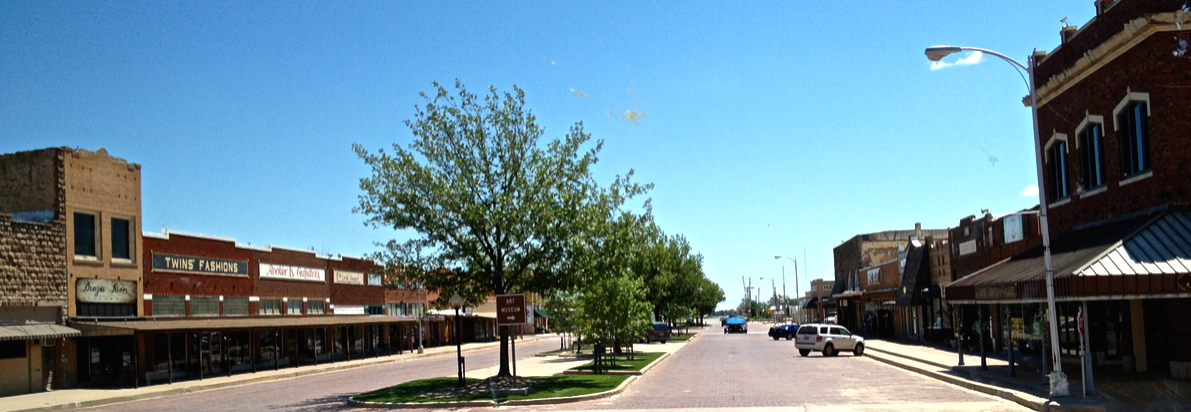 Main Street, Post, Texas