#106/254
“Reeves County is on Interstate Highway 20 in the Trans-Pecos region of West Texas with the northern edge of its irregular shape touching New Mexico. On the northeast it borders the Pecos River, which separates it from Loving and Ward counties.”
“Reeves County comprises 2,626 square miles of land with flat and undulating terrain in its northern part and mountainous topography in the extreme south [this being portions of the Davis Mountains].”
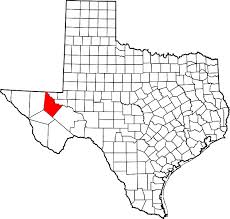
”The entire county is drained by the Pecos River. The main tributaries are Salt and Toyah creeks and Four Mile, Horsehead, and Salt draws. Two lakes provide water for recreation and irrigation: Red Bluff Reservoir on the Pecos River in extreme northwestern Reeves County and Balmorhea Lake in the southwest.”
”Pecos was named the seat of government when Reeves County was separated from Pecos County in 1883 and organized in 1884. Pecos constructed a three-room school in 1883 and opened a post office in 1884. The county was named for Confederate colonel George R. Reeves.”
”Reeves and other West Texas counties experienced a rush of new settlers, which continued even after the law was changed in 1905 to award land to the highest bidder. Between 1903 and 1913 several new communities developed, but most were ephemeral.”
Julia Cauble Smith, “REEVES COUNTY,” Handbook of Texas Online
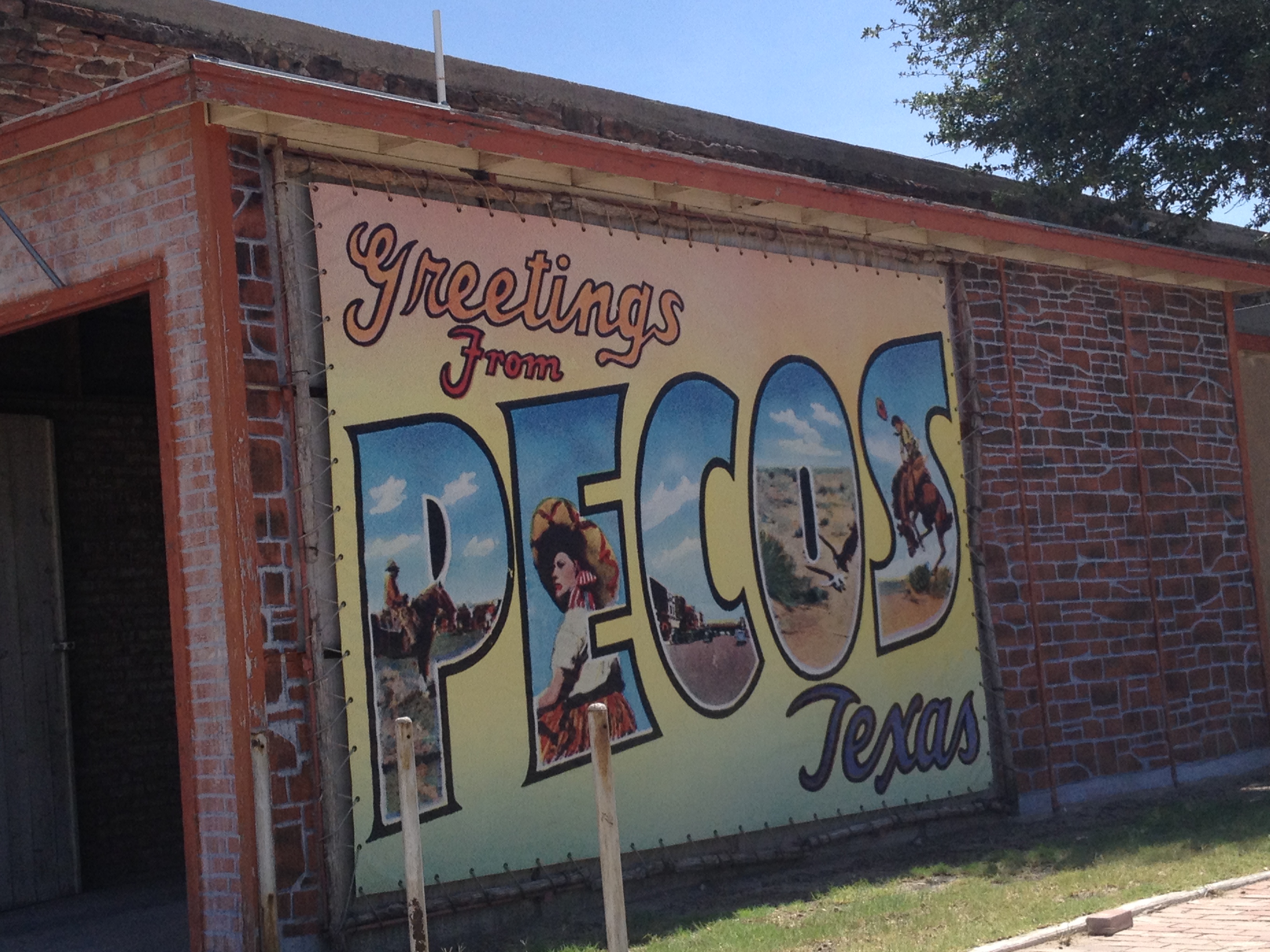
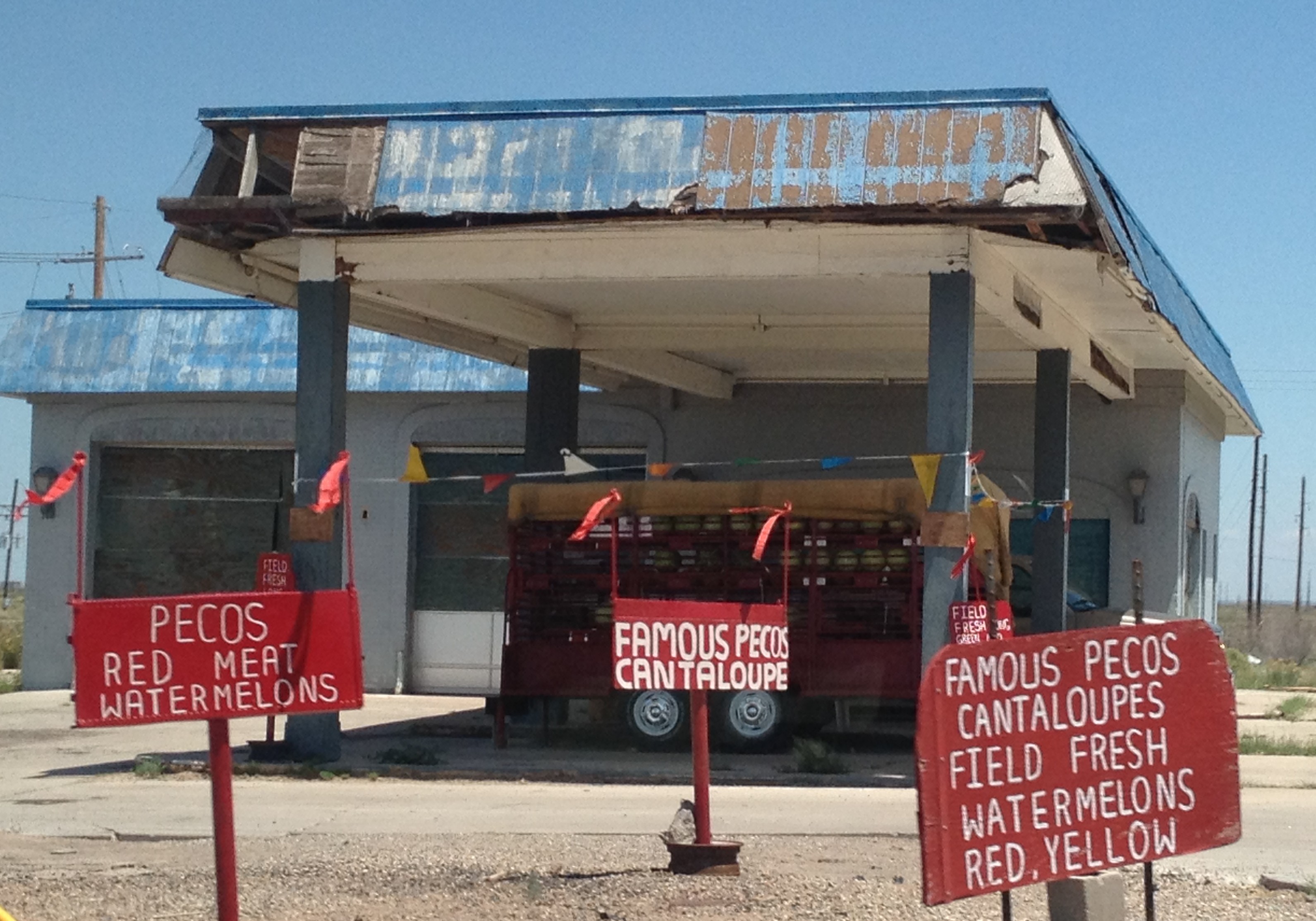
While it is known for its cantaloupes and watermelons, Pecos also takes credit as being the location of the world’s first rodeo. Also, like neighboring Pecos County, it is pronounced “pay-cuss” rather than “pay-cose.”
I came to Pecos on August 13, 2013

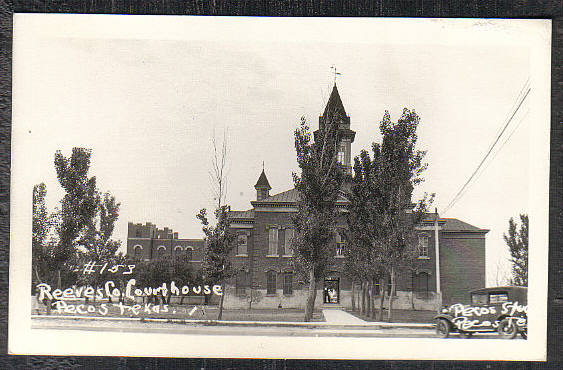
Reeves’ County first courthouse was constructed in 1886 and designed by Martin, Byrnes, and Johnson in an Italianate style. The Texas Historical Commission describes the building as such: “Two story brick building with central cross plan. Embellished bell tower and window hood molds provide much of the decoration.”
(Photo courtesy: THC)
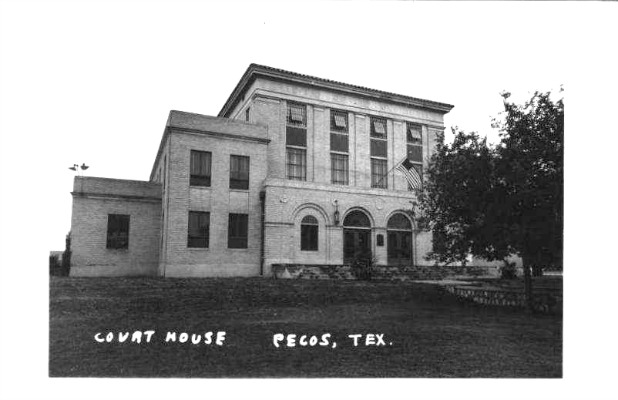 In 1937, a second courthouse took the place of the original; a work of the El Paso firm Trost & Trost. It is described by Dr. Mavis P. Kelsey Sr. and Donald H. Dyal in their book The Courthouses of Texas as, “an interesting mix of Classical Revival and Mediterranean elements.” It stands third stories.
(Photo Courtesy: THC)

Reeves County landscape just outside of Pecos
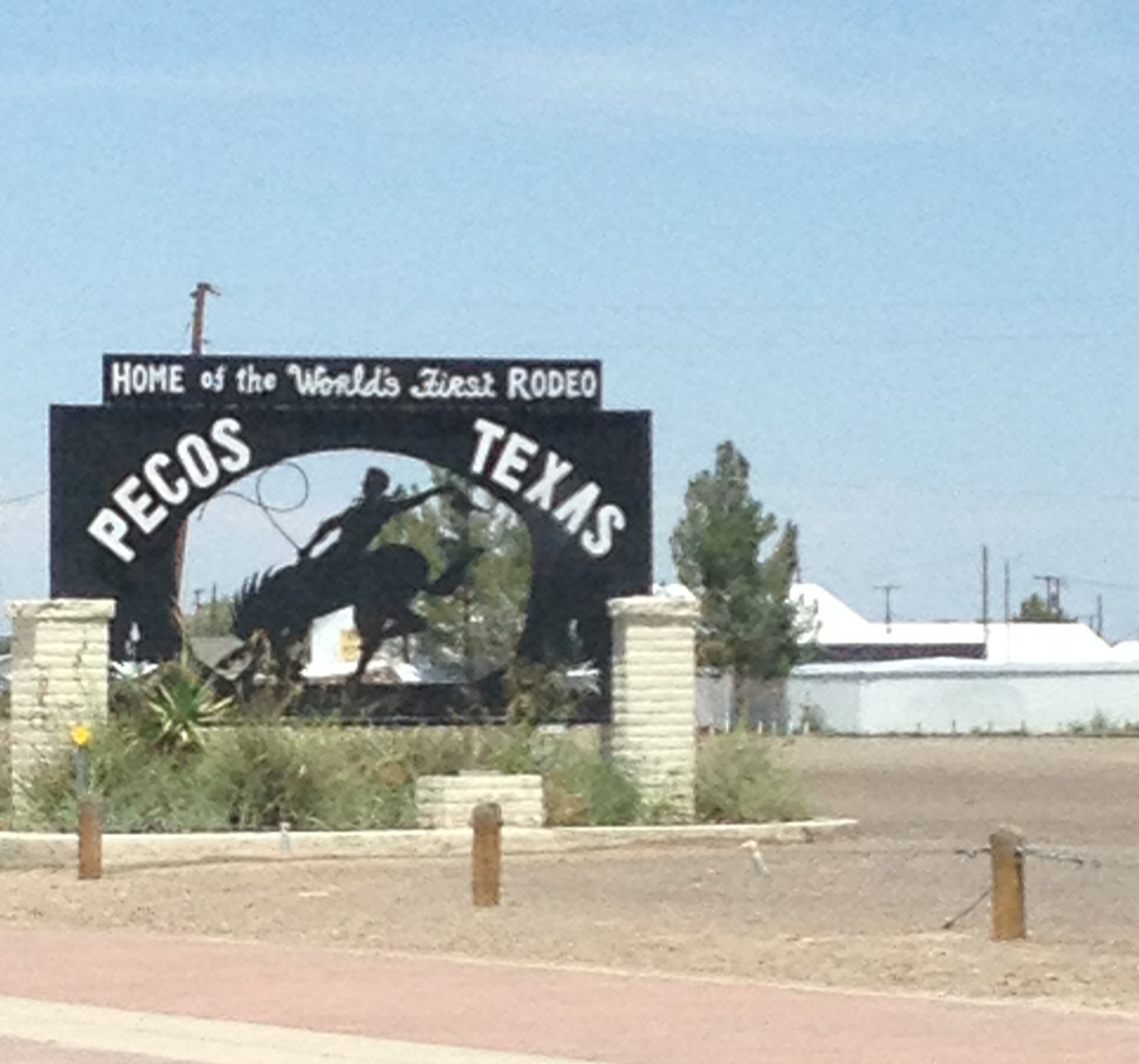
Entering Pecos

Buck Jackson Arena: home to Pecos’ annual rodeo

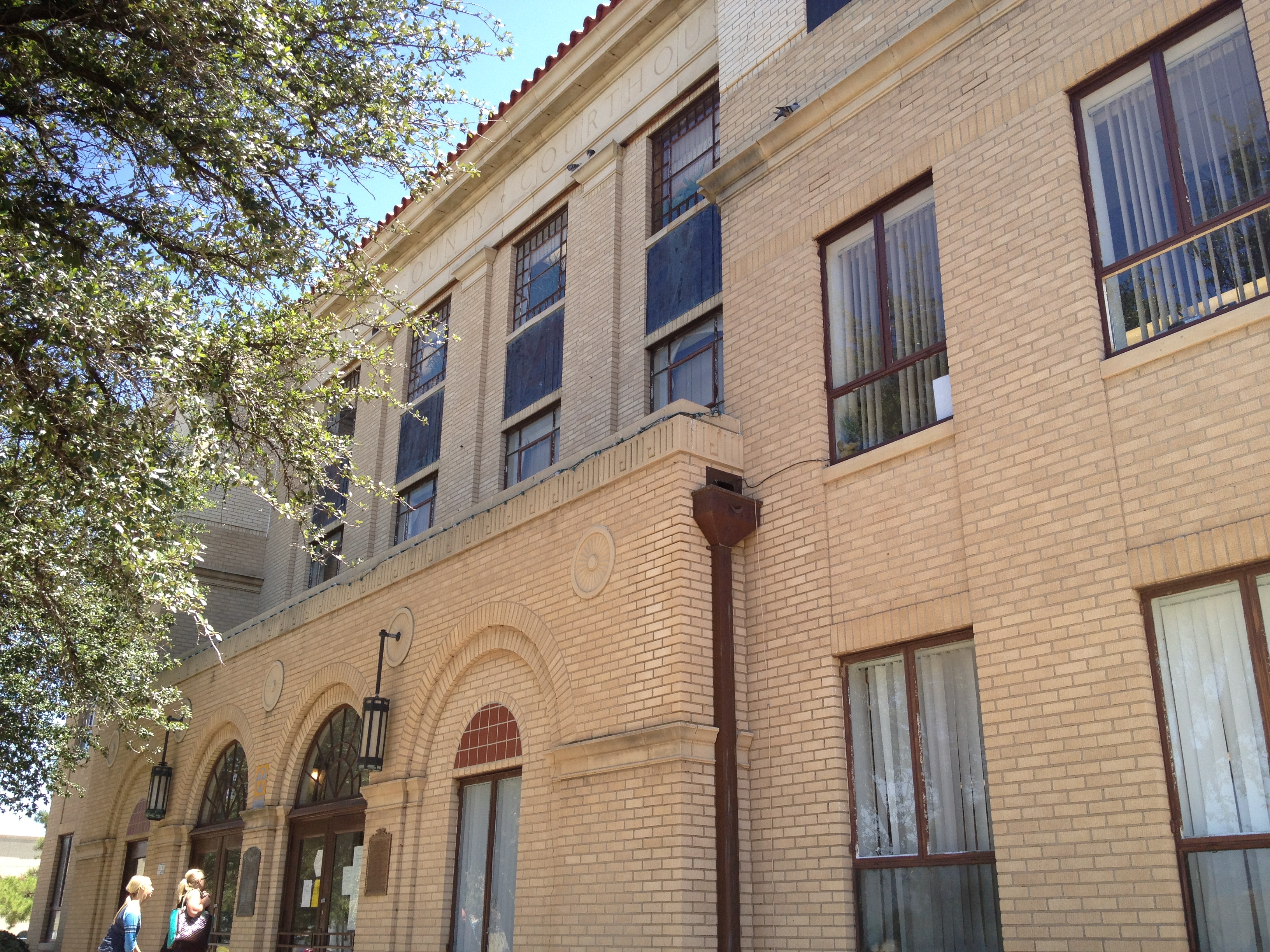
In today’s time, trees cover most of the front façade.
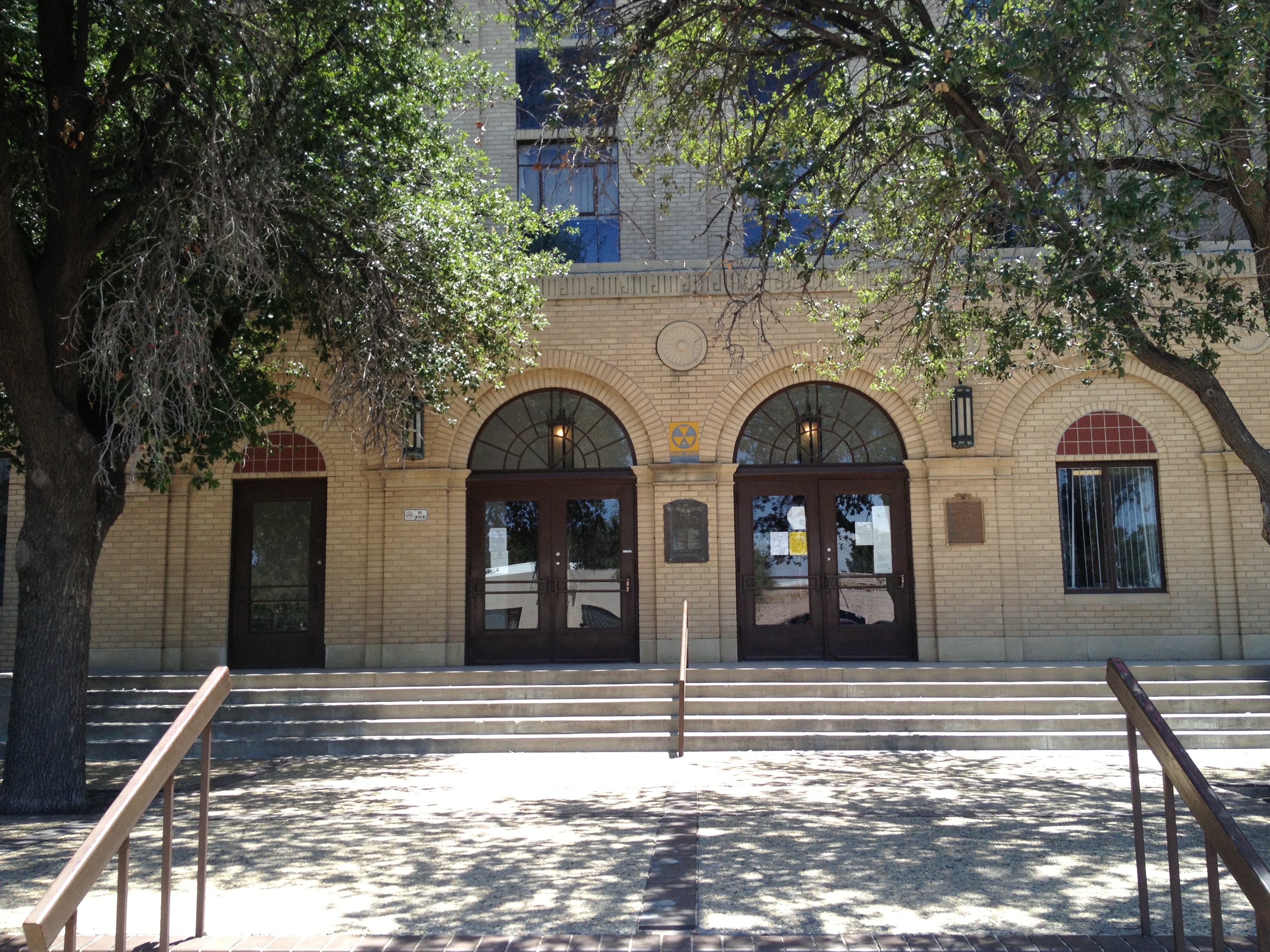

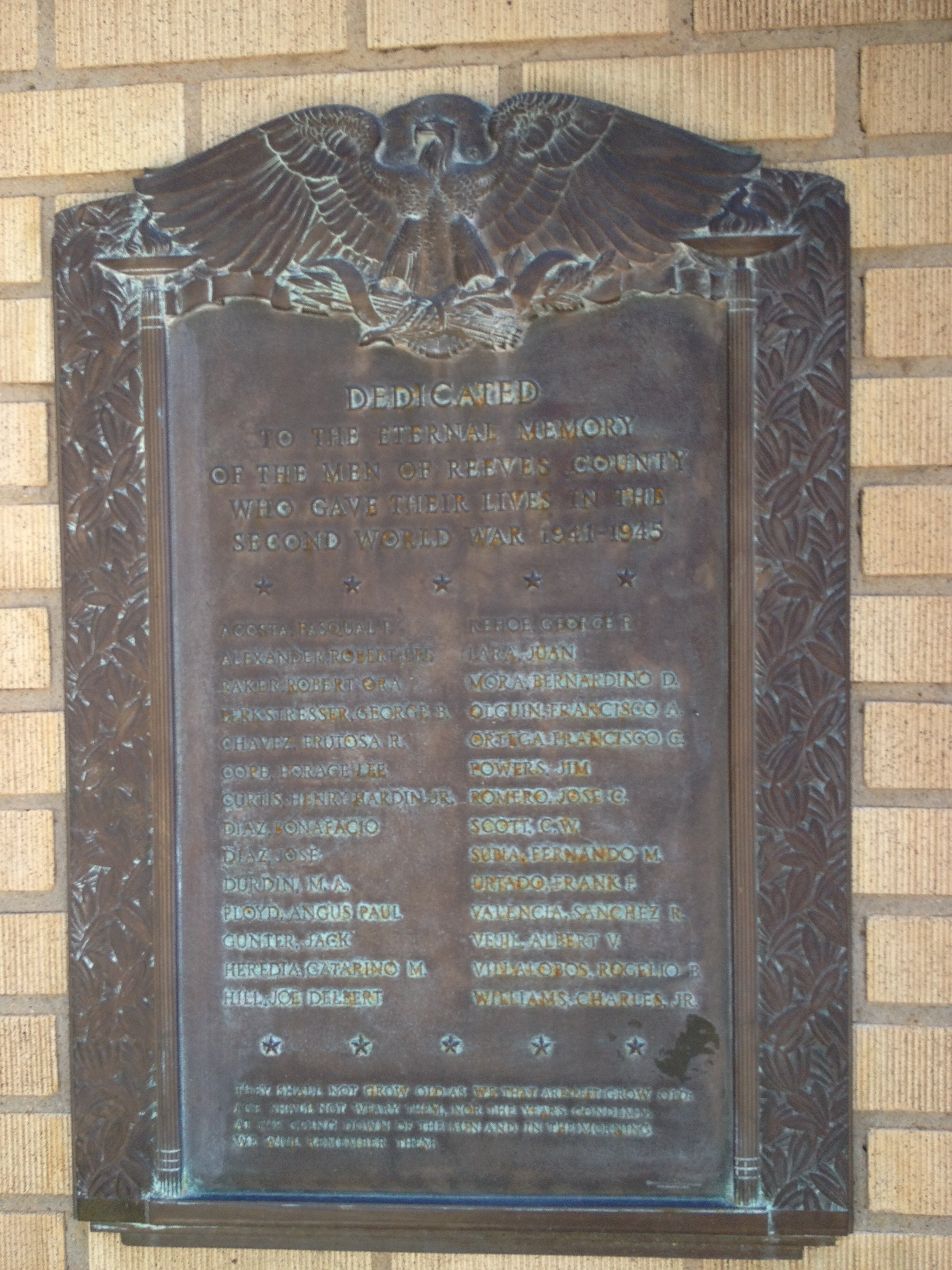
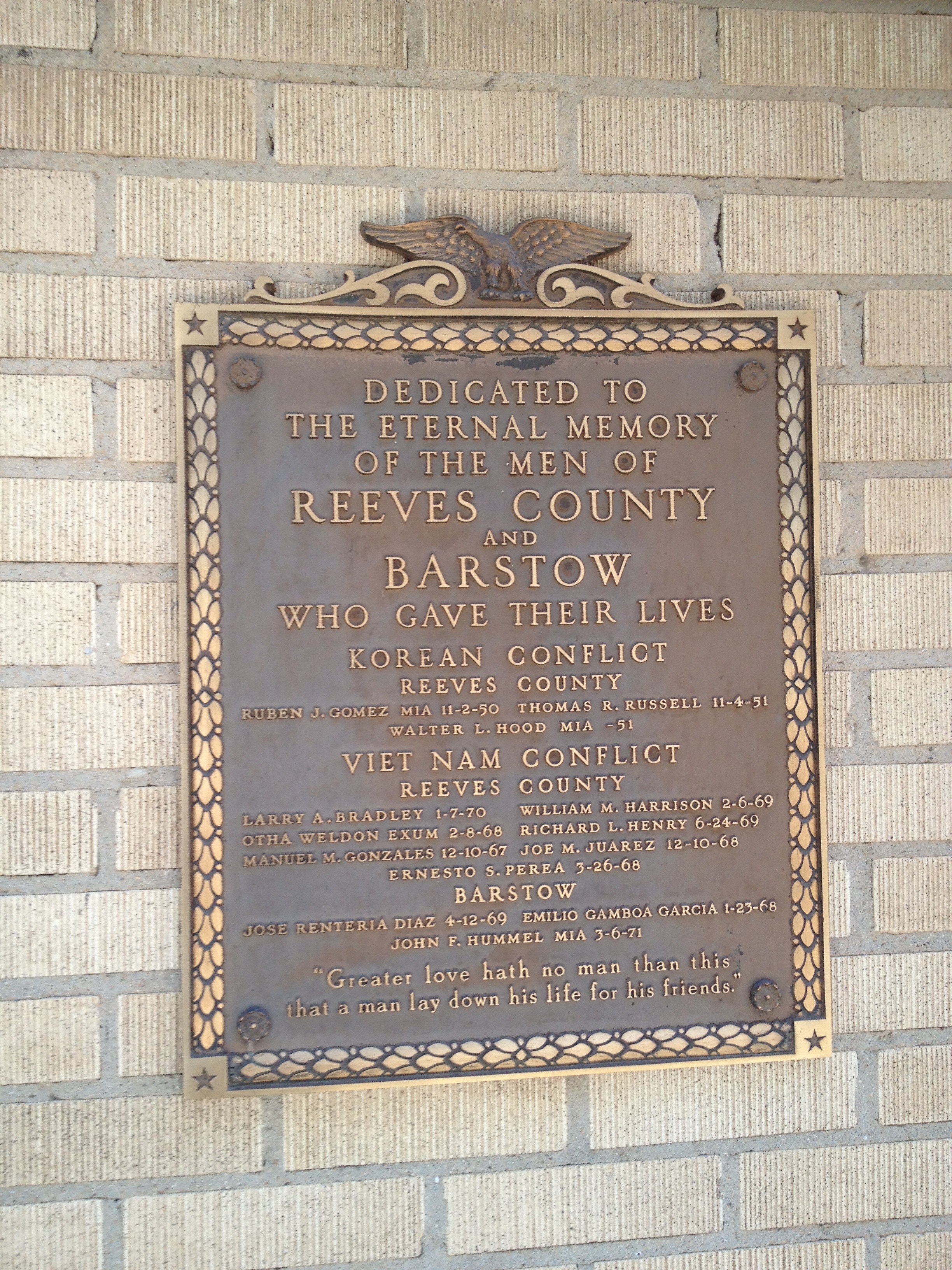
Two plaques commemorating veterans hang next to the doors of the front entrance.
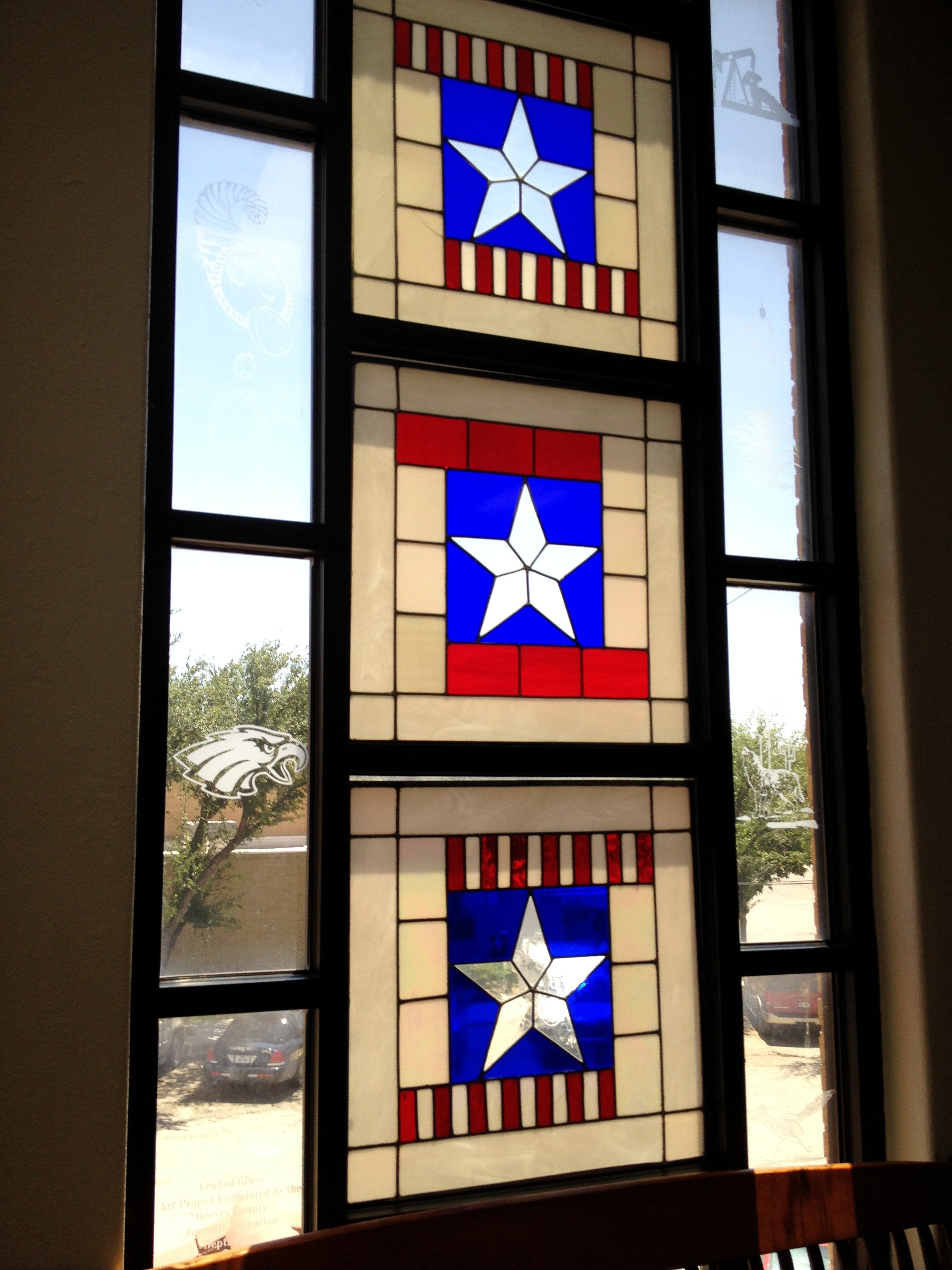
This colorful window mosaic on the second floor is easily the most appealing feature of the courthouse.

Due to this, I have very few pictures of the second floor. I don’t have many of the first floor because it was being utilized by what appeared to be a group of students at the time of my visit.


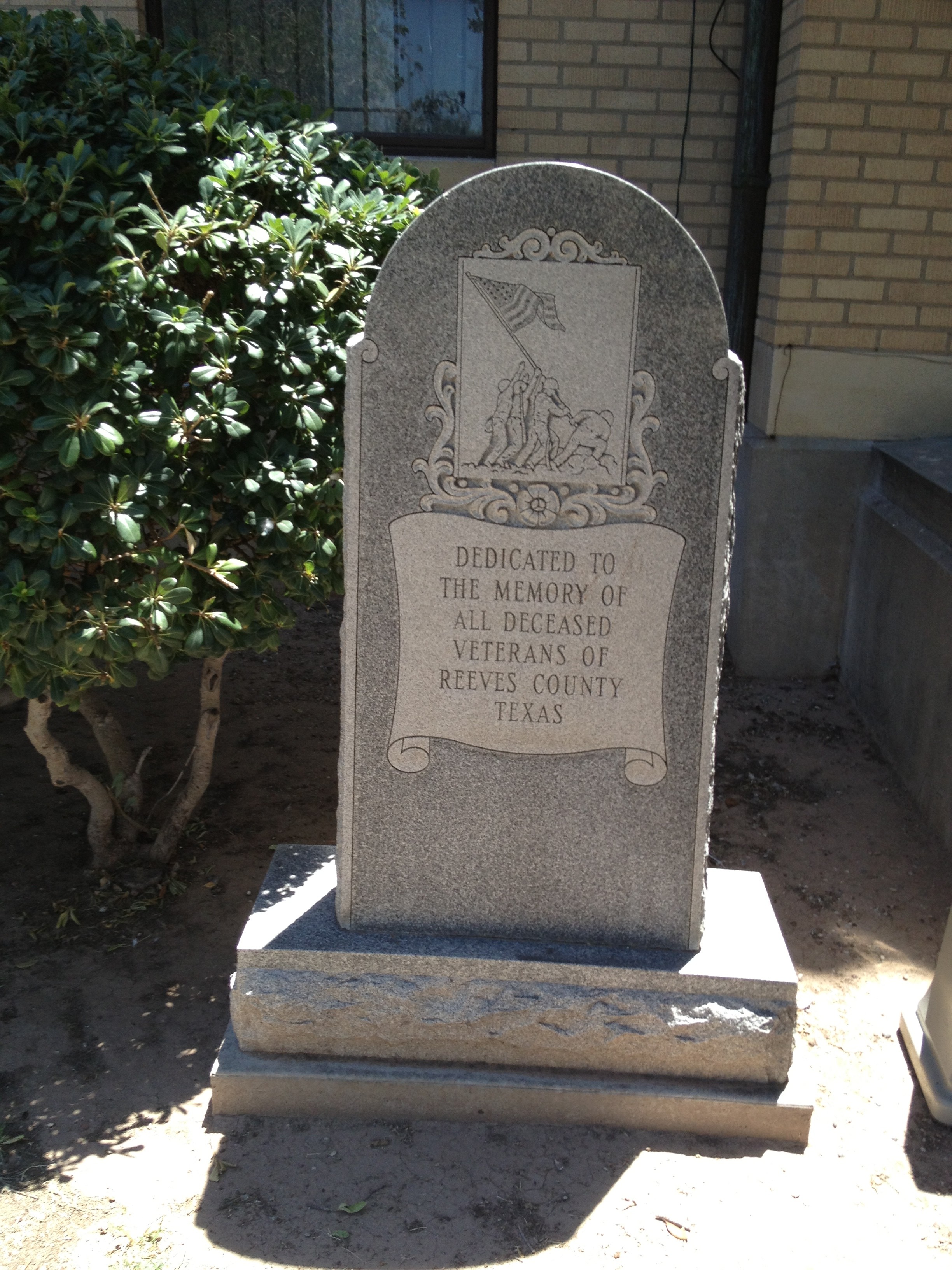

United States District Courthouse across the highway from the County Courthouse