
#82/254
“The county was named for Martin Parmer, an early settler and Texas Revolution veteran. Parmer County occupies 859 square miles of level plains surfaced by sandy, clay, and loam soils. These soils support some native grasses, but now the land is largely cultivated and produces abundant corn, sugar beets, and potatoes, as well as sorghums, cotton, wheat, hay, and soybeans.”
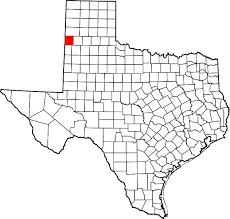
“The region including Parmer County has remained rather isolated throughout its history. It is possible that the José Maresexpedition from Santa Fe to San Antonio crossed the northeastern corner of the county in 1787, but for the most part the region remained under the control of its aboriginal inhabitants. Apaches occupied the Panhandle-Plains until they were pushed out around 1700 by the Kiowas and Comanches, who ruled the Texas High Plains between 1700 and the end of the Red River Warin 1874. After their defeat and removal to Indian Territory, the Parmer County region was opened for white settlement.”
“In 1876 Parmer County was established by the Texas legislature from lands formerly assigned to the Bexar District. No settlement occurred in the county until 1882. In January of that year the Capitol Syndicate agreed to build a new state capitol in return for 3,000,000 acres of land in West Texas. Parmer County lay entirely within the lands granted to the Chicago syndicate for its hugeXIT Ranch. For the rest of the century Parmer County remained unorganized and unpopulated, except for the XIT cowboys.”
“In 1898 the Pecos and Northern Texas Railway Company began construction of a ninety-five-mile branch line from Amarillo to the Texas-New Mexico border. On this line, which was eventually to run from Amarillo to the Santa Fe main line in Belen, New Mexico, grew several communities in Parmer County. Parmerton appeared in 1898 as a Capitol Syndicate townsite, while Black, Friona, and Bovina appeared the same year as switches and townsites on the line.”
“Farwell, established in 1904 and surveyed in 1905, was founded by the syndicate as a central point from which the company could administer the sales of XIT lands. The appearance of Farwell led to the quick demise of Parmerton.”
“In 1904 the Capitol Syndicate launched a campaign to sell the holdings of the XIT Ranch to land speculators, smaller ranchers, and farmers. Between 1904 and 1910 farmers slowly but steadily arrived to establish new operations, and by 1910 there were 161 farms and ranches in the county.”
“The agricultural growth of the years between 1904 and 1920 set the stage for greater expansion that occurred in the county between 1920 and 1930. A tremendous amount of range land was put into production, and the population grew accordingly.”
“As the farm economy of the county expanded, a transportation network emerged to handle the crops and to link the county to the outside world. In 1913 the Pecos and Northern Texas Railway built a branch line from Farwell to Lubbock to complement its earlier line to Amarillo. While the automobile was becoming a vital part of America’s everyday life, a road network was built in the county.”
Donald R. Abbe, “PARMER COUNTY,” Handbook of Texas Online
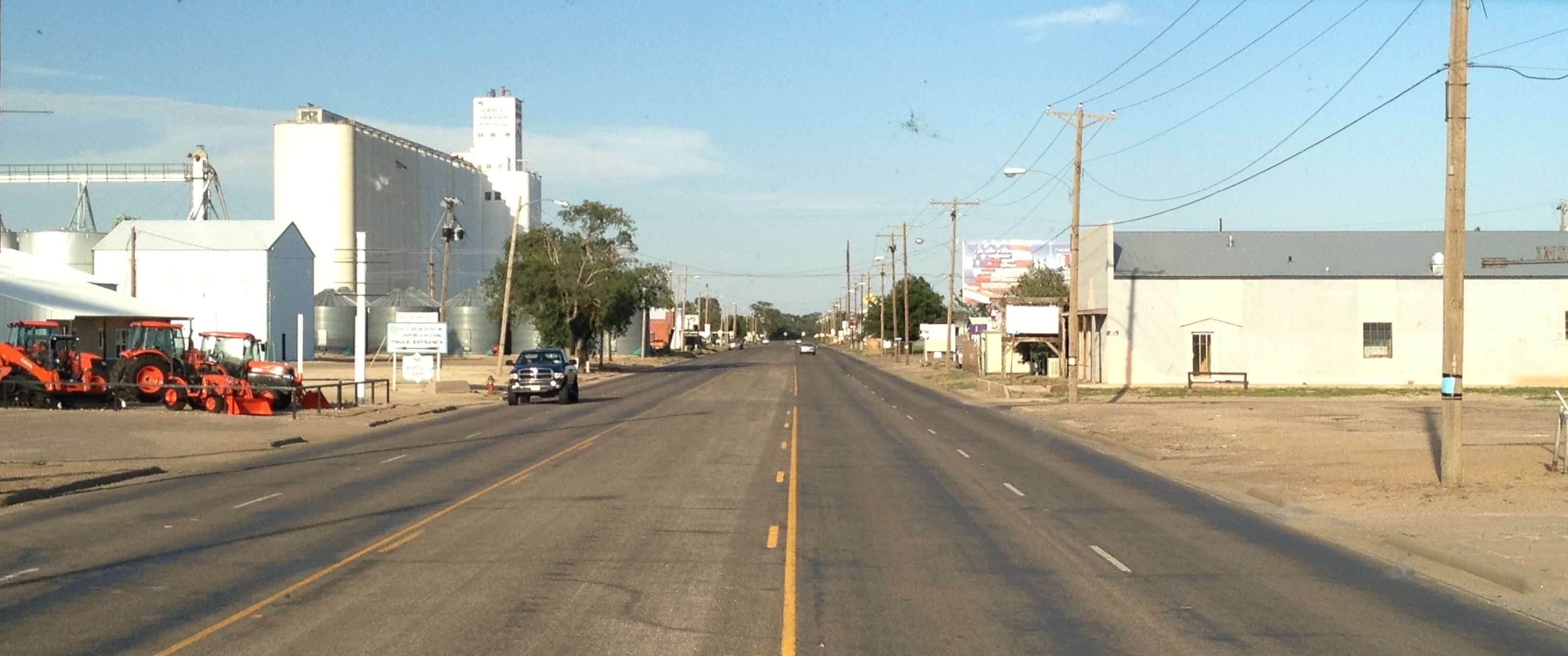
Farwell is the closest county seat in proximity to New Mexico (aside from El Paso). As we entered Texas coming home from Santa Fe, we simultaneously entered the “border town” of Farwell, located in southwest Parmer County. Farwell gets its name from the brothers Charles B. and John V. Farwell who headed the Capitol Syndicate.
Let it be noted that because we were merely driving through Farwell to reach another destination before nightfall, there was little choice in the matter of whether or not I should make the stop with the light conditions. You’ll find the sun to cast many shadows on the picture here, so forgive me for that. Maybe someday I’ll return to Farwell to take better pictures, but for now that seems unlikely.
I came to Farwell (and nearly missed it) on July 27, 2013
______________________________________________________________________________
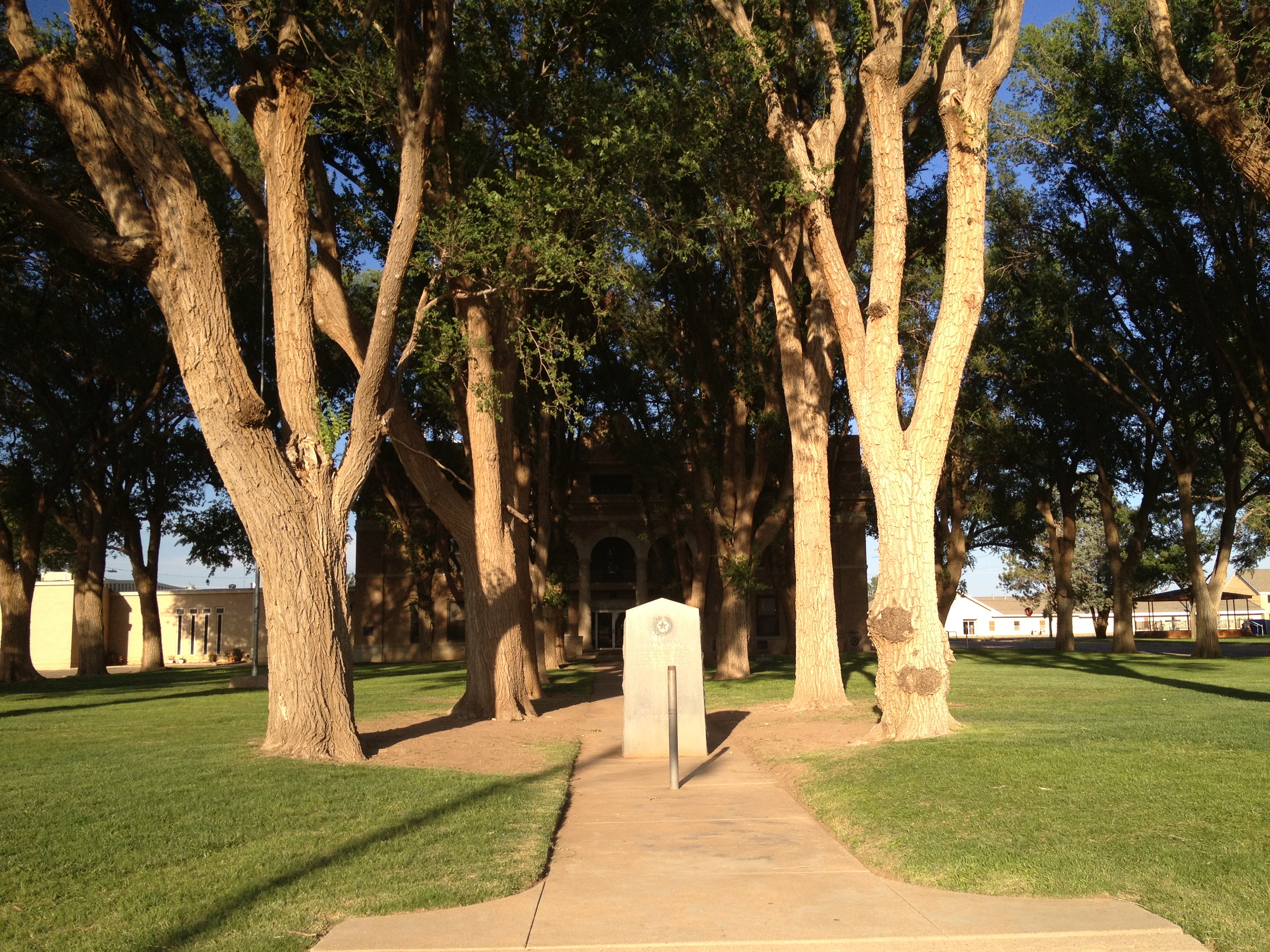
Parmer County Courthouse 1916
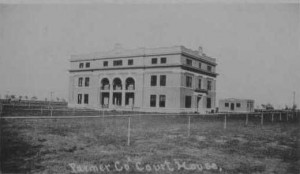
Architect: C. Risser & Townes
Number for the County: Second
Style: Classical Revival
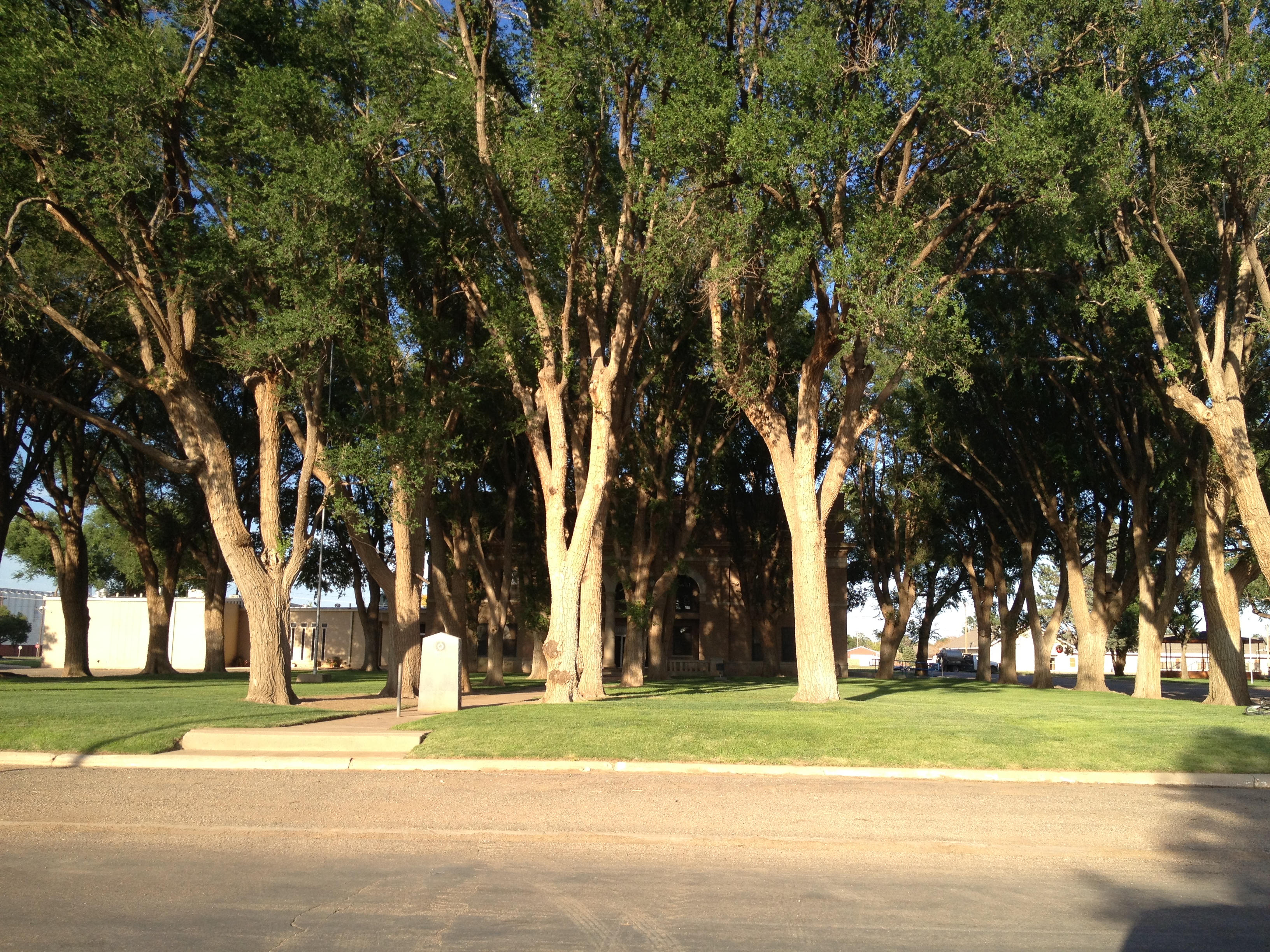
The courthouse lies within a highly shaded grove of trees (odd for the Panhandle), making the end-of-the-day lighting even worse on me.
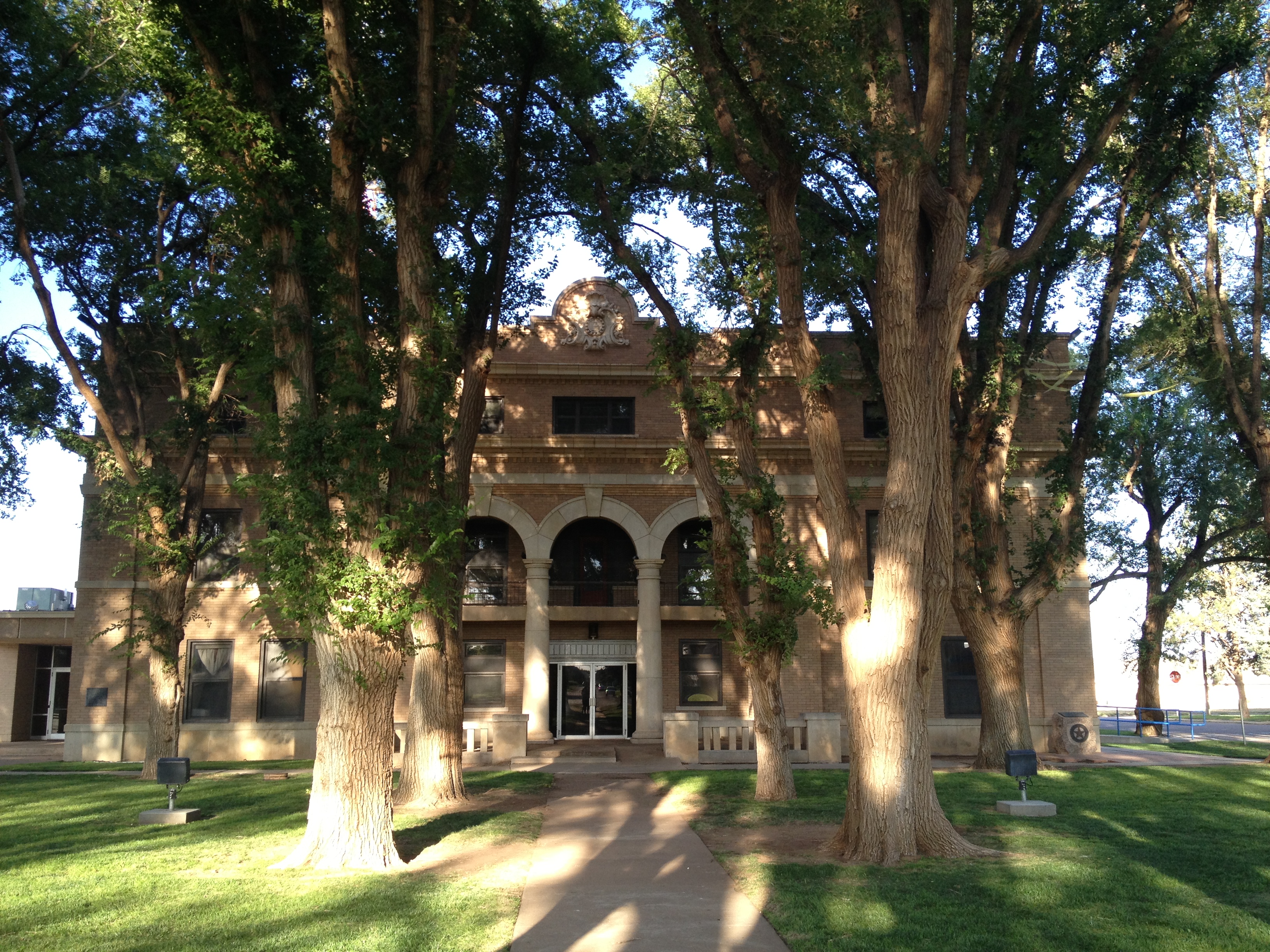
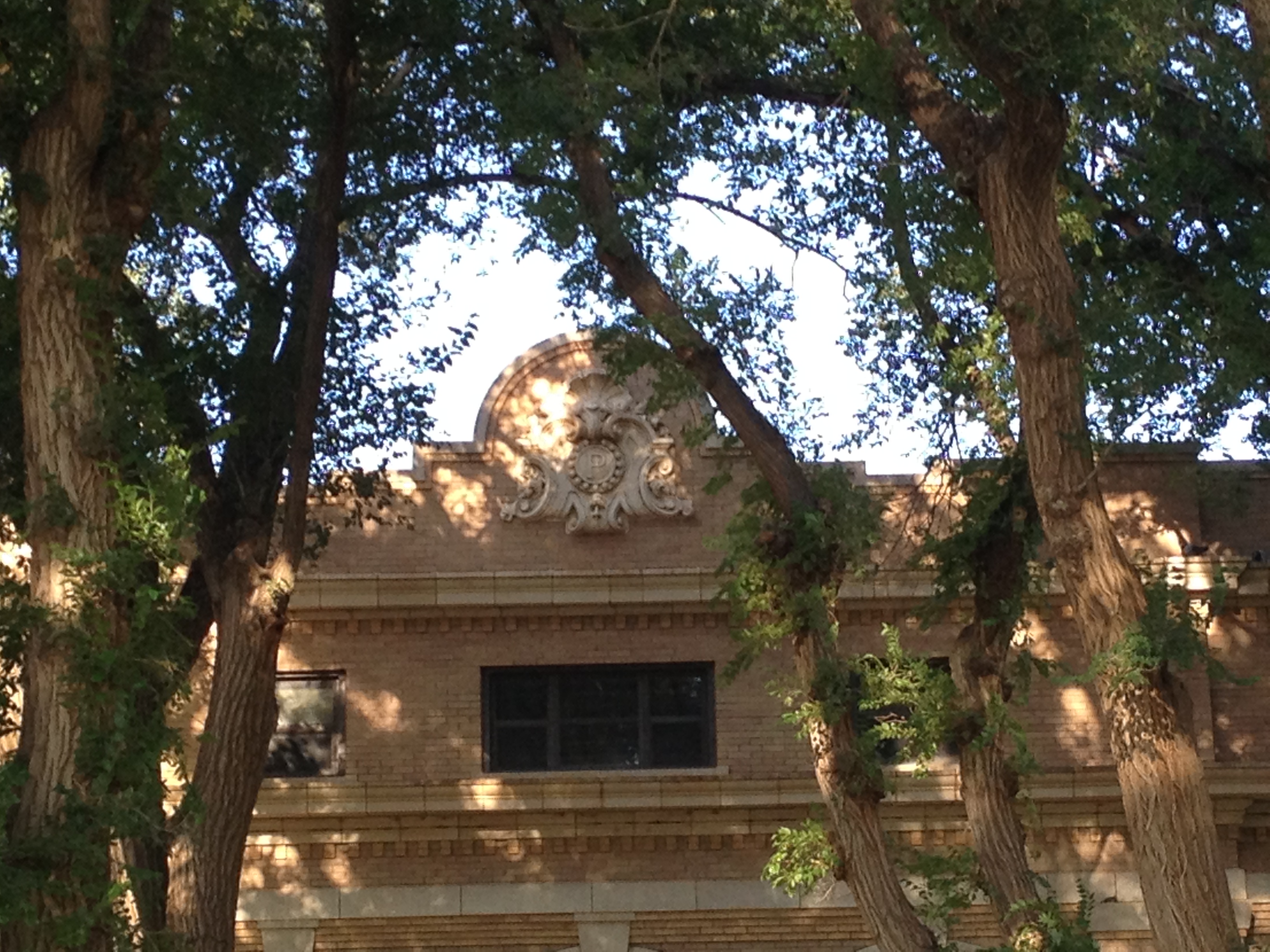
The decorative P is similar to those on courthouses in Freestone and Dallam Counties. Of course, Freestone County boasts an F and Dallam County has a D, rather than the signature P of Parmer County.
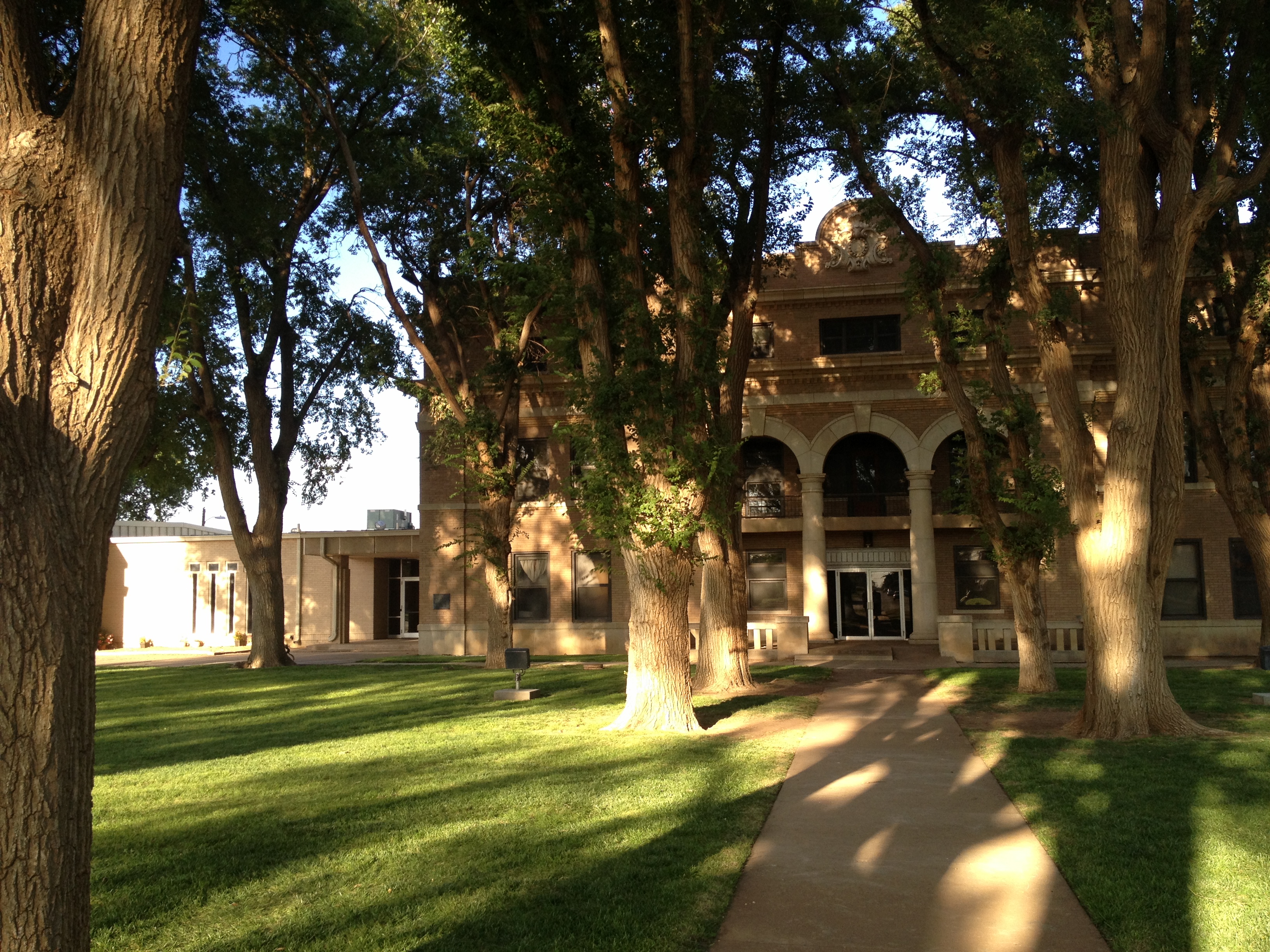
Courthouse and adjacent entrance (neither are the front entrance); in fact, the “front doors” you see here are no longer functional, as I understand an elevator shaft was built in front of them. The “main entrance” is to the right, on the south side.
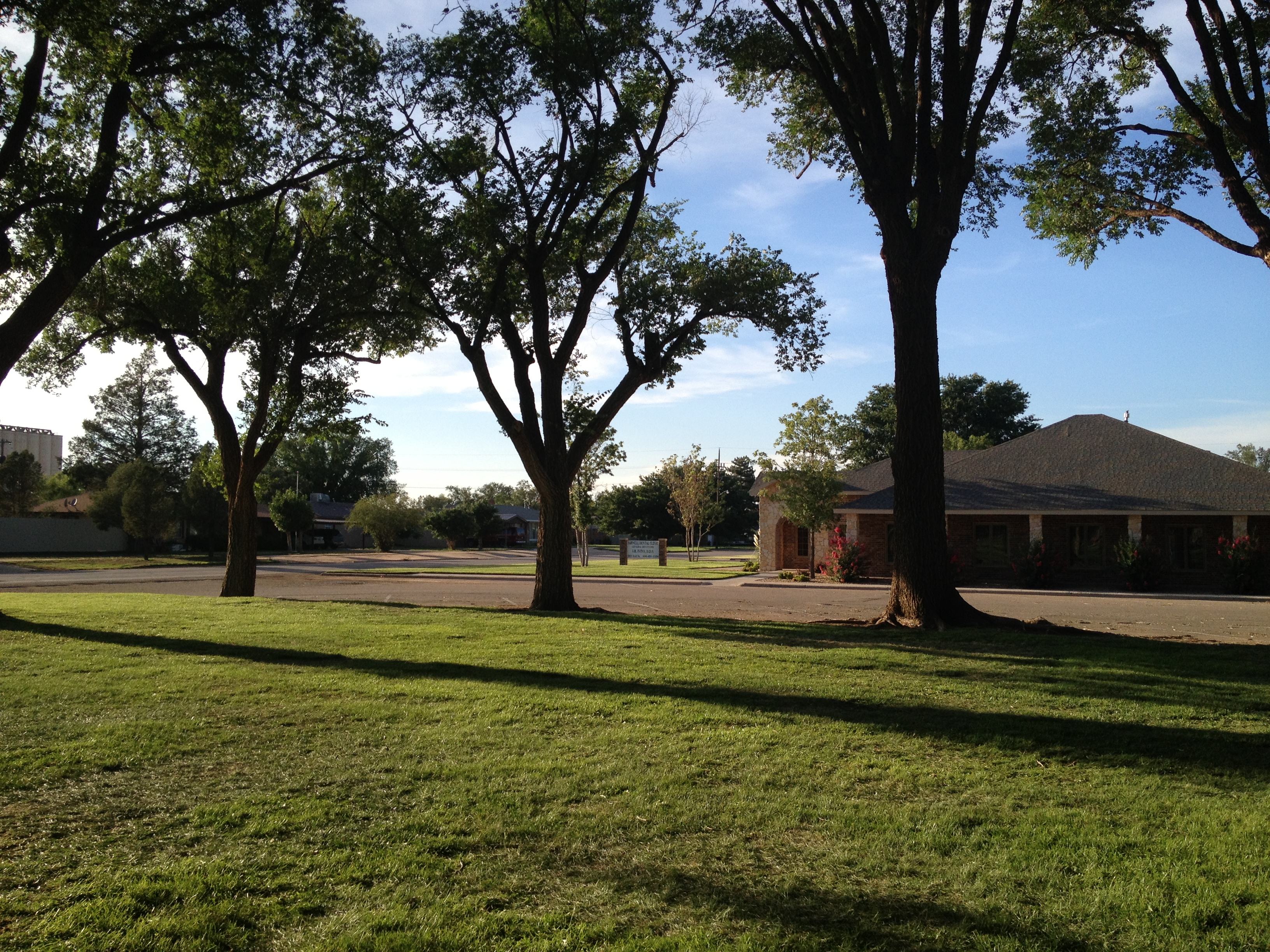
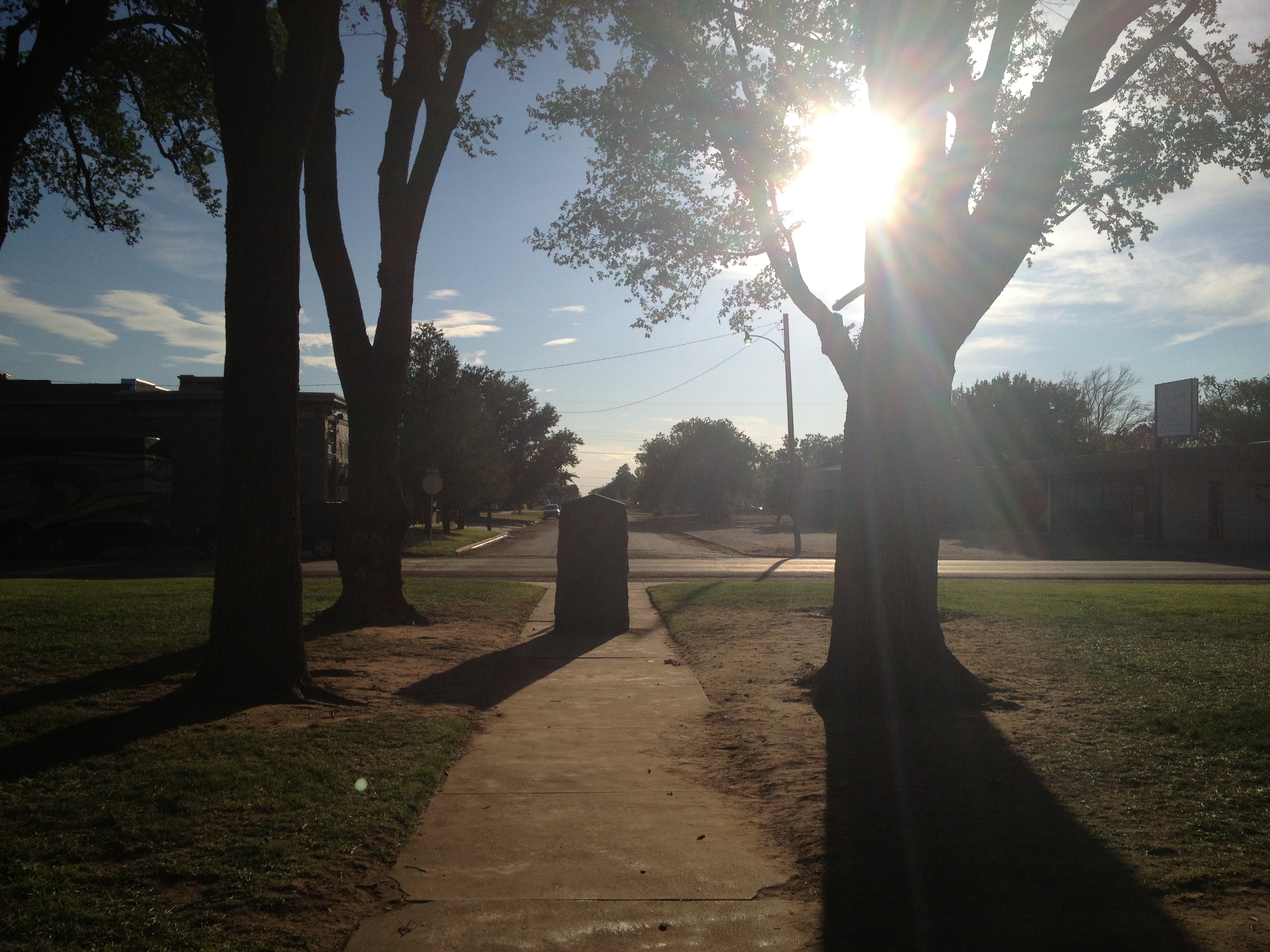
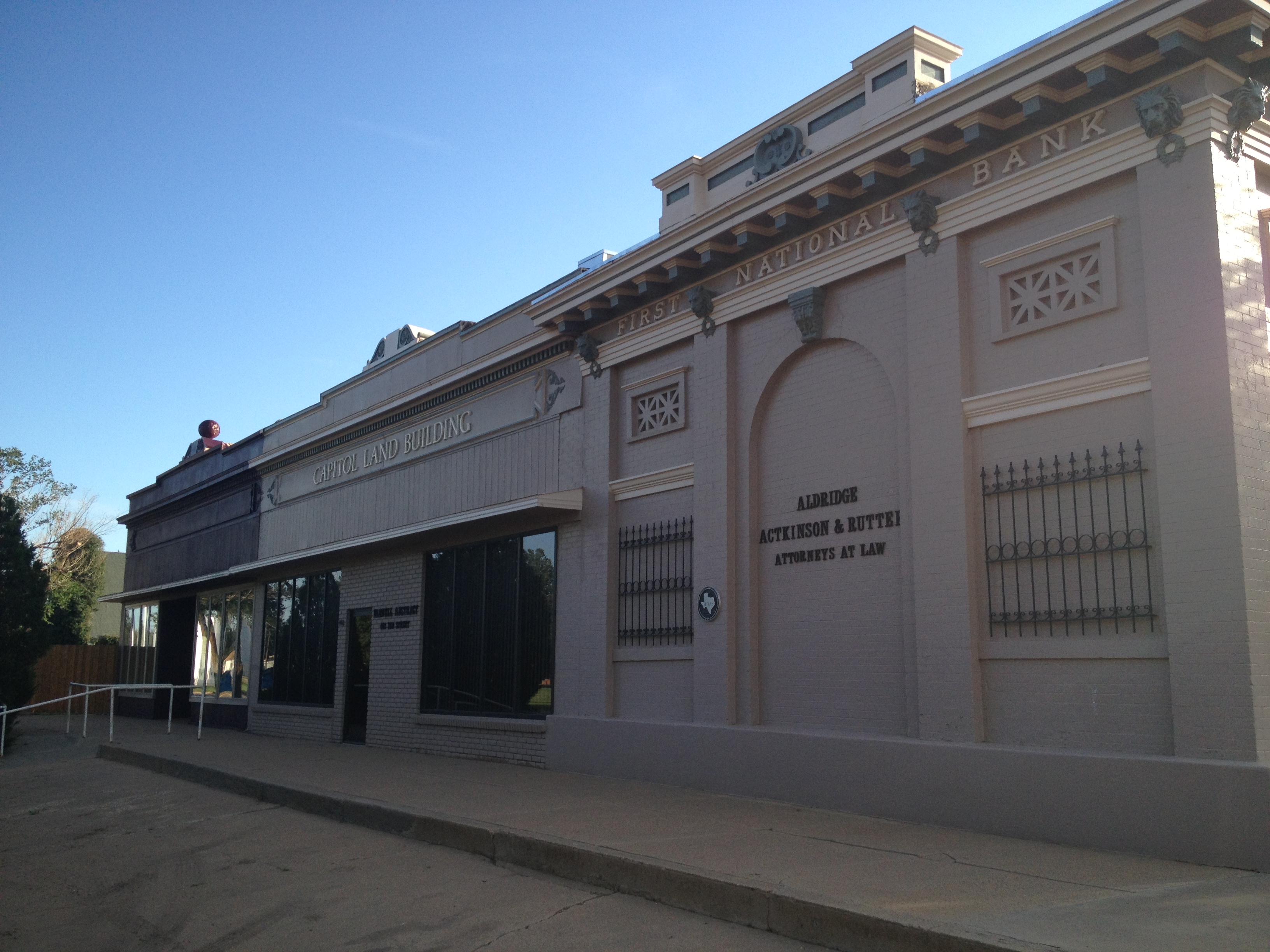
Across the street from the courthouse is a law firm housed in the historic Capitol Land Building.
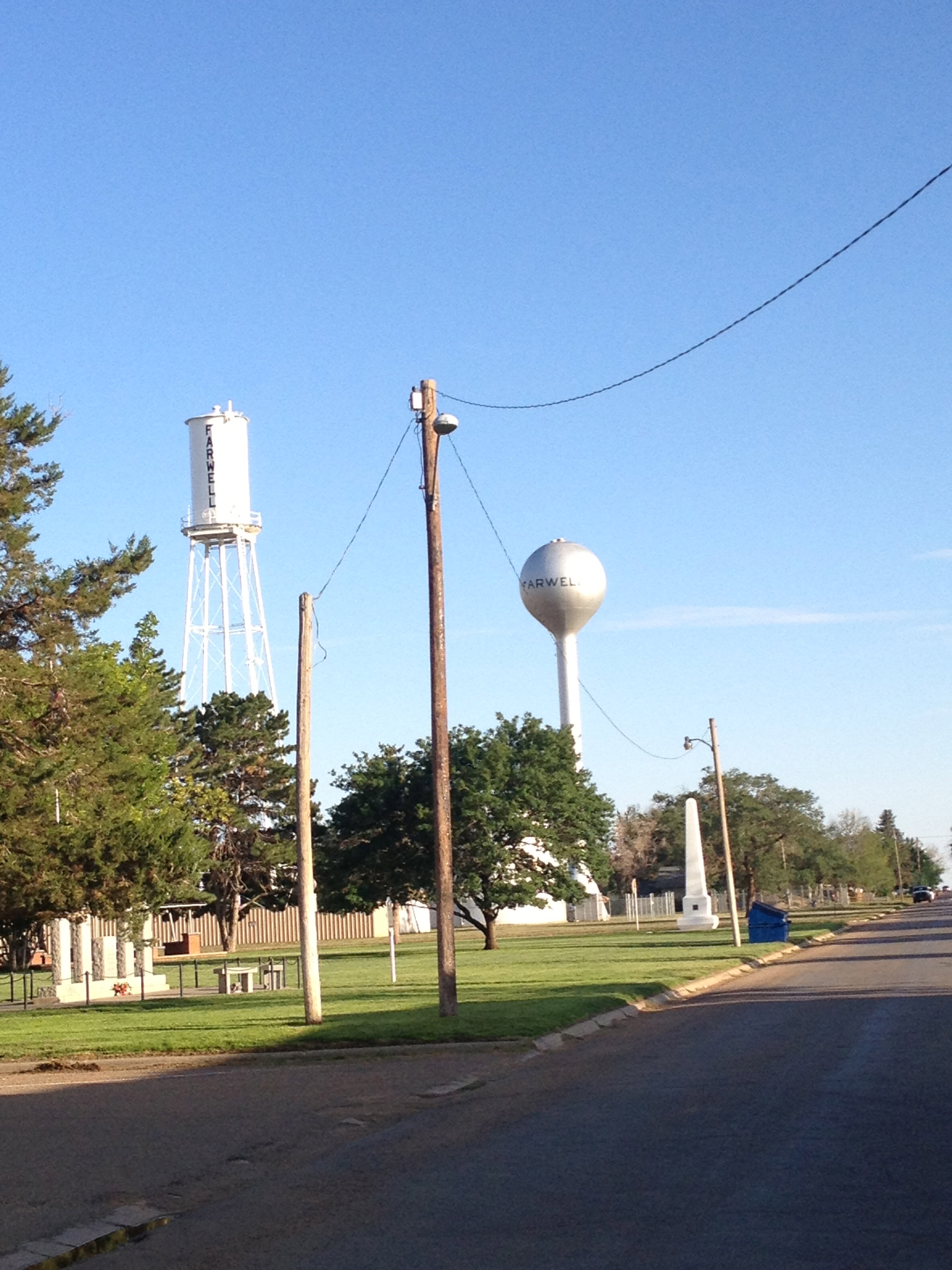
Farwell’s double water towers. At the time of taking the pictures, I did not realize I had capture the marble obelisk in the shot. From research afterwards, I’ve deduced that it is a memorial to the Ozark Trail, which extended from St. Louis to Santa Fe. The City of Farwell unveiled the creation in 2010. It cost the city $11,000.
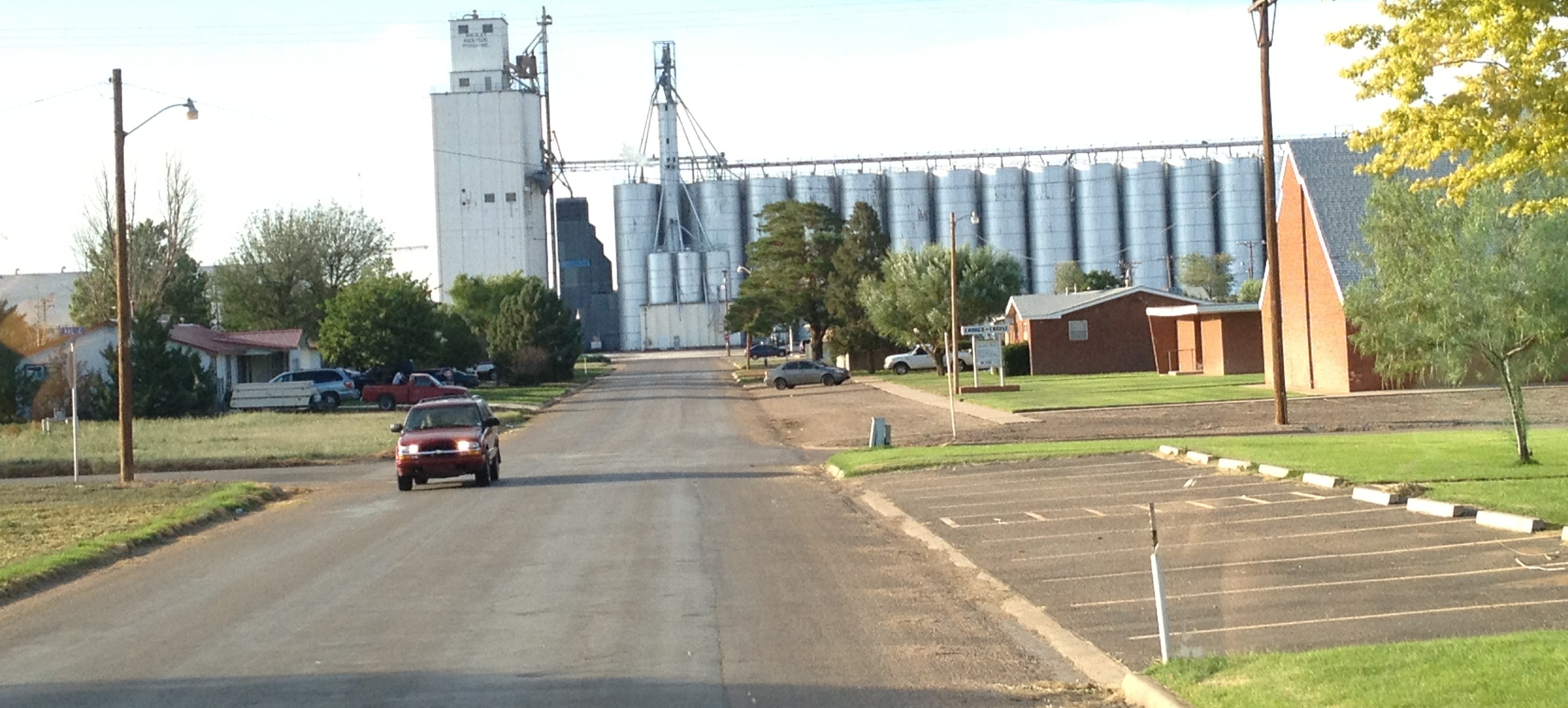
This massive grain silo dominates whatever skyline Farwell has.