 #84/254
“The county was named for George A. Lamb. It occupies 1,022 square miles of level plains dotted with playas and a few low hills. Soils range from sandy to brown and support a variety of agricultural crops, including grain sorghum, cotton, corn, wheat, and soybeans. A relatively small amount of oil production occurs in the southern part of the county.”
“Ranching arrived in the area when the huge XIT Ranch, occupying 3,050,000 acres of land, was established in 1885. Most of the eastern and northern part of the county was XIT land. C. C. Slaughter‘s Running Water Ranch occupied land in Lamb, Hale, Swisher, and Castro counties. The county’s economy developed slowly as large-scale ranching completely dominated the area during the late nineteenth century and into the first years of the twentieth.”
“Only four people lived in the county in 1890, and as late as 1900 there were only thirty-one people there. That year five ranches, encompassing 529,000 acres, had been established, and 10,908 cattle were reported. No crops were reported in the agricultural census taken in 1899. In the early 1900s the large ranches began to break up, and farmers began to establish themselves. In 1901 the XIT decided to sell its holdings.”
“George W. Littlefield purchased most of the Yellowhouse Division of the XIT, 300,000 acres, and established the LFD Ranch in 1901. The Halsell family, led by William E. Halsell, purchased 185,000 acres of the old XIT Ranch’s Springlake and Yellowhouse divisions to be operated as the Mashed O Ranch. These two new ranches joined an older ranch that occupied parts of Hockley, Lubbock, Lamb, and Hale counties.”
“In 1908 Slaughter sold much of his Running Water Ranch to land speculator William P. Soash. These lands lay around the tiny community of Olton. Soash sold the land to incoming farmers and stock farmers, and on June 20, 1908, Lamb County was organized with Olton as the seat of government. By 1910 there were ninety-two ranches and farms, and the population had risen to 540.”
“George Littlefield initiated land sales of major ranches in 1912 when he began to sell off parts of the LFD Ranch. Once the railroad was finished in March 1913 and the town of Littlefield established, farmers began to move into the area in larger numbers. By 1920 the county had 172 farms and ranches, and the population had increased to 1,175. Cropland expanded while the number of cattle declined.”
“During the 1920s the old ranchers realized great profits from land sales to thousands of newly arriving farmers; all three of the county’s large ranches began to market their acreages. Littlefield accelerated his sales in the 1920s, the Halsells initiated land sales in 1923, and the Ellwoods began to sell out in 1925. As land sales progressed, small farming communities cropped up: Sudan was established in 1917 and was followed by Pep (1923), Amherst (1923), Earth (1924), Witharral (1924), Spade (1924), and Rocky Ford (1926).”
“The county’s rapid economic development also shaped its political geography. In the years after 1920 Littlefield developed into the county’s leading community, and by 1930 it had about three times the population of Olton. After three attempts to change the county seat from Olton to Littlefield (in 1929, 1932, and 1937), Littlefield residents finally succeeded in 1946.”
Donald R. Abbe, “LAMB COUNTY,” Handbook of Texas Online
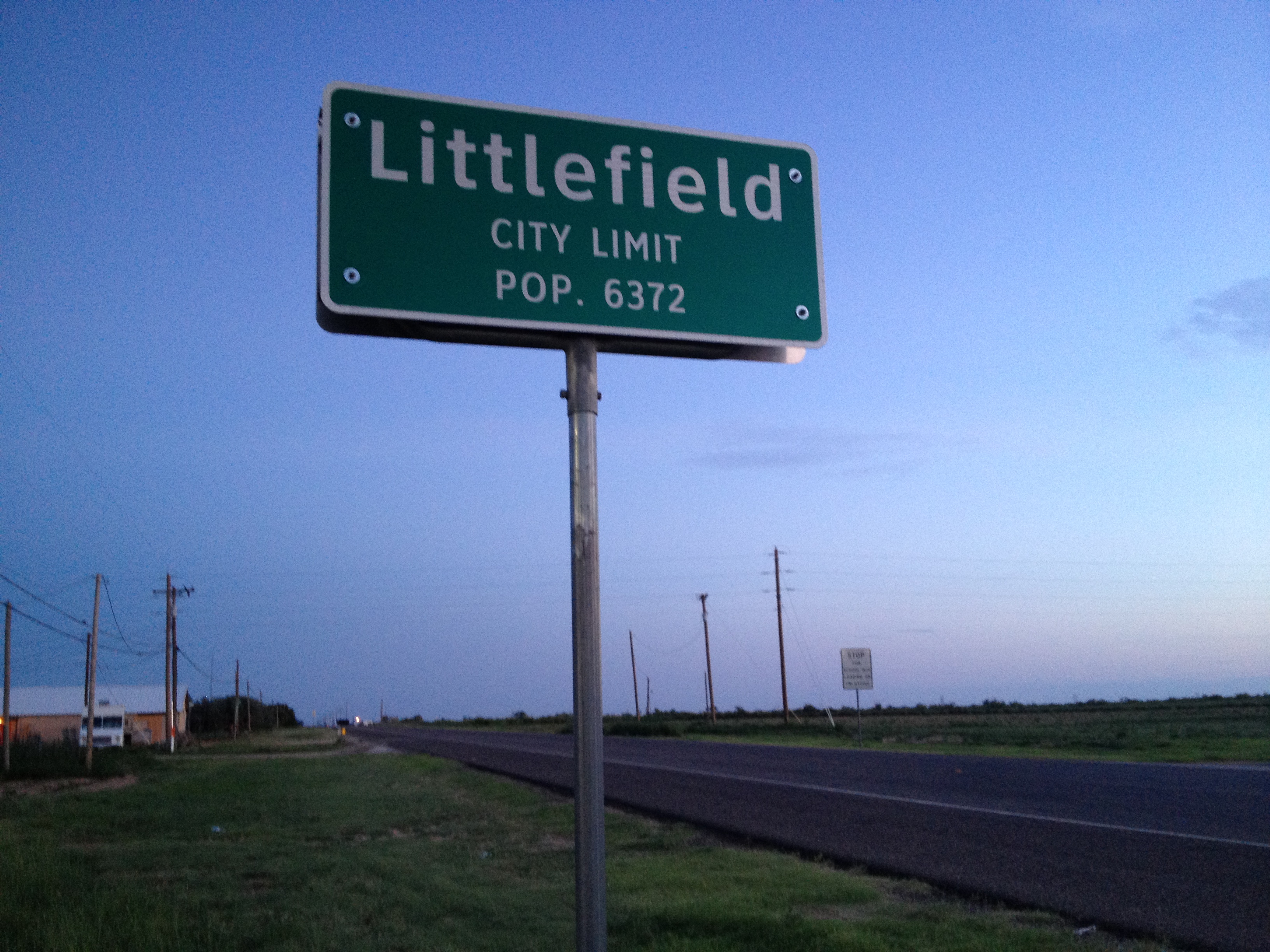
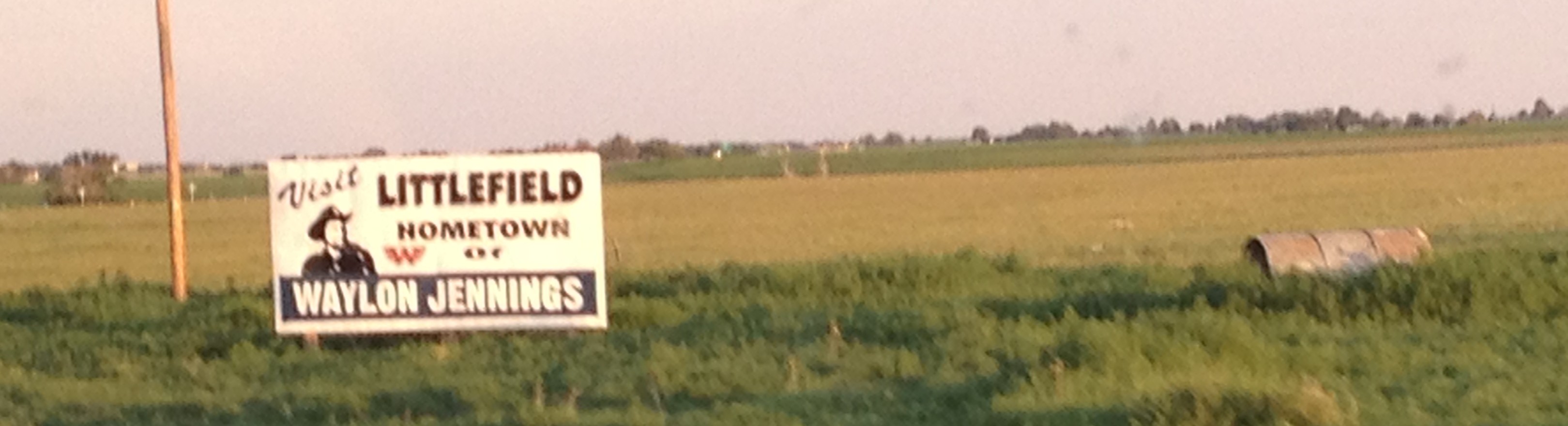
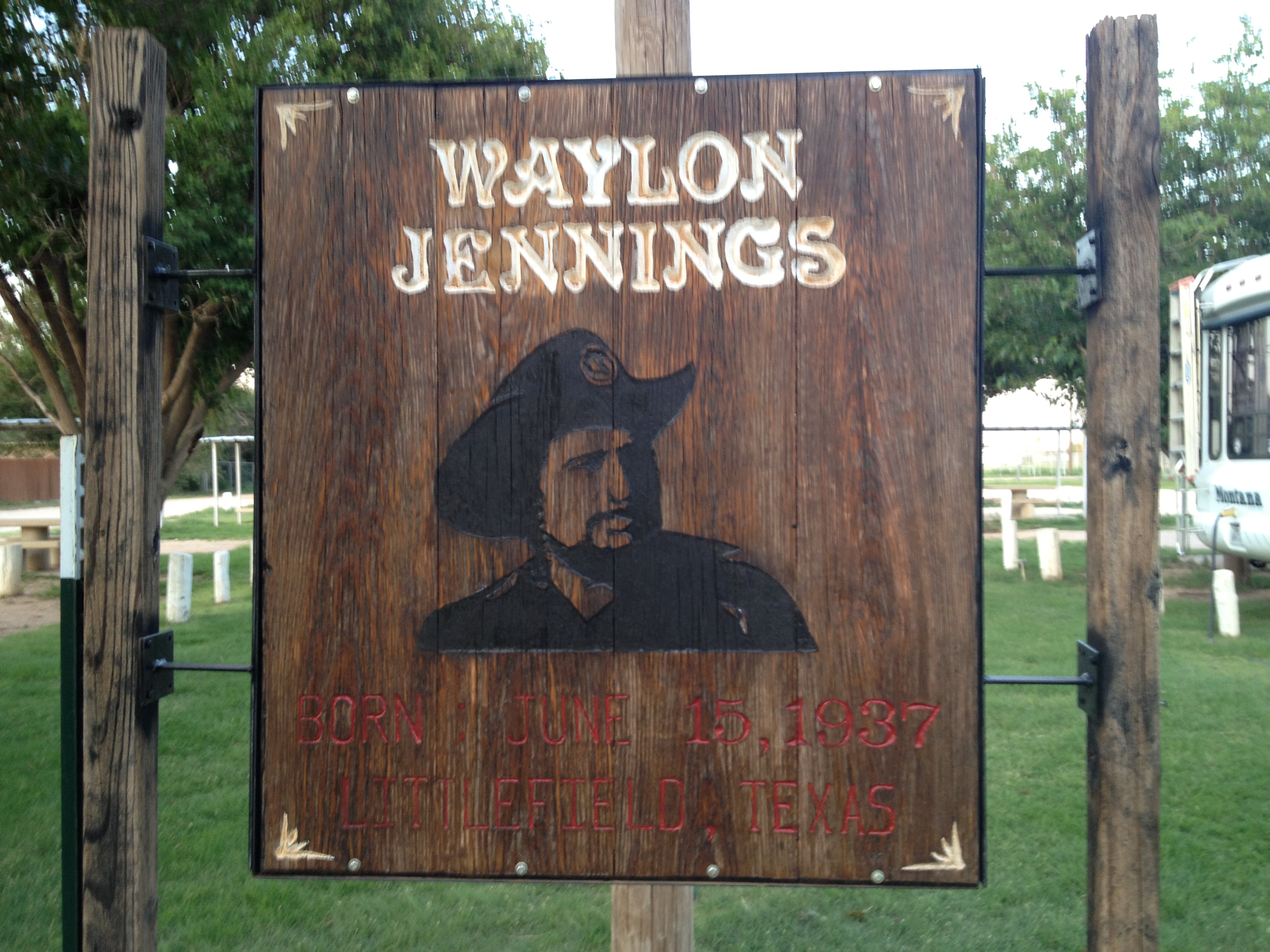
Littlefield was the birthplace and hometown of country music legend, Waylon Jennings. Being the country music fan that I am, I had to stop and get a few pictures of Waylon-related things. The people are very proud of their native son.
I was the guest of Lamb County and Littlefield on July 27 & 28, 2013.
__________________________________________________________________________
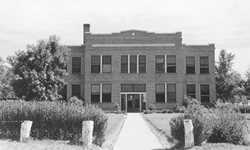
Lamb County Courthouse 1922 – Olton
(Photo Courtesy: THC)
This was the second courthouse of Lamb County, constructed in 1922 after the 1908 design burned. It was located in the original county seat of Olton and its use was terminated as a courthouse was terminated in 1946 when county government was moved to Littlefield. It was remodeled in 1949 to be used as a hospital, but was regrettably demolished in 1964.

(Photo Courtesy: Google Maps Street View)
While I personally have not been to Olton, I do know that this lot was the location of both Olton courthouses, 1908 and 1922. A historical marker explains more.
 (Photo Courtesy: Terry Jeanson)
__________________________________________________________________________
Lamb County Courthouse 1955 – Littlefield
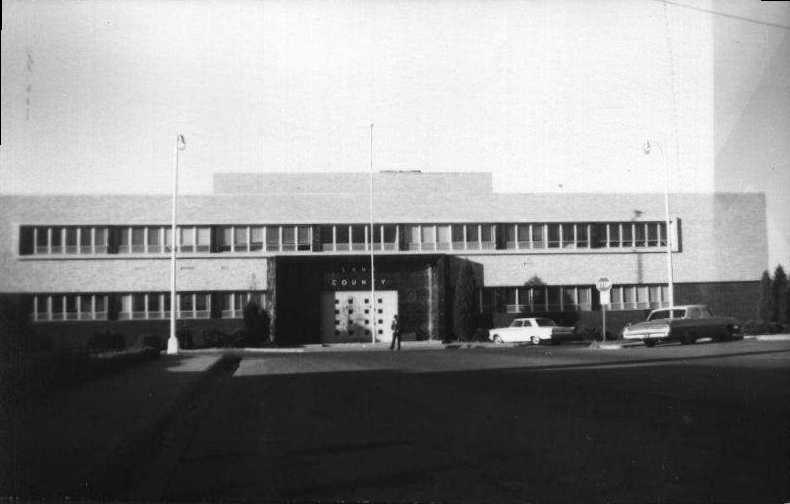
Architect: Atcheson & Atkinson
Number for the County: Third
Style: Modern
(Photo Courtesy: THC)
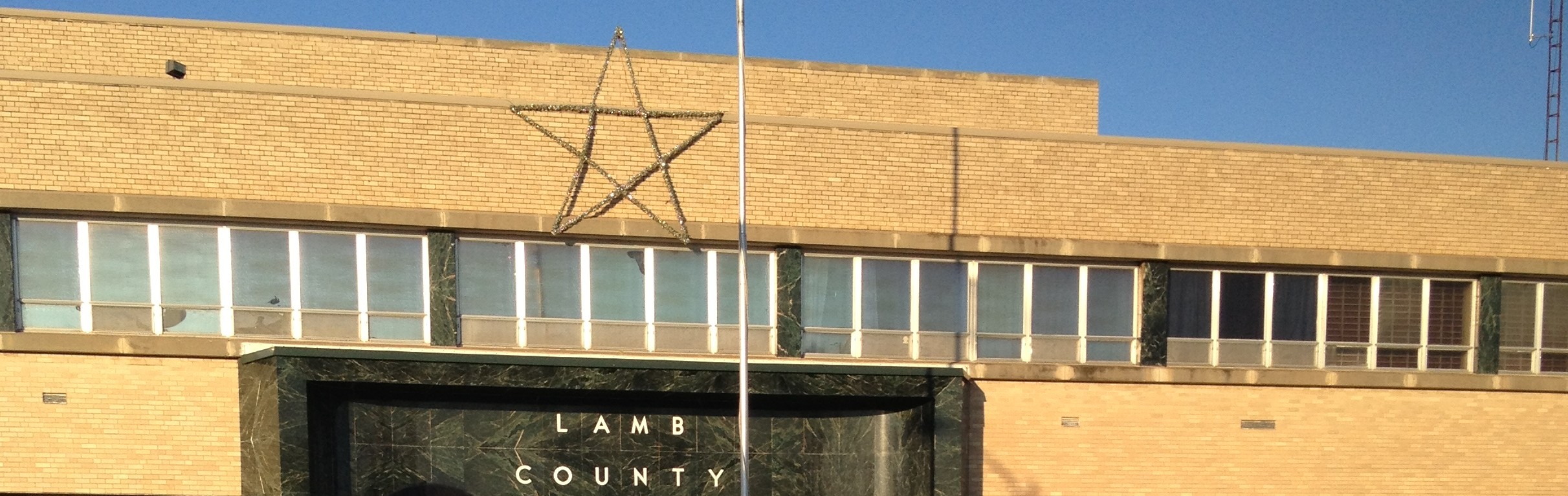
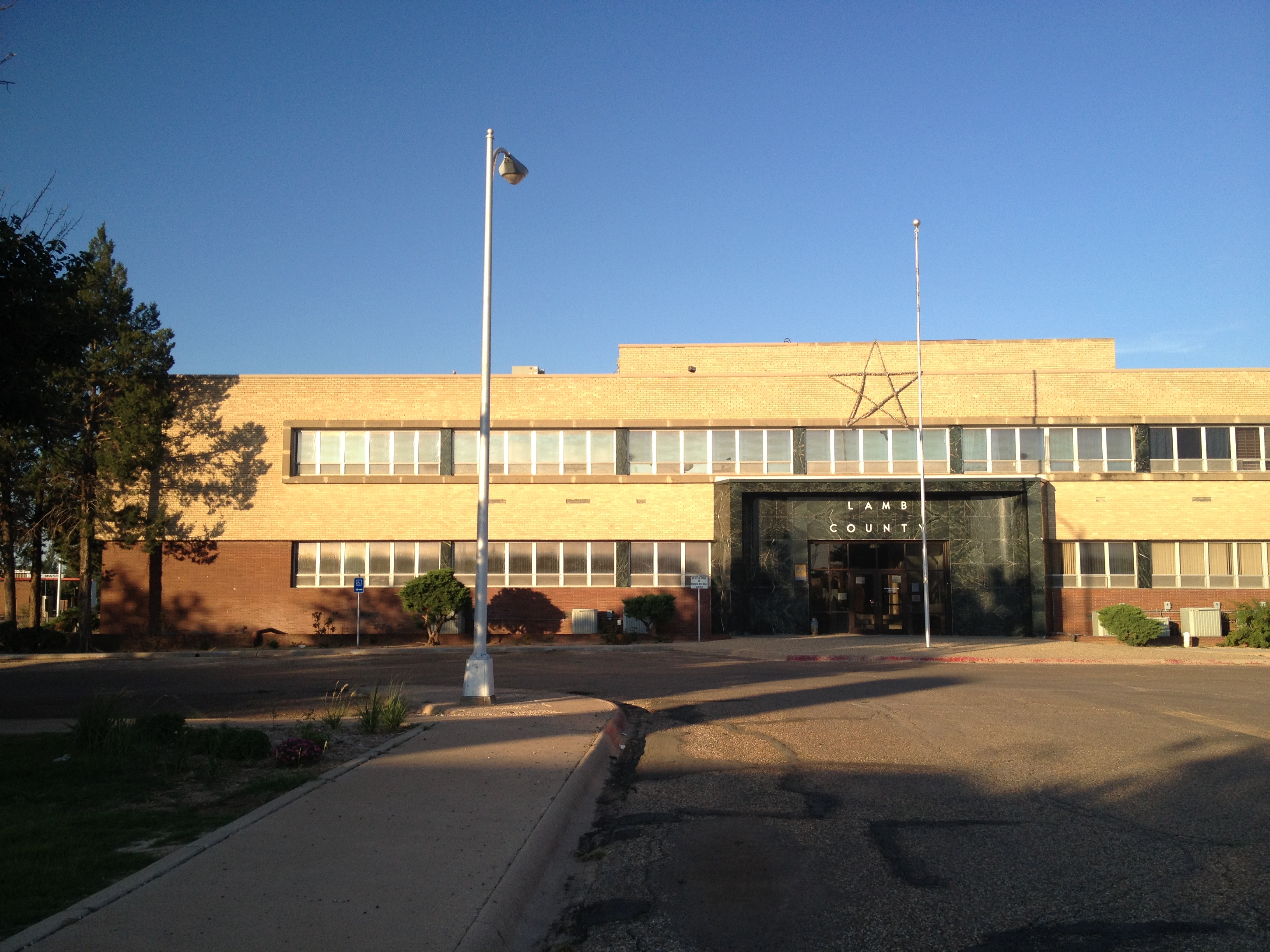
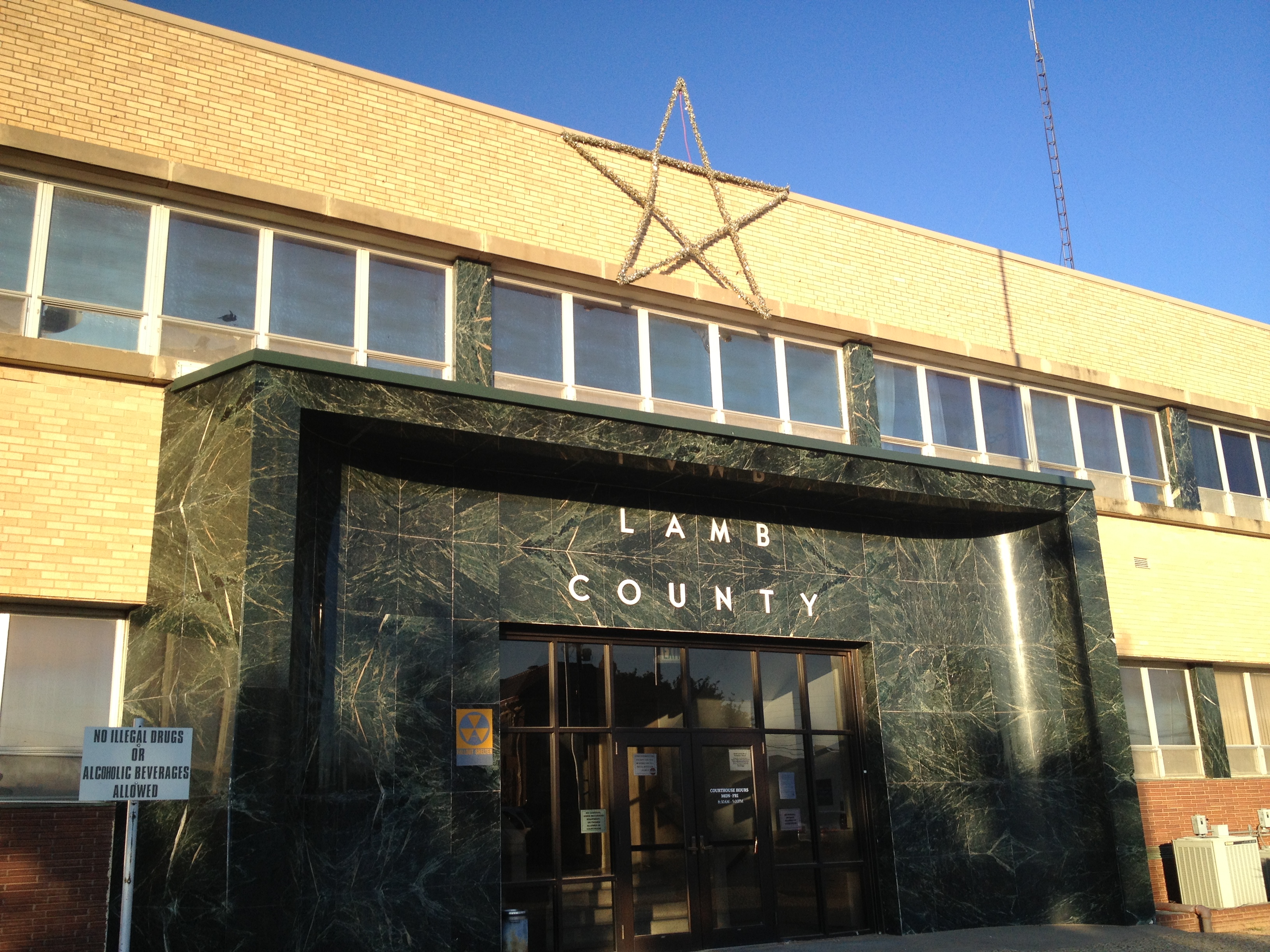
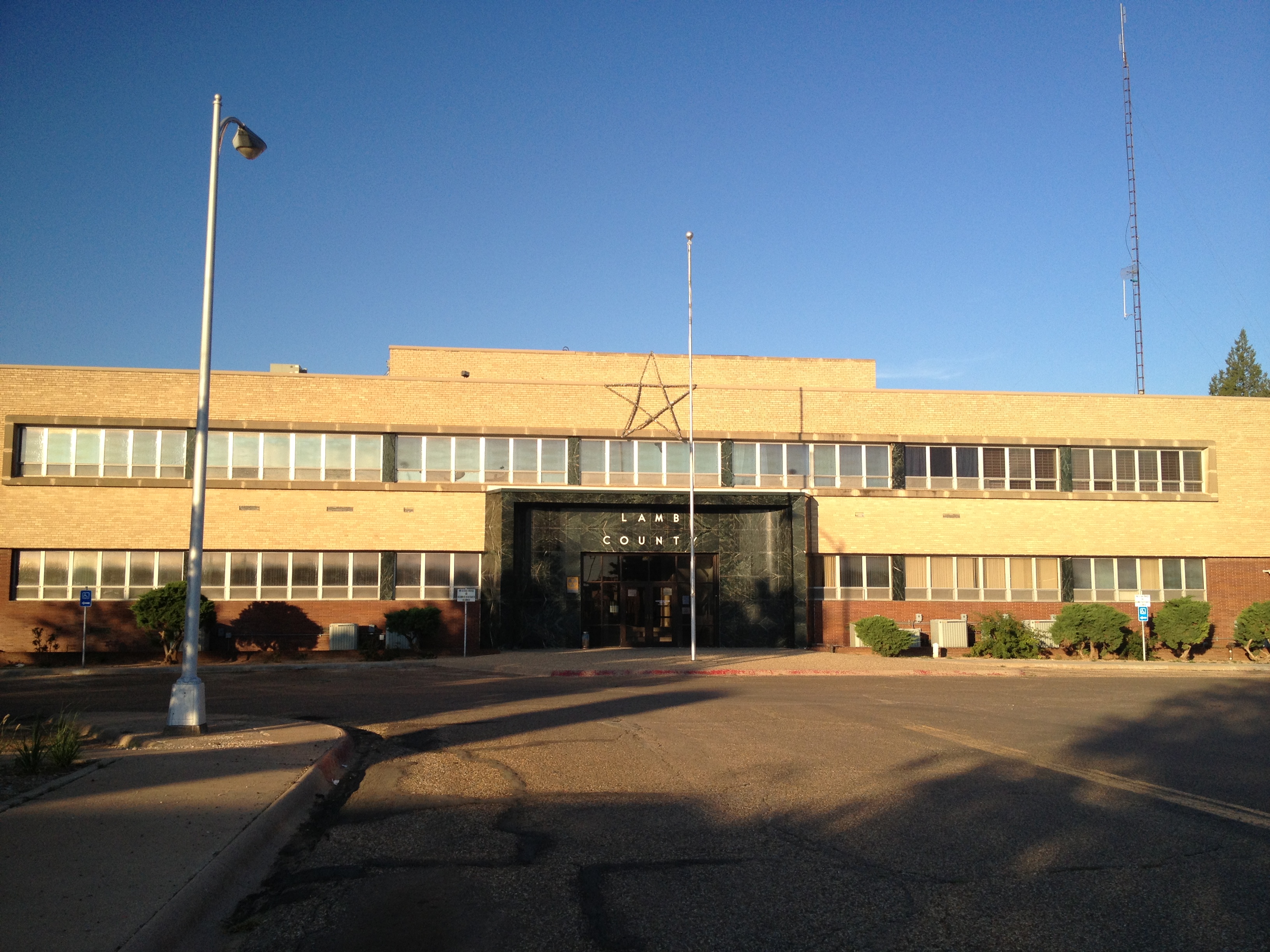 The Lamb County Courthouse has not changed much since 1955.
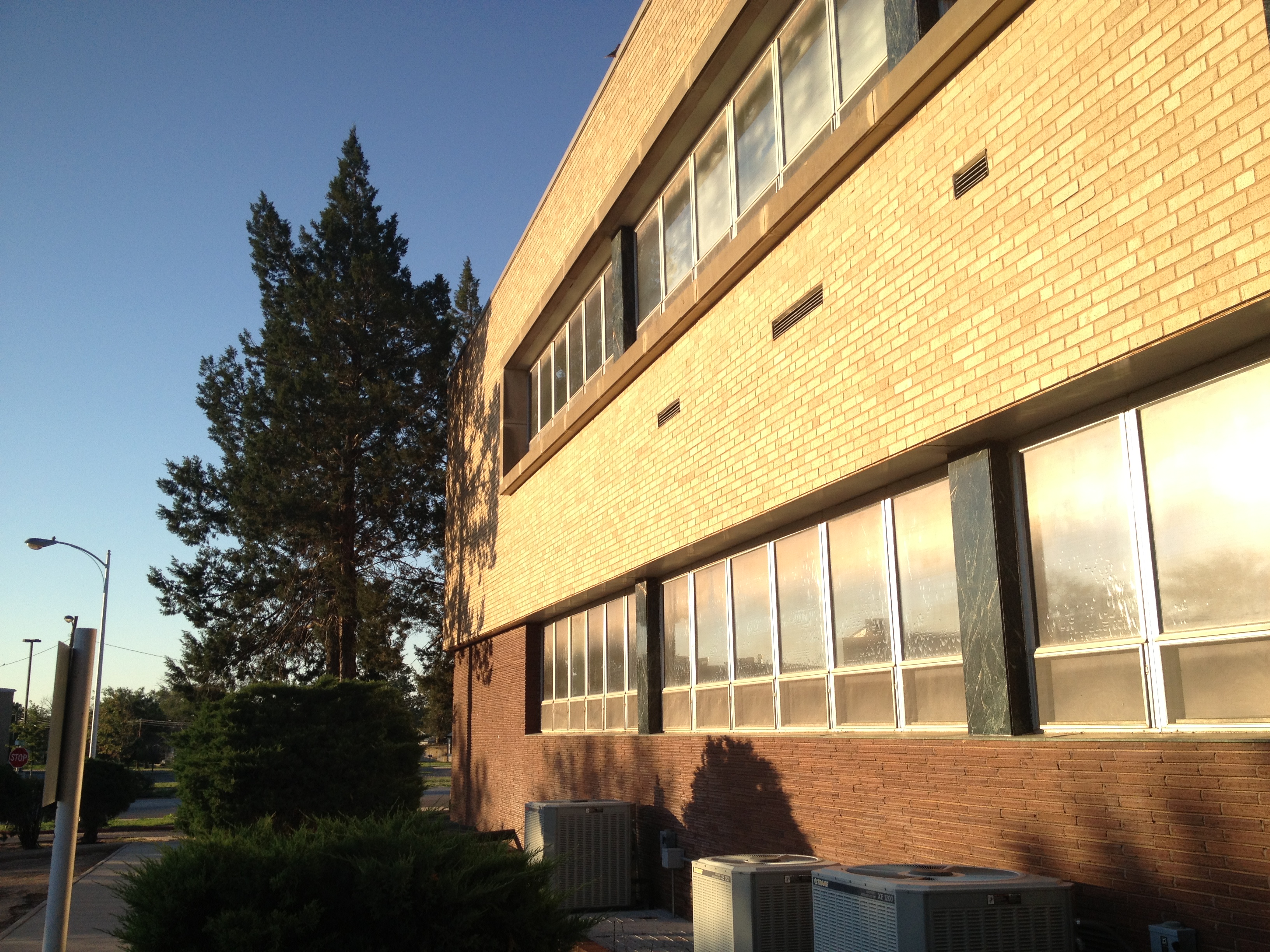
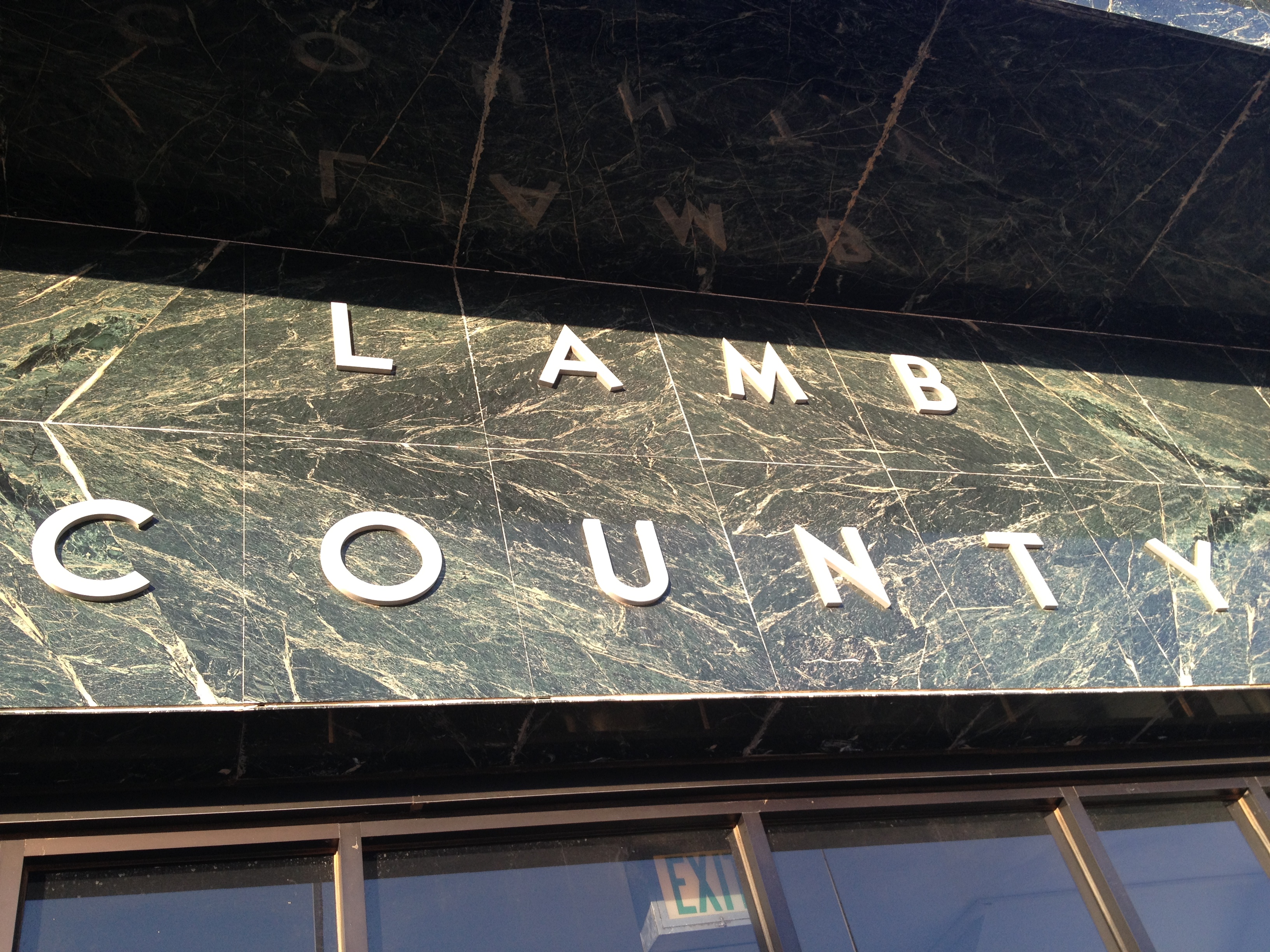
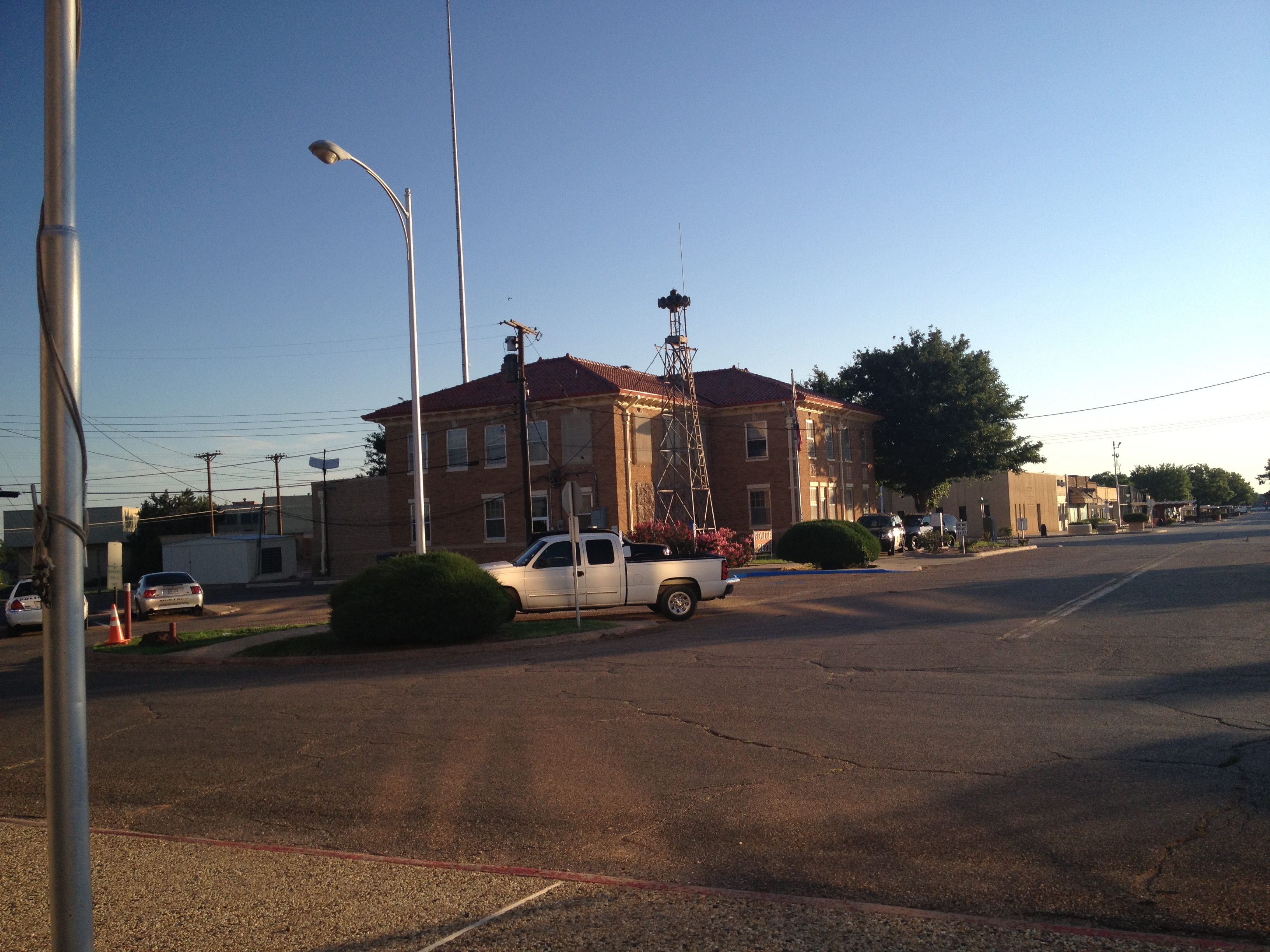 The Littlefield Police Department is diagonally across the courthouse’s parking lot from the main entrance.
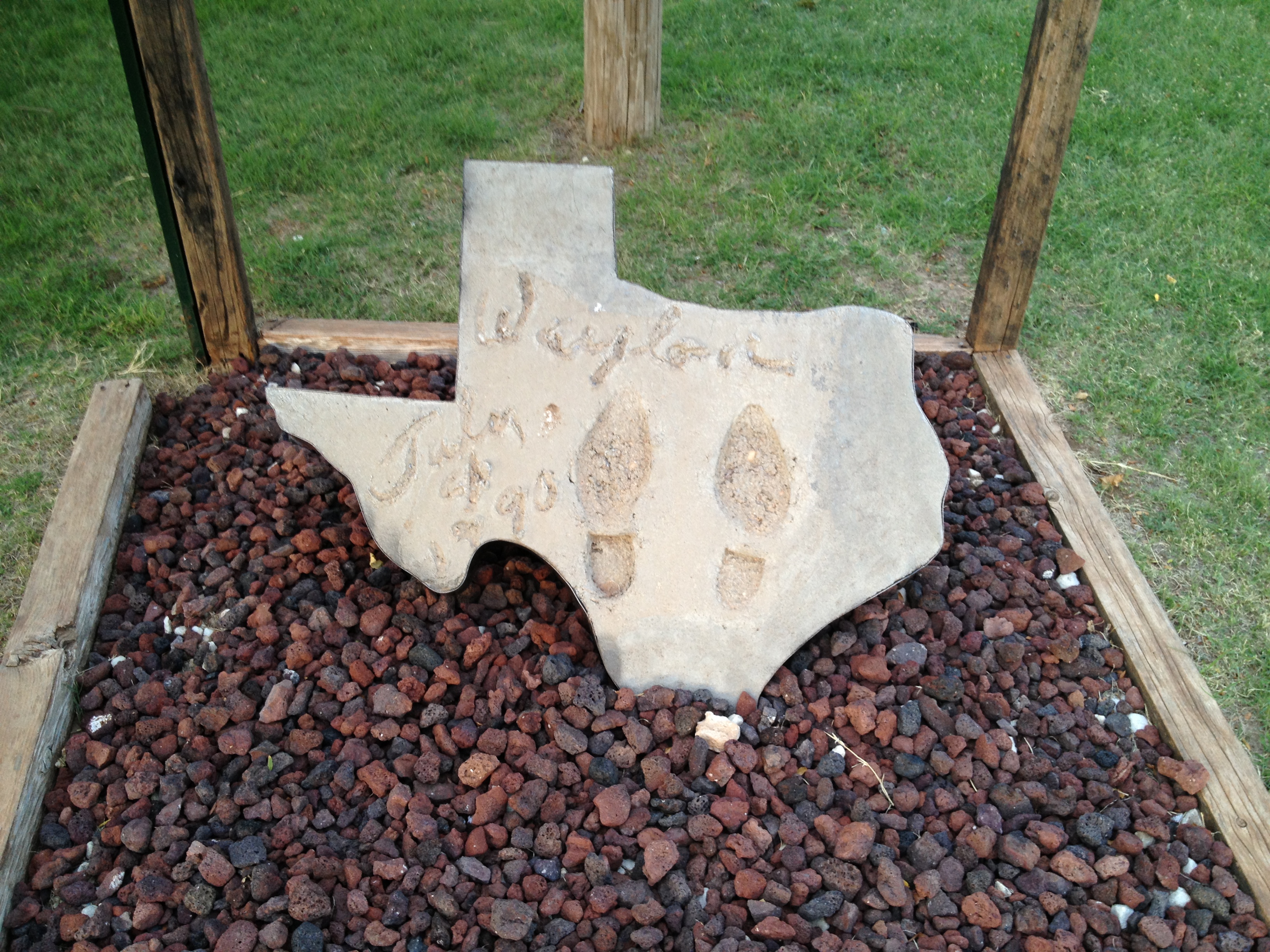
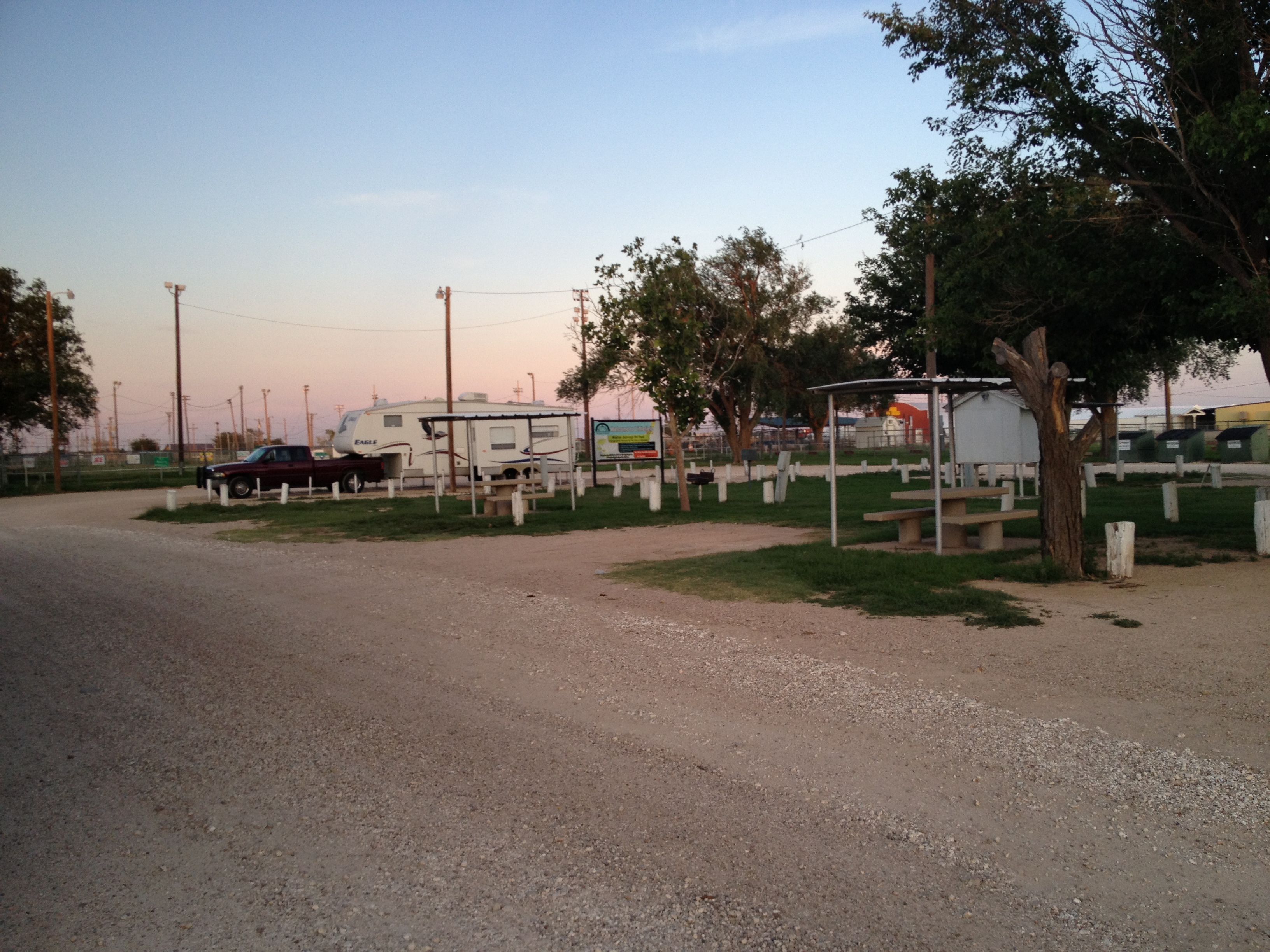 One of the ways the Waylon is honored in the town is with a small RV park in his name.
“The free Waylon Jennings RV Park, provided by the City of Littlefield, offers eight spaces for RV vehicles, and one longer space for larger rigs. The park was established by several local individuals back in the 1960s. A Waylon Jennings Memorial was established in the park in 1990 by the Littlefield Arts and Heritage Committee, when Waylon put his boot prints in wet cement, as a permanent part of his legacy. Guests may stay for four 24-hour periods, and after that, a charge of $20 per day is charged.”
- City of Littlefield’s Website
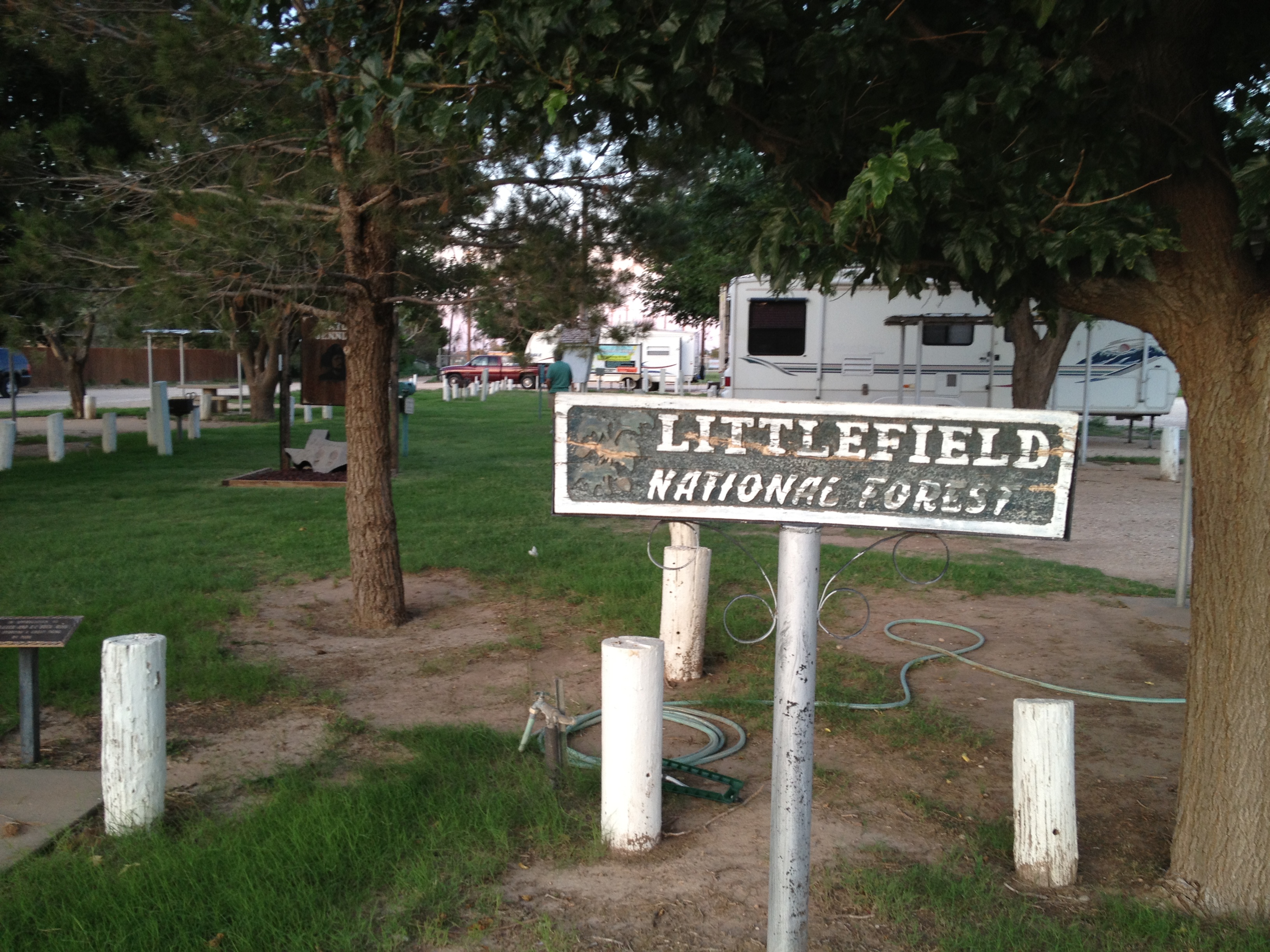 Also at the “Waylon Jennings RV Park” is Littlefield National Forest, comprised of only a handful of trees.