
*Disclaimer: While this post does include visits to two different courthouses, the majority has nothing to do with the rest of this website. Day 2 of my trip was spent in Galveston, enjoying the sights. If you’re solely interested in courthouses, move on to Day 3.
Our day began later in the morning than usual. Yesterday’s trip had been long and tiresome. We wanted this day to be the opposite, with a more relaxed feel. The goal (besides revisiting the Galveston County courthouse) was to just enjoy the town, taking in the sites and sea.
The only thing we knew about the day at that point was that we’d be checking out of our Galveston hotel. Later in the day, we planned on taking the Galveston Island-Bolivar Peninsula ferry across Galveson Bay to better access Chambers County, the next courthouse stop. That meant we’d have to find a new hotel, somewhere close to Anahuac, the Chambers County seat. Galveston was not that.
In the meantime though, we had a city to see. Once checkout was complete, we proceeded to the nearest stop, Lakeview Cemetery. Buried here is David G. Burnet, first president of Texas (before it officially became a republic). There’s much to say about him, so instead of typing it all, I’ll include a link to more information. The previous October, I had the chance to visit the final resting places of Sam Houston and Mirabeau Lamar (in Huntsville and Richmond, Texas respectively), both past presidents of the Republic of Texas. To honor all past presidents, I still had David Burnet and Anson Jones to see (Jones is in Houston).

Lakeview is one of the oldest cemeteries in Galveston and houses some of the city’s most important historical residents. Several people here were victims of the 1900 hurricane that devastated the city and went down in history as one of the most severe and damaging storms to ever hit the United States’ coast.
After several minutes of driving around the cemetery, we still had not found Burnet. Eventually, after searching for more information on the Internet, I concluded a large obelisk serves as his grave marker. The cemetery has a few of them that dot the area and after looking around, I spotted one very close to the car. Reading the inscription, I could tell this was the grave of Sidney Sherman, commander of the left wing at the Battle of San Jacinto. He is also honored with Sherman County, which I had recently visited only a few weeks before during my Panhandle trip. 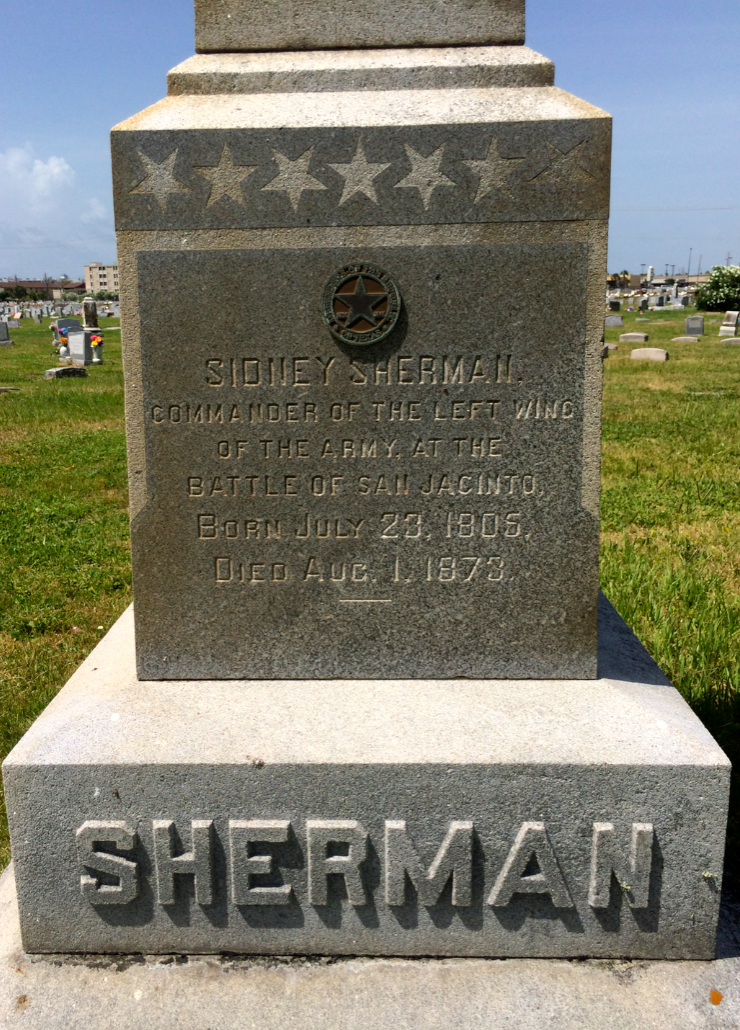 Walking around the other side of this obelisk, my grandfather remarked, “Burnet’s over here.” Sure enough, this large marker honors both men.
 Turns out, this obelisk does not stand directly over Sherman and Burnet’s graves. Both men are in separate graves, each to the opposite side of this large marker.
 I was glad we found it. Only Anson Jones left to see!
Our next stop was lunch. Keep in mind, we got up later than usual. For lunch we stopped at Fisherman’s Wharf, one of the more visited seafood restaurants along the bay. On our way downtown from Lakeview, we passed by a series of Corvettes blocking the road. Apparently, traffic was jammed due to an actual Corvette parade in celebration of Galveton’s Juneteenth Festival.

 At the Wharf, we had another good seafood meal. The fried shrimp were especially good.
Next, we walked across the street to the historic side of Galveston’s downtown. The storefronts along the series of roads here are unique and old, to say the least.
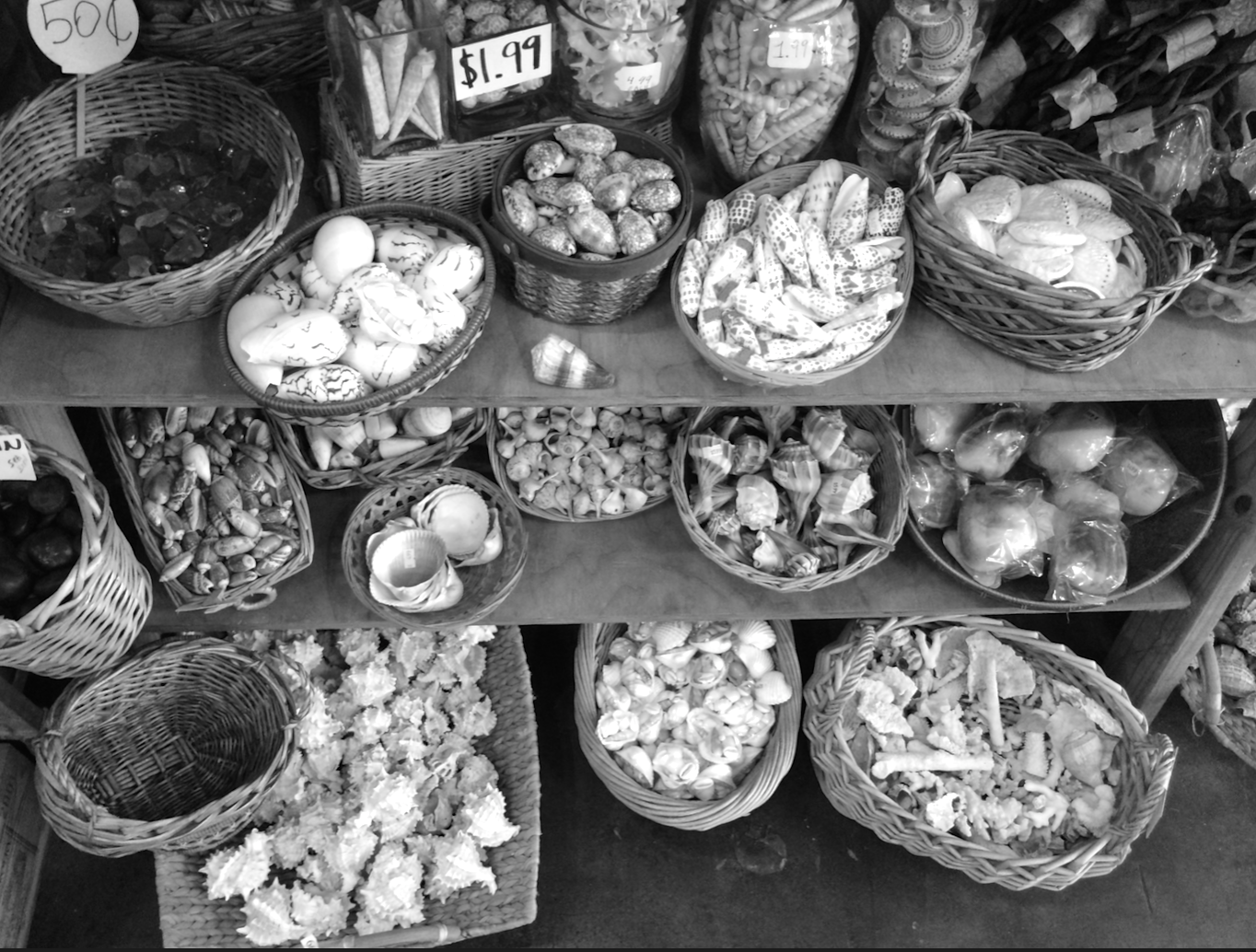
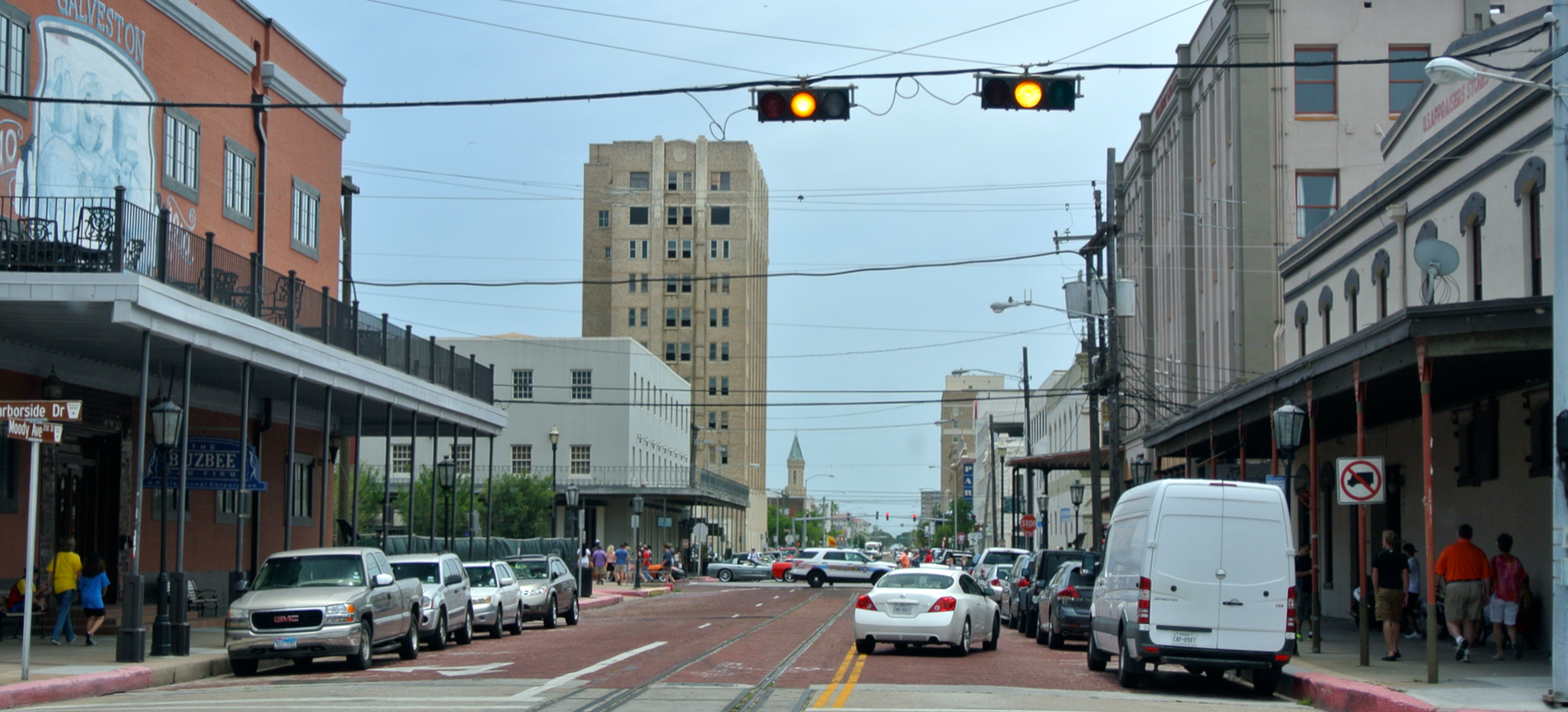 In one of them we stopped for typical beach tourist souvenirs: shells and such.
 We took some time after shell shopping to observe the Juneteenth Parade that was underway. A group of elementary school kids gave an especially comical singing/dancing performance.
It was time now to get serious about courthouses. Galveston County has two, the modern “historic one” and a much newer, much larger courts building that better resembles a historic courthouse. The newer one was first. It’s on west of downtown, near the main causeway providing entrance to the island. The first time I came to Galveston to photograph the courthouse, I did not know of this one’s existence. Therefore, it was totally new to me.
 While there, we came across…inmates! Just like I’d seen in both Grimes County (October 2013) and on several occasions in my recent Panhandle trip, the county was putting criminals to work at the local courthouse. They were busy trimming trees while I photographed this building.
At this point, I put off the other courthouse in lieu of going to the beach. I didn’t bring a swimsuit for this trip, but even if I had, I’m not sure I would have wanted to get in the water. The beaches, all along the Galveston seawall, were covered with hundreds and hundreds of yards of upturned seaweed, stretching from one side of the city to the other.

A little seaweed probably never hurt anyone, but I wasn’t interested. Instead of walking the beach, we went to Murdoch’s, the main beachfront souvenir shop in Galveston since 1970.
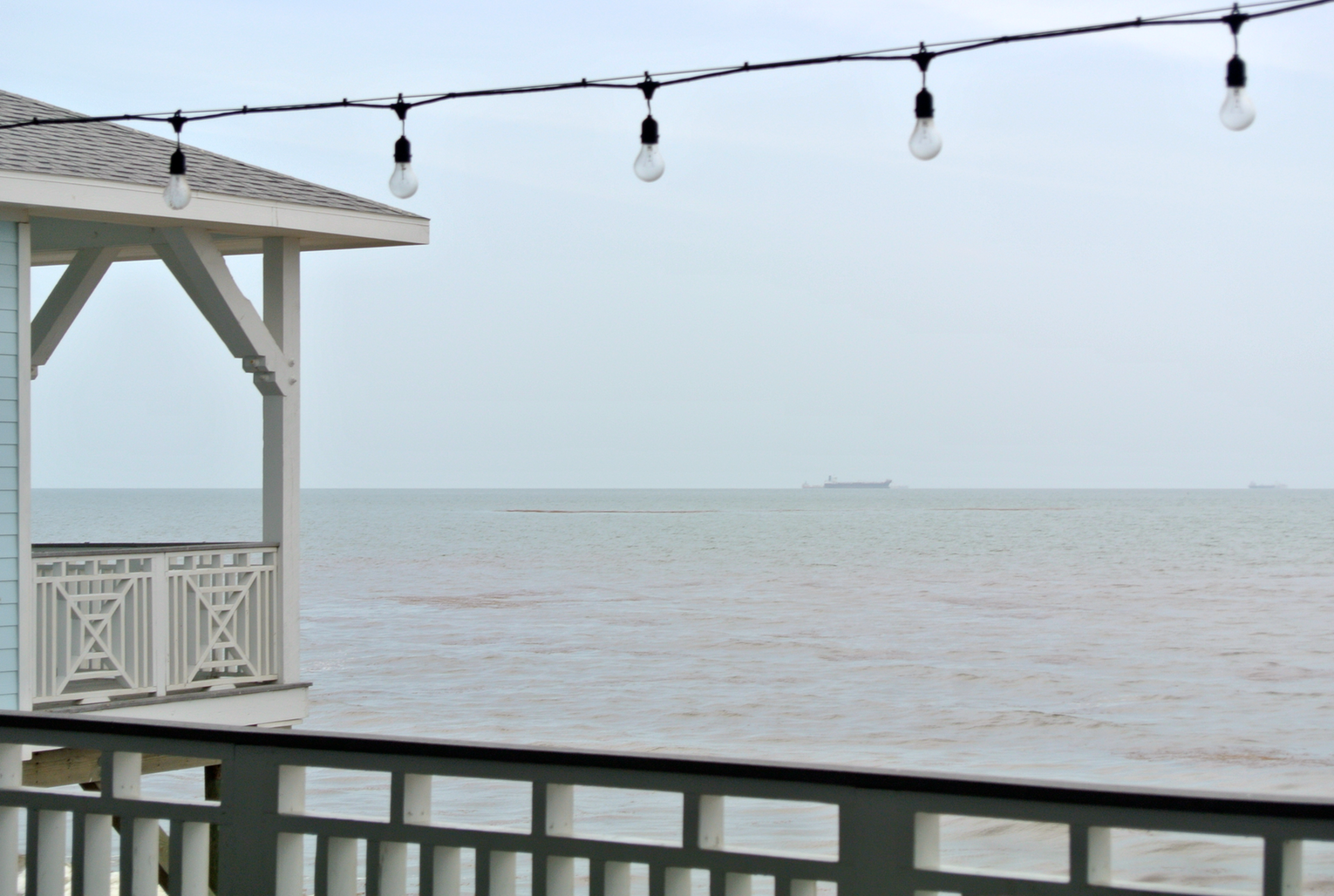
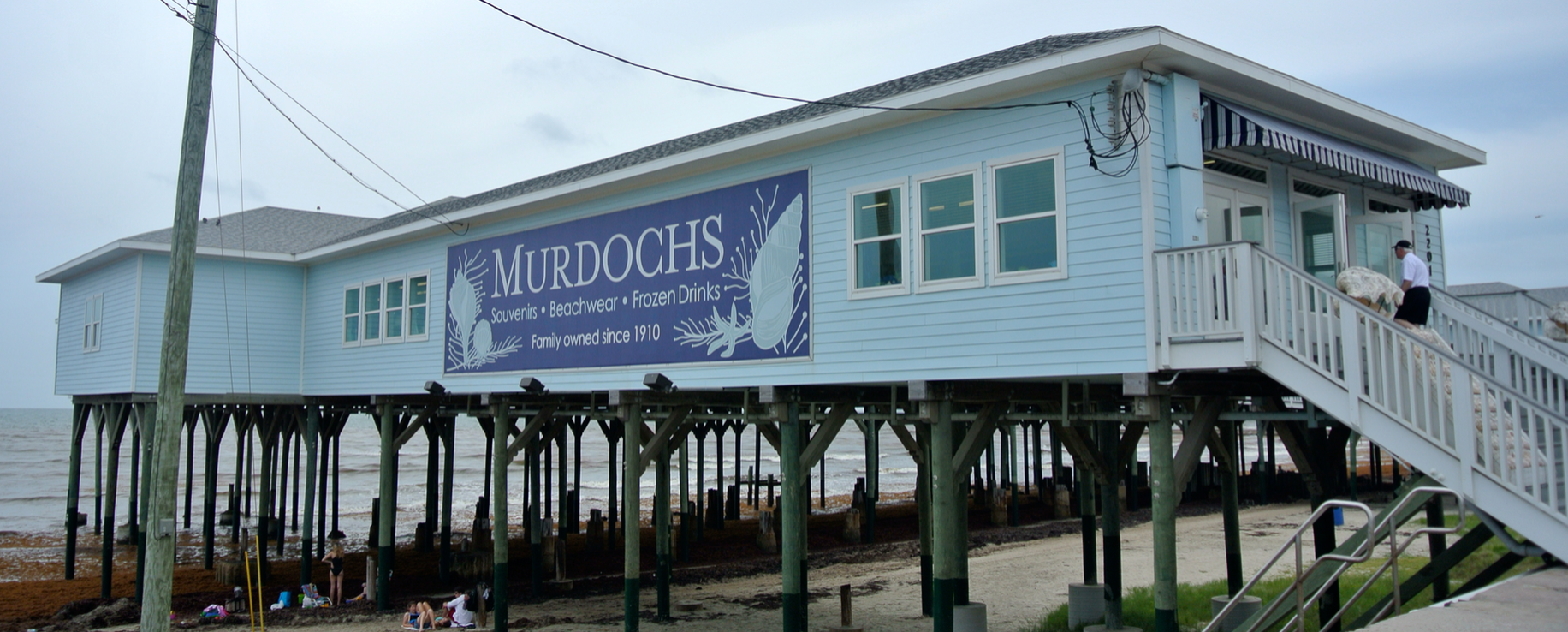 At Murdoch’s there’s a covered balcony that offers a rare look at the Gulf of Mexico from Galveston without the seaweed covered beach in the way.
 While on the southern side of the island near Murdoch’s, we also passed by Pleasure Pier, the historic Galveston boardwalk.
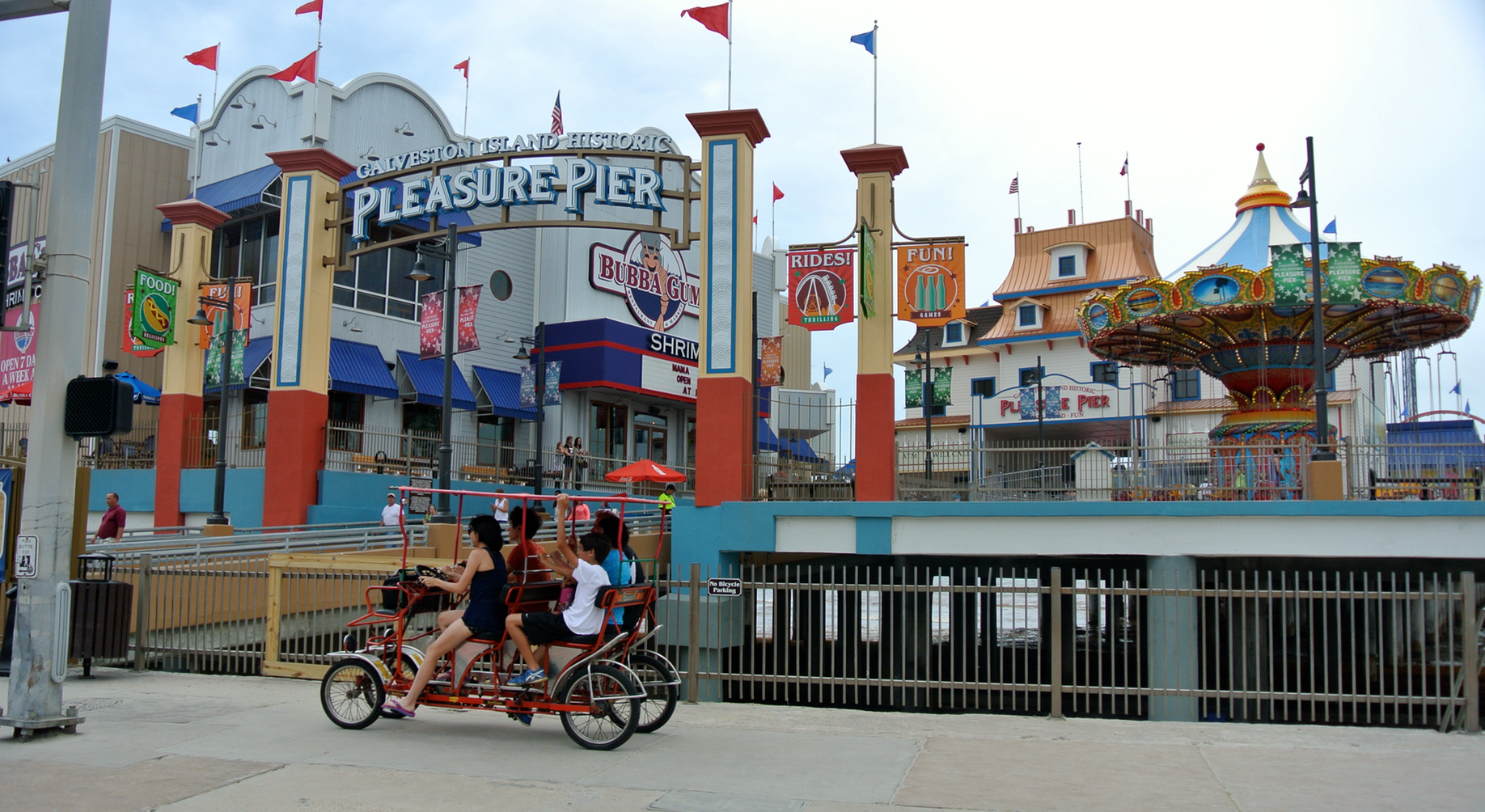 It’s very busy in the summertime.
My short courthouse break over with, we moved on further into downtown to revisit the 1966 building, constructed forty years before the other one. It’s less impressive.

Groovy

The courthouse rests on the edge of Galveston’s “Castle District”, a community of historic Victorian homes. We drove through the streets looking at some of them next.

 The most striking of these homes is undisputedly the 1892 Bishop’s Palace, located at the corner of Christopher Columbus Boulevard and Broadway Avenue J.
 It is now open to the public. After debating whether or not I wanted to see it or move on to the ferry, I made the decision to stop in and take the tour. I was very glad I did.


 The interior is remarkable!
It was a well deserving use of forty-five minutes. If you’d like to know more about the Bishop’s Palace, you can follow the link here.
It was getting later in the afternoon and we had a ferry to catch! We left the mansion behind and moved on to the northeast side of the island to board the boat for Port Bolivar. We had about a thirty minute wait for the ferry before being able to drive on.
 The trip to Port Bolivar took another twenty or so.
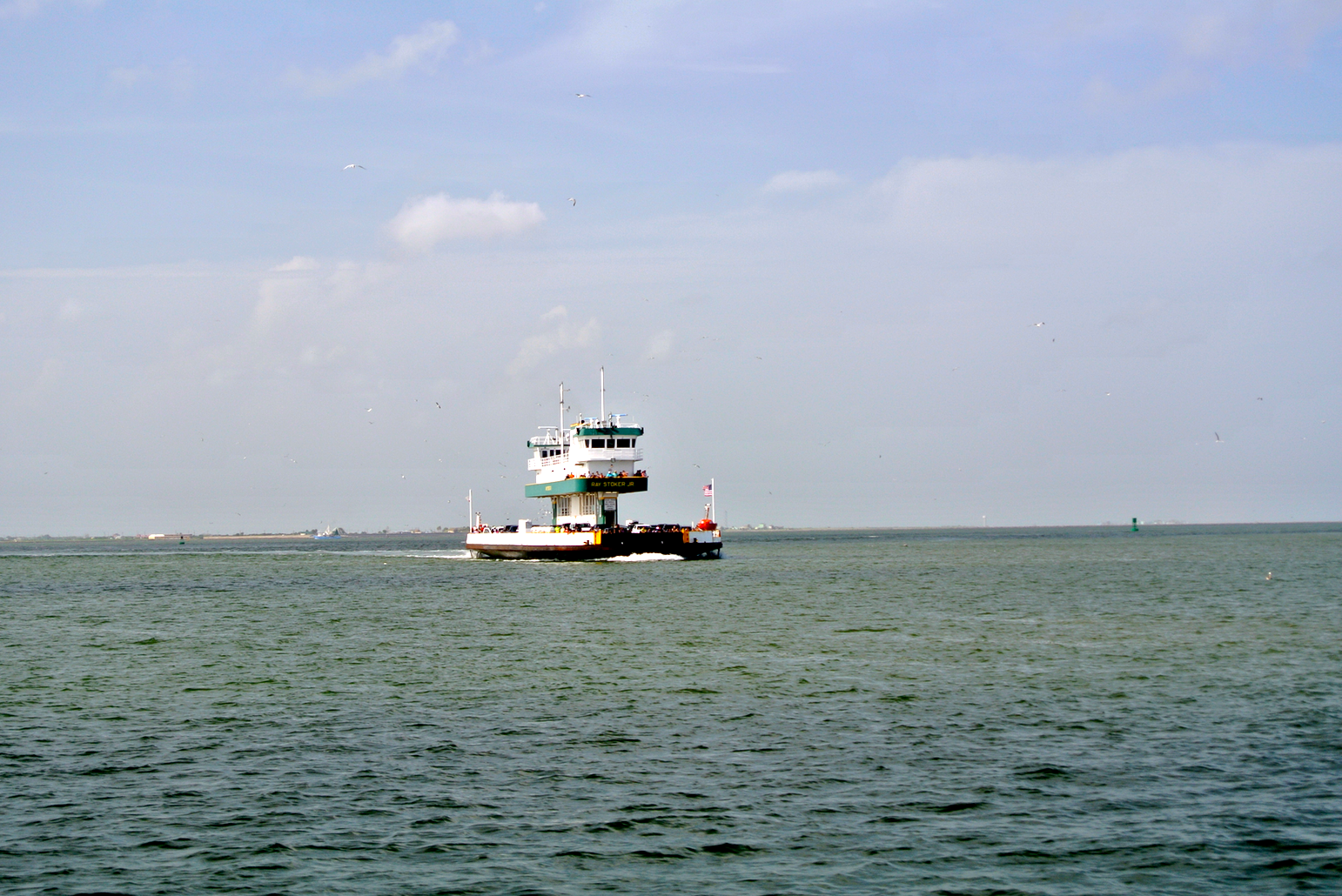

 Leaving Galveston behind
 As we drove from Port Bolivar further inland, we began to get hungry. Looking up restaurants in the area, we came across “Stingaree”, a seafood joint overlooking the East Bay in Crystal Beach, Texas. We stopped there for another excellent dinner.

 While we sat on the second-story outdoor deck that offers great views of the bay, an oil barge passed through the area. This zone is past of the Intercoastal Waterway, a popular passageway for commercial water travel.
The country between Crystal Beach and High Island (the easternmost city in Galveston County) is pretty desolate, marked only by the occasional home on stilts/oil derrick. One such home on the outskirts of Crystal Beach was very interesting.
 Very tall!

A bit further on, we started glimpsing the beach again. The seaweed even stretches to here!

Eventually, we hit the end of the road and had to turn, headed north and leaving the beach and ocean behind for good. The small city of High Island was the first town we passed through. Just past the town limits was a large bridge crossing the Intercoastal Waterway. As we passed over it, we glimpsed a large barge hauling lumber off east.


 The Chambers County line begins just past the bridge. Soon we were out of Galveston County, headed for our night’s stop in Winnie, Texas. What a day!